What Causes It Around Here
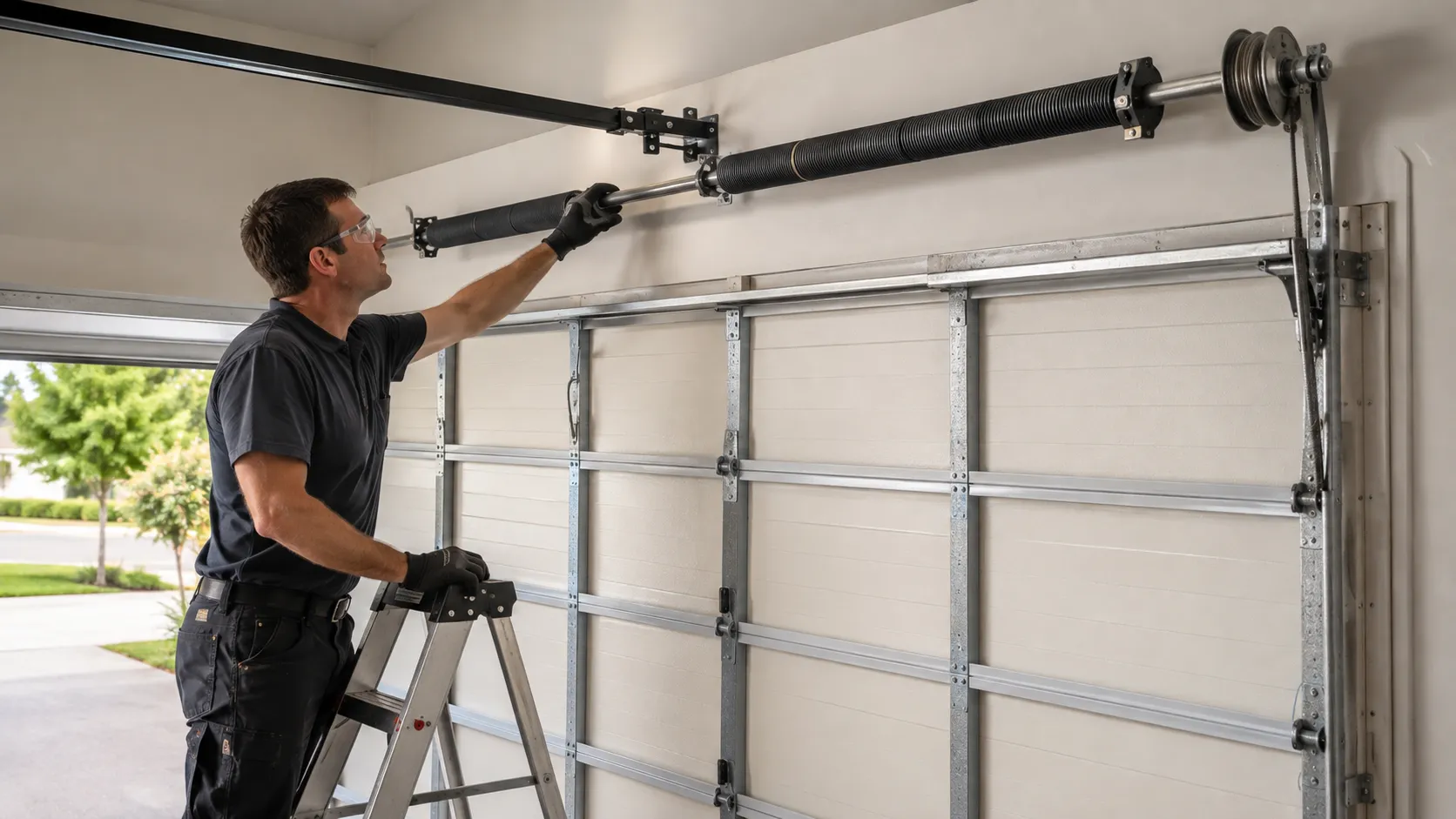
Most houses across Auburn's 47 named areas went up between 1938 and 2003, with the typical build year sitting around 1983. That matters because a torsion spring is rated for a set number of open-close cycles, not a set number of years, and a door installed under a Reagan-era build permit has been through a lot of cycles by now. The steel in those original springs and the galvanizing on the cables were built to a 1980s standard, not today's.\n\nAdd Auburn's climate band, which sits in the cold-moderate range, and you get a second stress on top of age. Steel contracts in cold weather, grease inside bearings and hinges thickens, and a spring that was already near the end of its rated life gets asked to move a heavier door with less lubrication and tighter tolerances. That's the exact combination - old hardware plus cold mornings - that produces the loud bang of a snapped torsion spring or a door that groans and hesitates before it moves at all. It isn't random. It's the housing stock and the weather working on the same parts at once.
The Complications
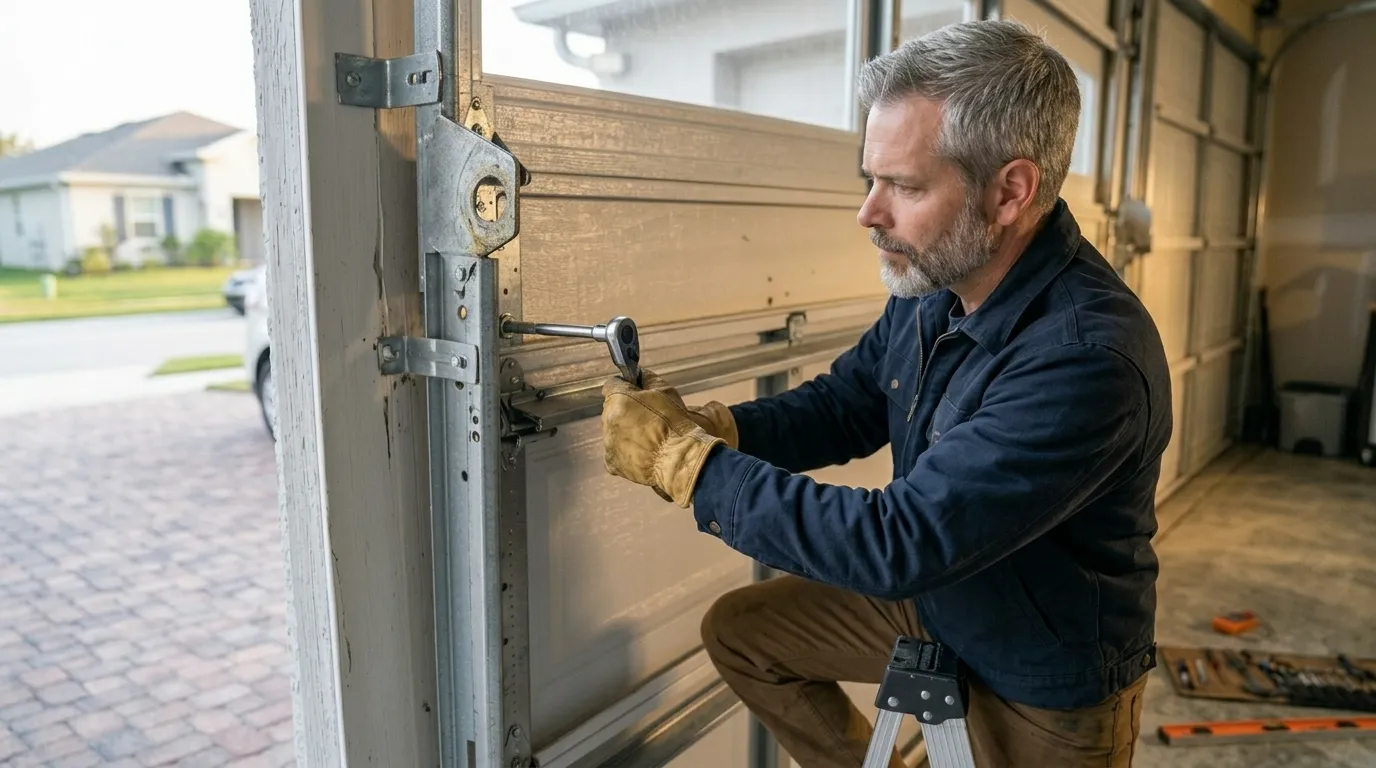
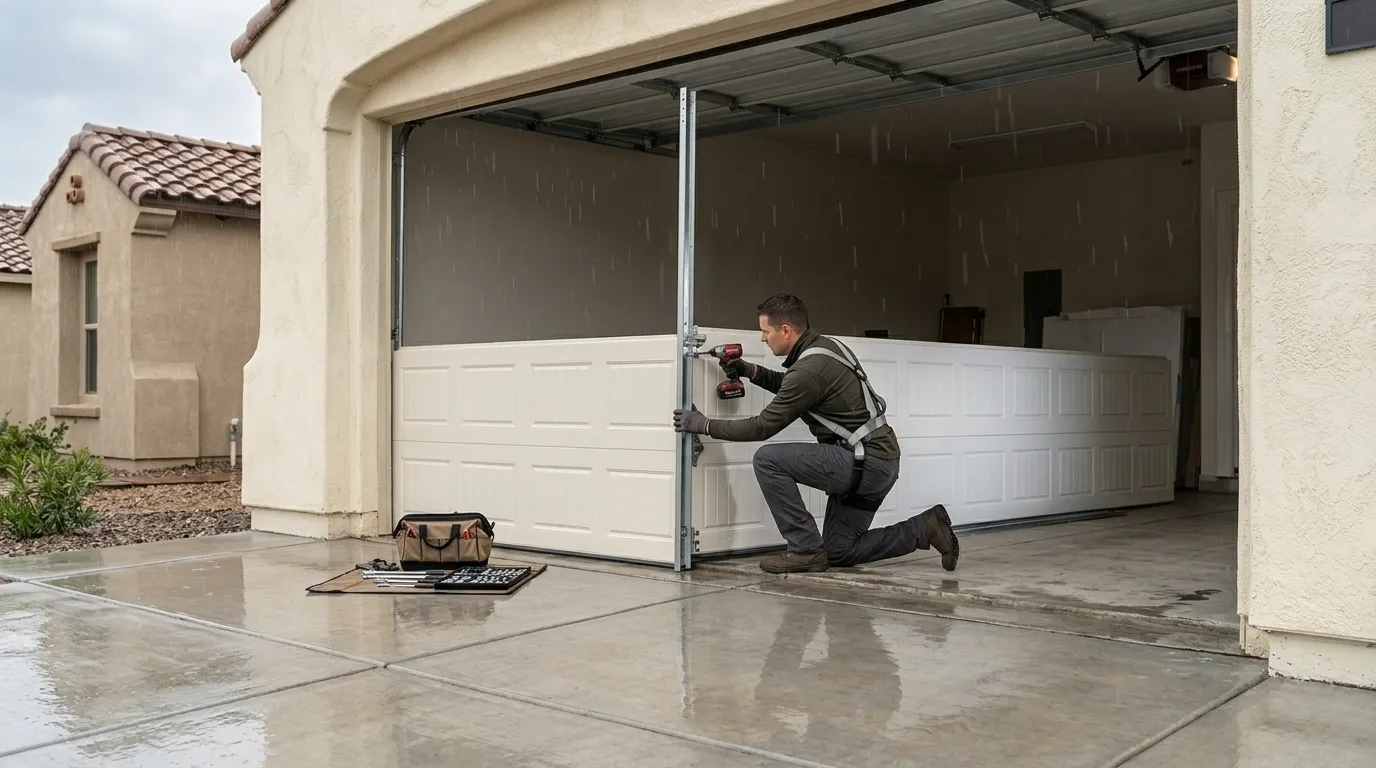
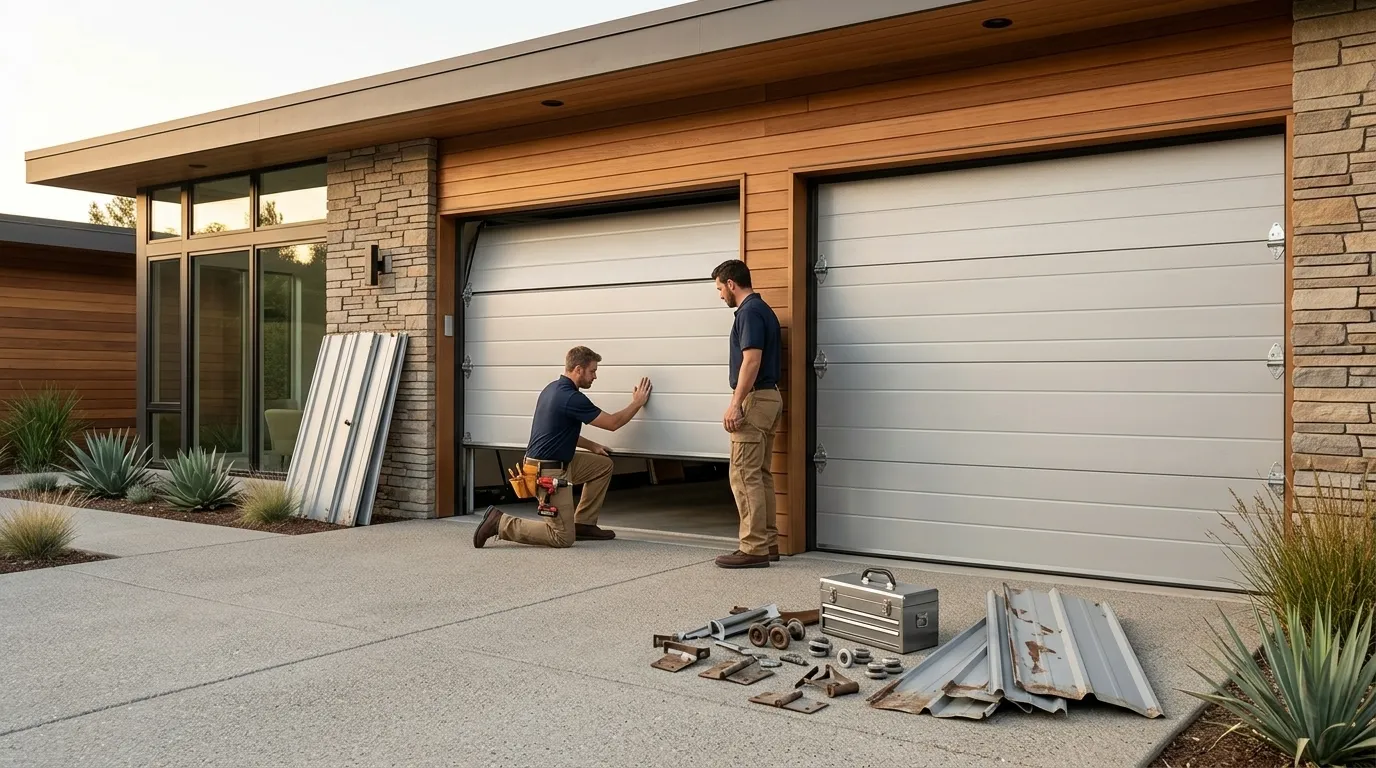
A house built in the early 1980s often has its original track and drum hardware even after one or two opener swaps. That creates a mismatch: a newer opener with more lifting force bolted onto an old bracket or a worn roller track that was never sized for it. The opener strains, the track flexes, and homeowners assume the opener is bad when the real problem is 40-year-old steel behind it.\n\nMoisture is the other complication. Across a service area with roughly 298,442 households and 147,257 owner-occupied houses, a good share of garages sit low relative to grade, and cold-moderate winters mean condensation and rust on cables and bottom brackets, especially on doors that don't see much summer sun. Rust doesn't announce itself. A cable can look fine and still be down to a few working strands inside the loop closest to the drum, which is the kind of thing that fails without warning rather than with a slow decline you'd notice.\n\nNone of this is a defect in any one door. It's what happens to hardware from that era exposed to this weather for this long.
What You Are Seeing
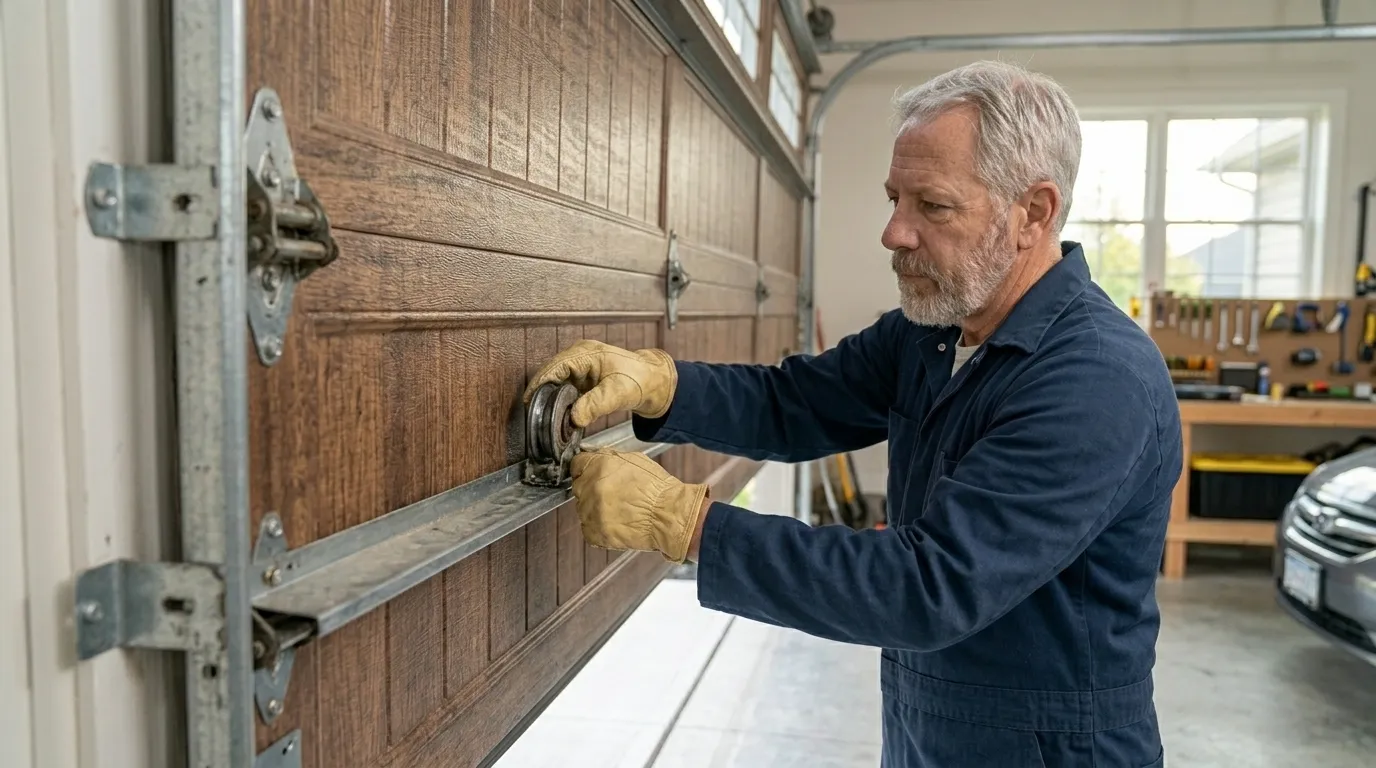
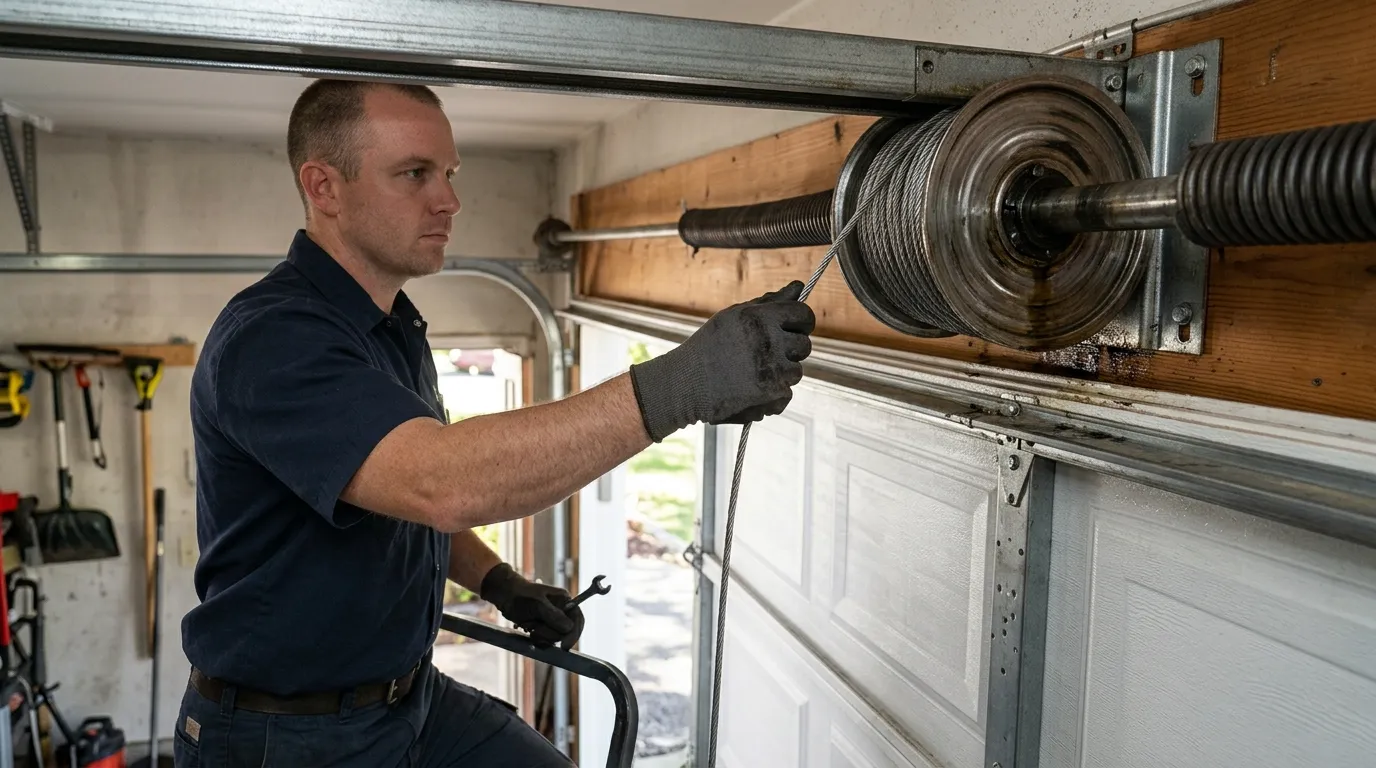
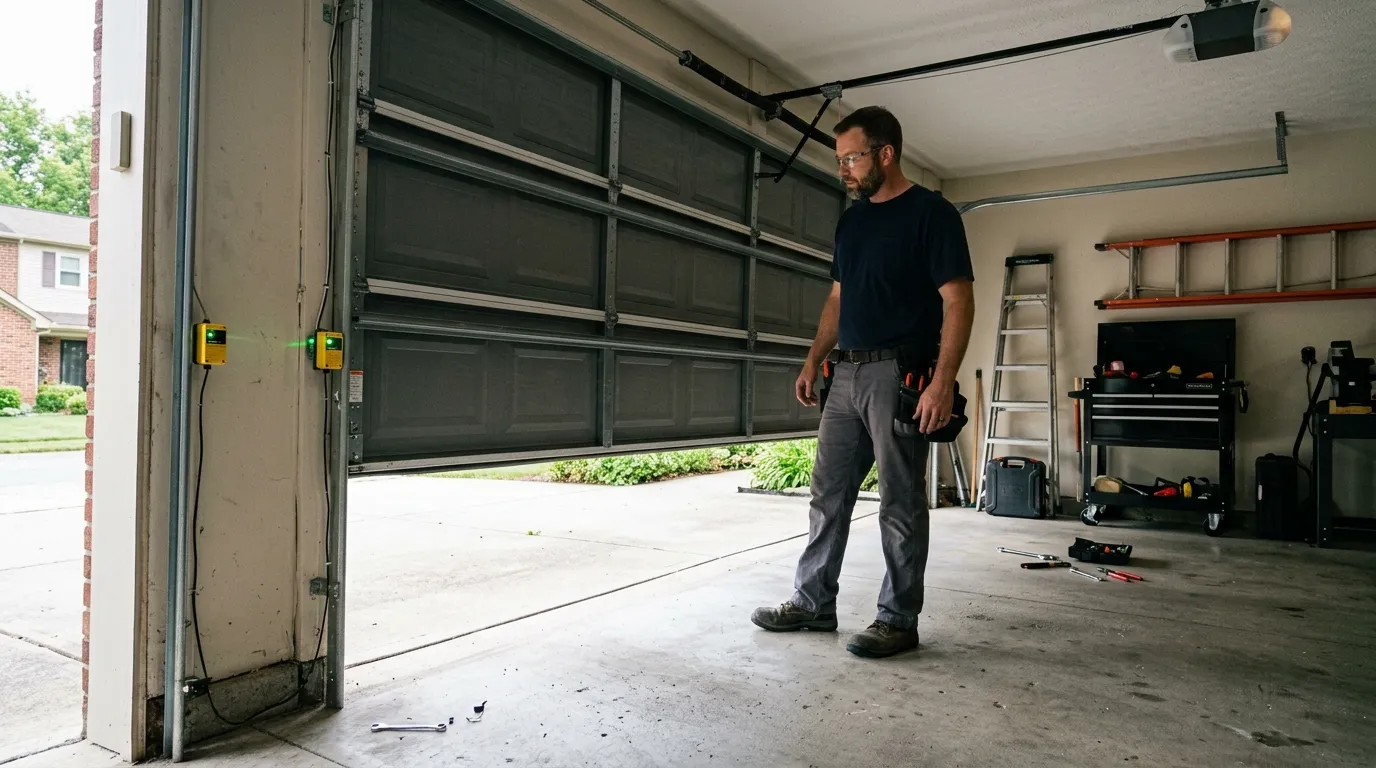
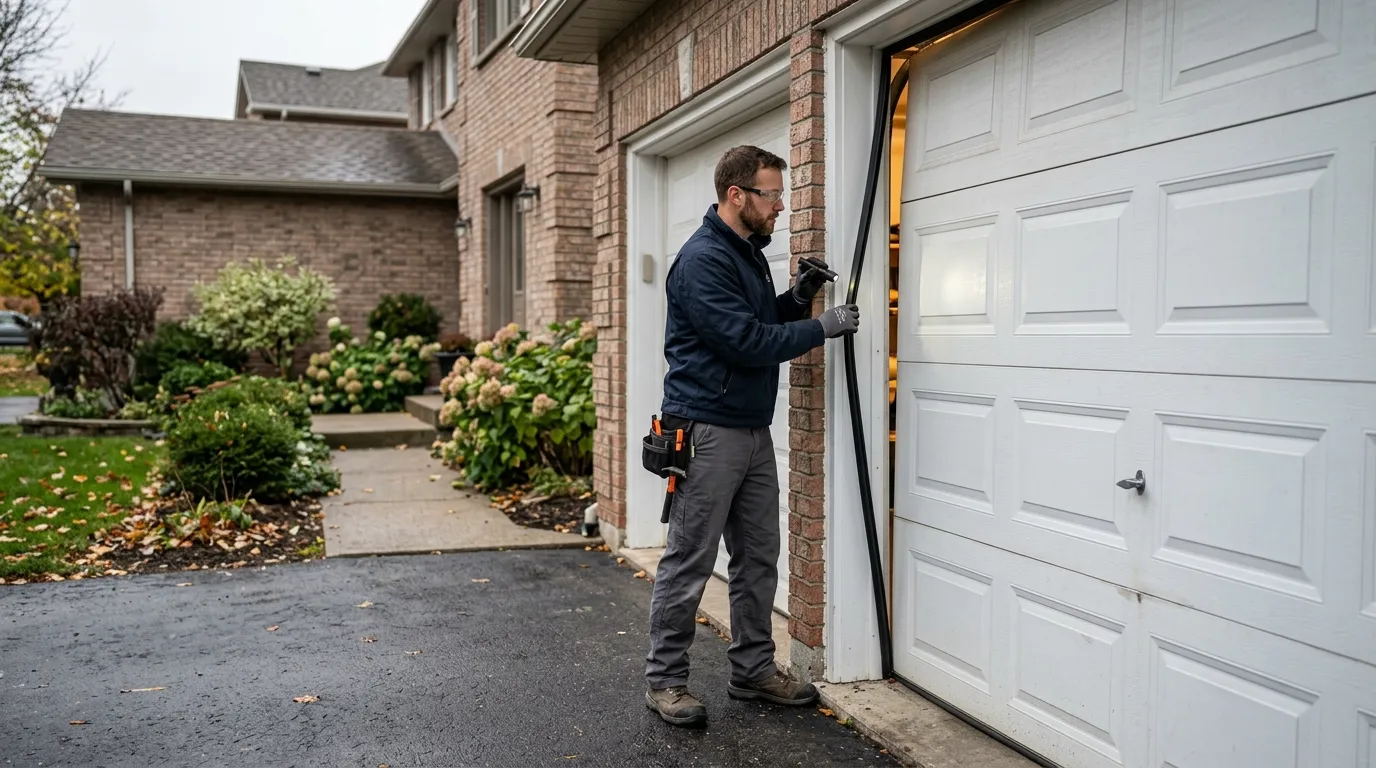
If the door is slow to start moving and then catches up to normal speed, that's usually a spring losing tension gradually rather than snapping outright - common on doors from the 1983-era housing stock that are due for replacement on schedule rather than failure. A loud bang from the garage, followed by a door that won't lift at all or feels much heavier by hand, is a torsion spring letting go, and it happens more in cold snaps for the reasons above.\n\nGrinding or squealing that gets worse over weeks points to rollers or hinges that have gone dry, often worse in winter when lubricant thickens. A door that reverses partway up or down, or that the opener strains against, suggests a track or hardware mismatch left over from an opener upgrade that didn't touch the original 1980s track. And a cable that looks intact but has visible rust near the drum end is worth having checked before it's asked to do real work on a cold morning, since that's exactly when a weakened cable tends to fail.