What Is Going On
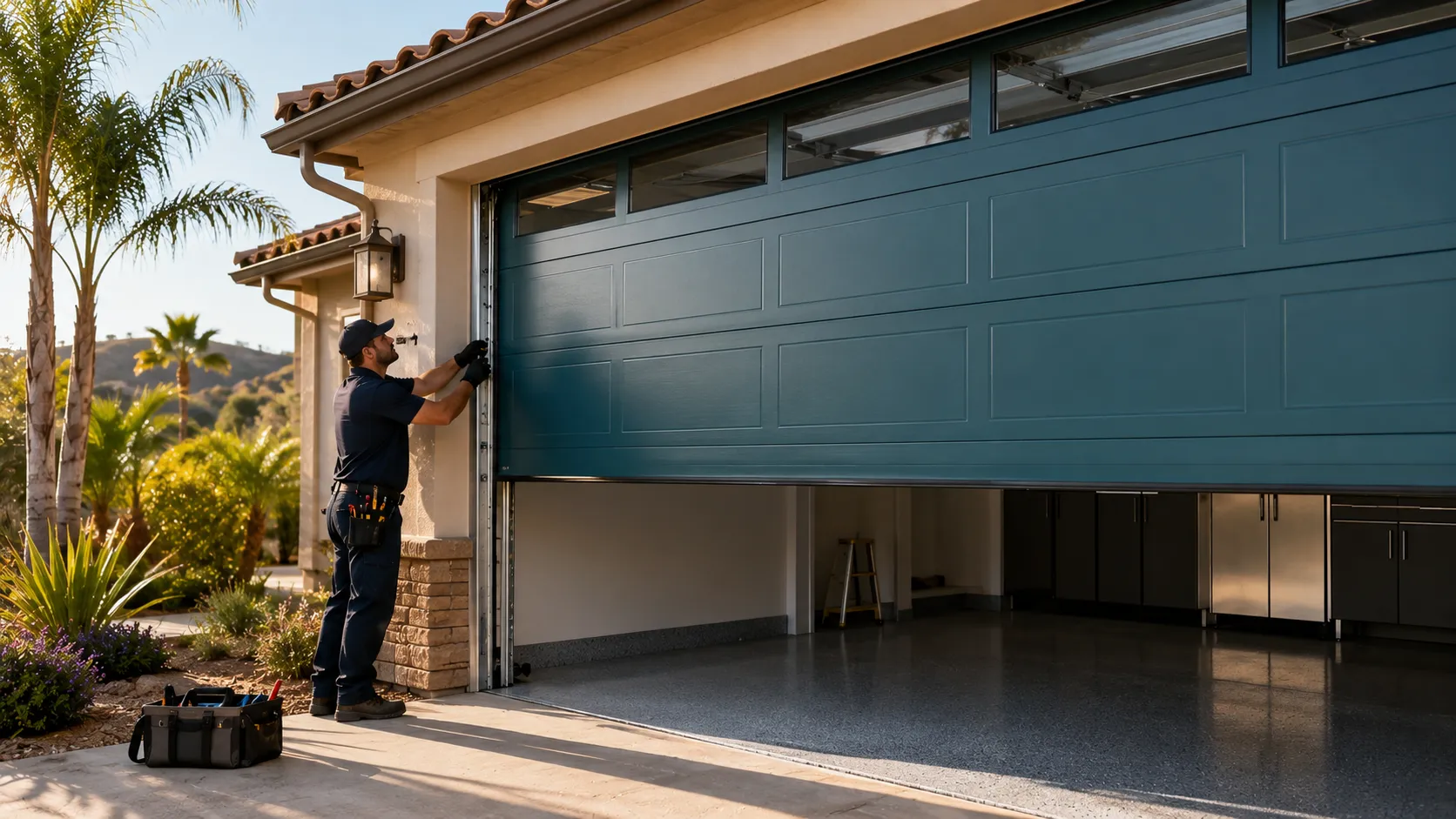
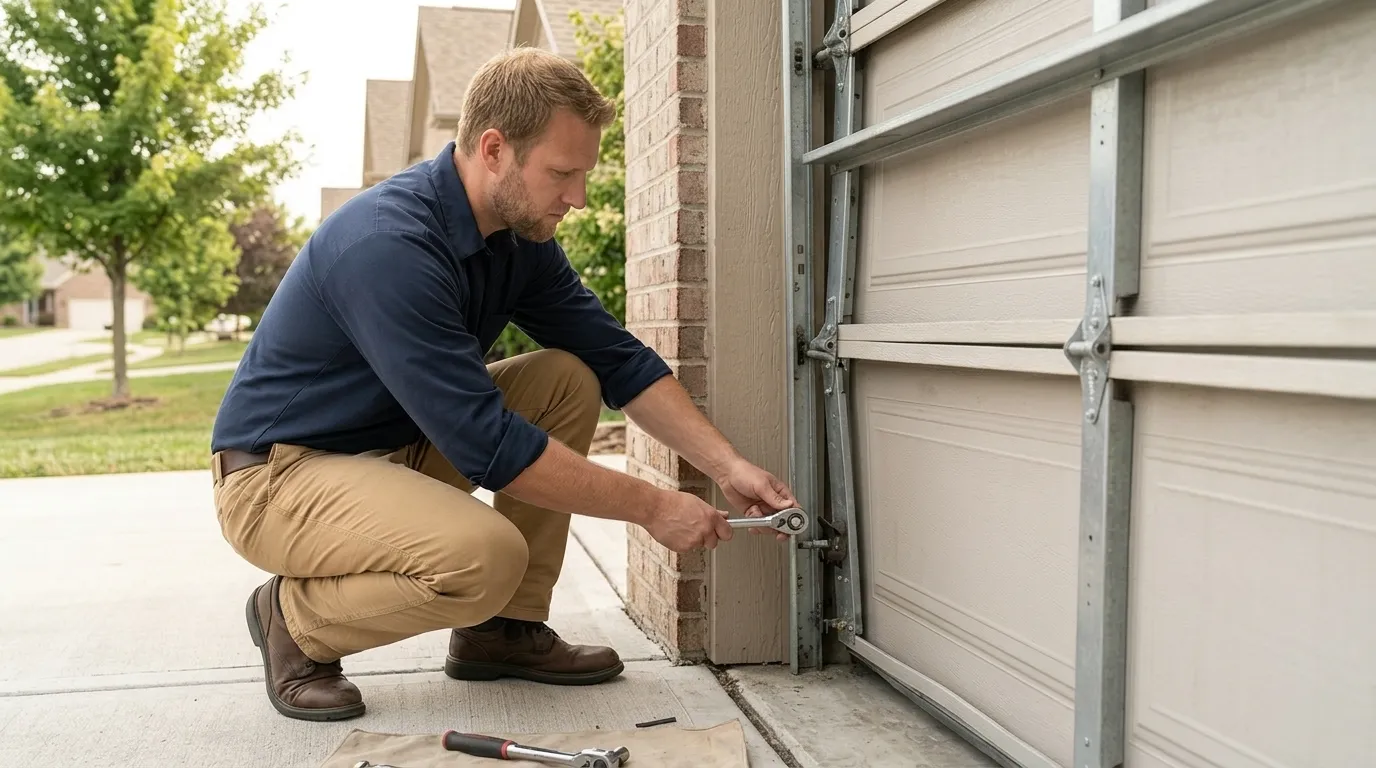
Your garage door has two small sensor eyes mounted low on the tracks, one on each side, about six inches off the slab. They talk to each other with an infrared beam, and if anything breaks that beam, the door won't close. When people call us saying the door reverses for no reason, or won't close at all, it's almost always one of those eyes has drifted a few degrees out of alignment.
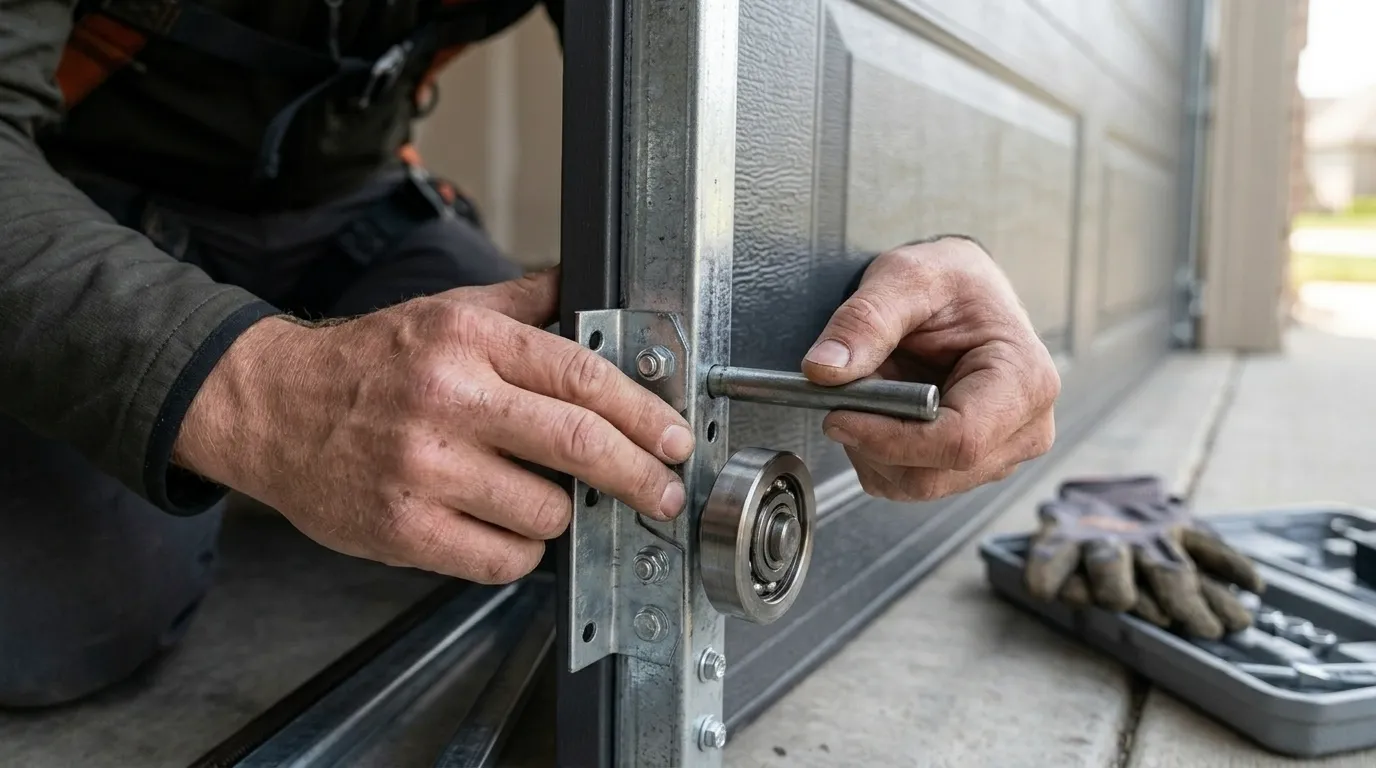
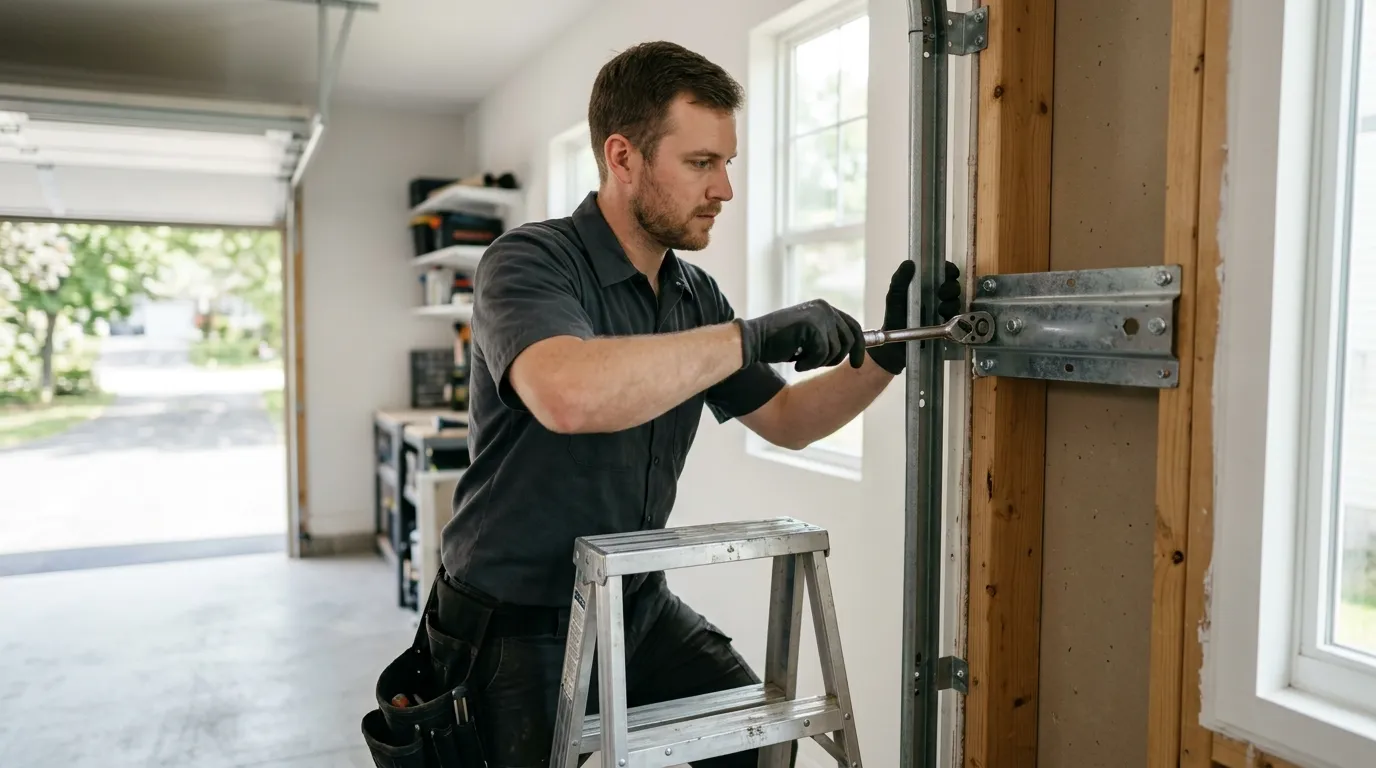
Across Auburn's housing stock, which runs from 1938 up through 2003 with a lot of it clustered in the 1980s and 90s, the sensor brackets are bolted either to the track itself or to a separate stake driven into the slab next to the track. Neither mount is rigid forever. The bracket screws work loose, the little plastic aiming tabs crack from age, and on the older end of that build range the brackets themselves have often been bent or bumped over the decades by whoever's parked a bike or a mower too close.
This isn't a wiring problem most of the time. It's a geometry problem: two eyes that used to point straight at each other now point a hair off, and it takes almost nothing to knock them out further.
What Local Conditions Do
Auburn sits in a cold, moderate climate band, and that matters more for sensor alignment than most people expect. The concrete slab your garage sits on expands and contracts with the seasonal temperature swings, and on homes from the older half of our 1938-2003 build range, that slab has had a lot more freeze-thaw cycles to work with than a newer pour would have. Over enough winters, the slab settles unevenly near the door opening, which tips the track legs a degree or two, which tips the sensor brackets bolted to them.
Humidity and cold together also do a number on the wiring and the plastic housings themselves. Auburn's wetter, colder months mean condensation forms inside garages that aren't heated, and that moisture works into the sensor wire connections at the bracket. A connection that's slightly corroded doesn't always fail outright - it just gets flaky, so the eye reads intermittently and the door acts like the alignment is off even when it's close.
So in a lot of Auburn garages, what looks like a bumped sensor is really two separate things stacking on top of each other: physical drift from slab movement, and electrical flakiness from years of cold, damp air sitting in an unheated bay.
The Cost of This Job
We're not going to give you a number here we can't stand behind. What we can tell you is what drives the cost on this specific job: whether it's aim only, whether a bracket needs replacing, and whether the wiring at the connection has corroded enough to need a splice or a full new sensor pair. In an area like Auburn with a lot of homes in the 1980s-90s range, the bracket-and-wire combination is the more common repair, not just an aim adjustment, because those setups have had two or three decades of freeze-thaw cycling to loosen things up.
With median household income in this area running well above the state's, most homeowners here aren't choosing between fixing sensors and letting the door sit broken - but that doesn't mean it's worth over-fixing. If the door and opener are otherwise sound, sensor repair is a small, contained job. It only turns into a bigger one if you've let a bent bracket or corroded wire run long enough that it's taken the opener's logic board with it, which does happen but isn't the norm.