24/7 Emergency Service Open 7 days · 7am–8pm Serving Auburn, WA & nearby
(253) 559-8642
Auburn, WA

Why Auburn Garage Doors Let in Cold Air and Draughts

Auburn homes built mostly in the 1980s and 90s face cold-climate seal failure at the garage door. Here's what causes the draught, what it costs to fix, and when it can wait.

Why Auburn Garage Doors Let in Cold Air and Draughts

What Is Going On

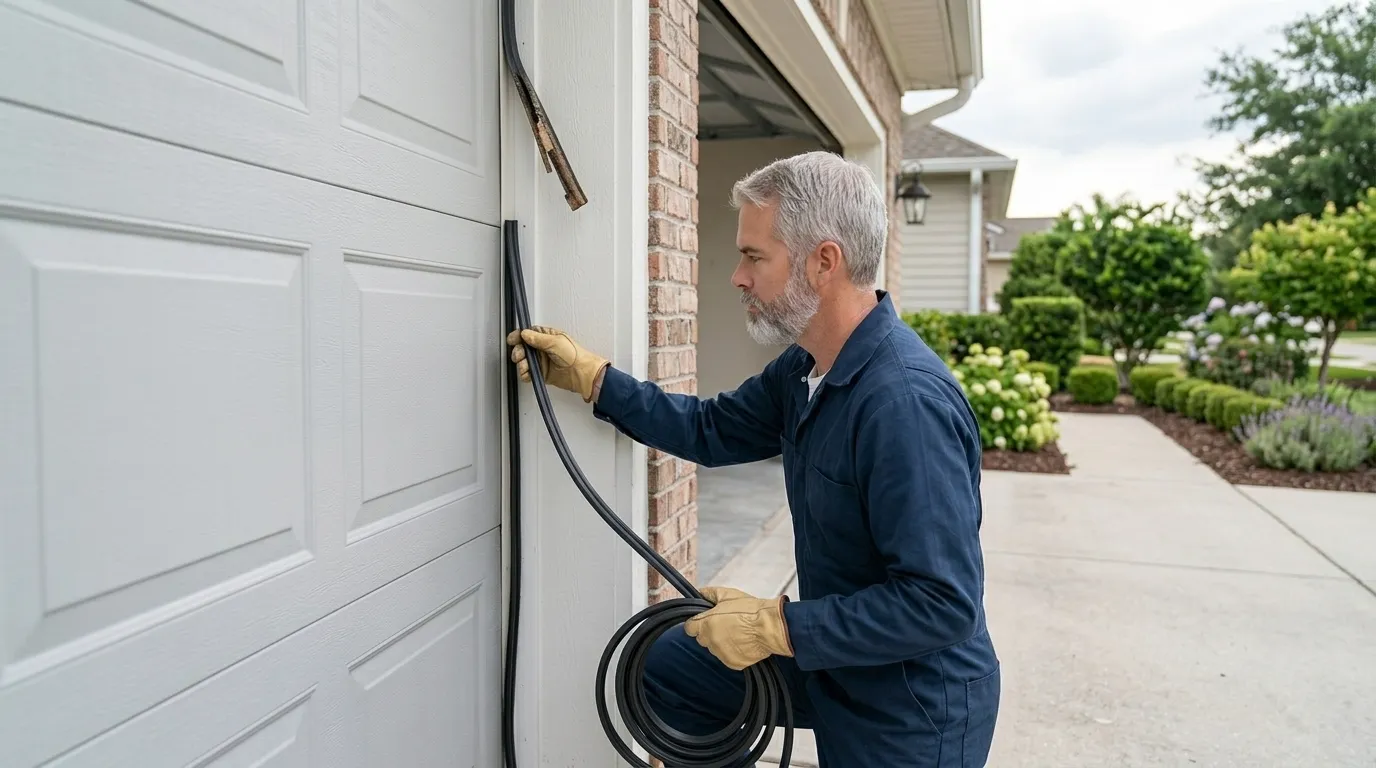
Most garage doors in this service area went up somewhere between 1938 and 2003, with the median build year landing around 1983. That means a huge share of the doors we look at still carry factory weatherstripping from a design era before today's compression seals were standard. The vinyl on the bottom astragal and the flexible strip along the sides both harden and crack over decades of temperature swings. Once that happens, you get a visible gap at the floor, light coming through the top corners, or a cold line you can feel standing a few feet inside the garage. It's rarely one dramatic failure. It's the rubber losing its memory a little every winter until the door stops sealing the way it did when the house was new. On the 1980s-90s stock that makes up most of the local housing, we also see the original aluminum retainer channel still in place, which limits which replacement seal profiles actually fit without swapping the track too. That's the detail that trips up a DIY seal kit bought off a shelf sized for a newer door.

The fix is usually straightforward once we know the retainer style, but guessing at it from a phone description is how people end up with a seal that doesn't seat.

What Local Conditions Do

This area sits in a cold, moderate climate band, not the deep freeze of the mountain passes but enough sustained cold and damp to work seals harder than a mild coastal town would. The freeze-thaw cycle here isn't extreme, but it's frequent, and frequent is what actually degrades rubber and vinyl faster than one hard freeze ever would. A seal that flexes and hardens, flexes and hardens, week after week through a wet Northwest winter, loses elasticity years before it would in a drier or steadier climate. That's why a door that sealed fine in October can whistle at the corners by February without anything having broken.

Moisture matters as much as temperature in this band. Damp air finds the gap a stiffened seal leaves behind and carries it into the garage, which is where we start seeing rust bloom on spring coils and track hardware that otherwise had years left in it. The draught itself is the visible symptom. The slower damage to metal parts behind the door is the one homeowners don't notice until something binds or squeaks. Sealing the gap early protects more than comfort - it protects the hardware living behind it.

Doing Nothing For Now

Here's the honest part: a draughty seal on its own is not an emergency, and we'll tell you that on the phone. If the door still opens smoothly, the spring looks fine, and the gap is just cold air at the bottom corners, you can live with it for a season without anything getting worse in a hurry. Plenty of owners in older sections of this housing stock wait until a slow weekend rather than calling it in as urgent.

What we won't tell you is that it's harmless to ignore indefinitely. A cracked seal that's letting in moisture year after year in this climate band is slowly feeding water and cold air onto hardware that was built for a sealed environment. Rust doesn't announce itself until a roller seizes or a hinge starts grinding. If your door was part of that 1980s-90s wave of local construction, the metal parts behind the seal are already the oldest thing on the door, and they're the parts that get quietly punished while the draught just feels like an inconvenience. Waiting is a reasonable choice. Waiting forever usually turns a seal job into a hardware job.

The Cost of This Job

We don't have a set number to give you here without seeing the door, and we'd rather say that than make one up. What actually drives the cost on a seal and weatherstrip job is the retainer channel style, the door width, and whether the track needs any adjustment to get a new seal to seat flush - all of which varies across the older stock common in this area, since a door built in 1985 and one built in 2001 can take completely different seal profiles even if they look similar from the driveway.

A single-car door with a standard channel is a shorter job than a double door where the astragal has to run the full width without a seam. If the aluminum retainer itself is bent or rusted through, that adds a part to the job that a straight seal swap doesn't need. We'll tell you which situation you're in before we quote anything, and if the honest answer is that the seal is fine and it's actually the door alignment causing the draught, we'll say that instead of selling you a seal you don't need.
How it works

From “it’s stuck” to “it’s fixed”

Tell us what’s wrong - Auburn garage door service

Tell us what’s wrong

Describe the symptom - won’t open, loud bang, opener runs but the door won’t move.

On-site diagnosis - Auburn garage door service

On-site diagnosis

A technician tests the door under power and by hand and finds what actually failed.

Clear, up-front plan - Auburn garage door service

Clear, up-front plan

You get the fix that’s needed and what drives the cost - before any work starts.

Repaired & tested - Auburn garage door service

Repaired & tested

The repair is done, the door is set true and tested, and the work area left clean.

Serving Auburn, WA - tell us what your door’s doing and we’ll take it from there.

49areas covered
How we work

What to expect

Diagnosis firstEvery visit starts by finding what actually failed - not a pre-written parts list.
The right part for the doorSprings and openers matched to the door’s weight and age, so the fix holds up.
Straight answersWhen a repair makes more sense than a replacement - or the reverse - you hear it plainly.
Clean, careful workTension released safely, hardware set true, the door tested under power before we leave.
Questions

Frequently asked

Straight answers about garage door repair in Auburn. Still unsure? Ask us directly.

Why does my garage door only draught at the corners, not the whole bottom?

That's usually the side seal, not the bottom astragal. On older doors from the 1980s and 90s local stock, the side weatherstrip is a separate piece from the bottom seal, and it tends to harden and pull away first, especially near the bottom brackets where it flexes most with every open and close.

Is a garage door draught actually costing me on heating?

Some, though we can't give you a dollar figure without knowing your setup. In a cold moderate climate like this one, a gapped seal lets conditioned air out and damp cold air in continuously, not just during a storm, so it adds up over a winter even if any single day feels minor.

Can I just caulk the gap instead of replacing the seal?

You can seal small hairline gaps in the frame that way, but caulk doesn't flex with a moving door and will crack again fast. The seal itself needs to stay flexible through thousands of open-close cycles a year, which is a job for weatherstripping, not a sealant.

My house is from the 1980s - will a seal kit from the hardware store fit?

Maybe, but the retainer channel on doors from that era doesn't always match the profile that off-the-shelf kits are sized for. We check the channel style before recommending a seal so you're not buying one that won't seat.

Ready to get your garage door sorted?

Tell us what it’s doing and where you are in Auburn - we’ll take it from there.

Request a QuoteCall