What Is Going On
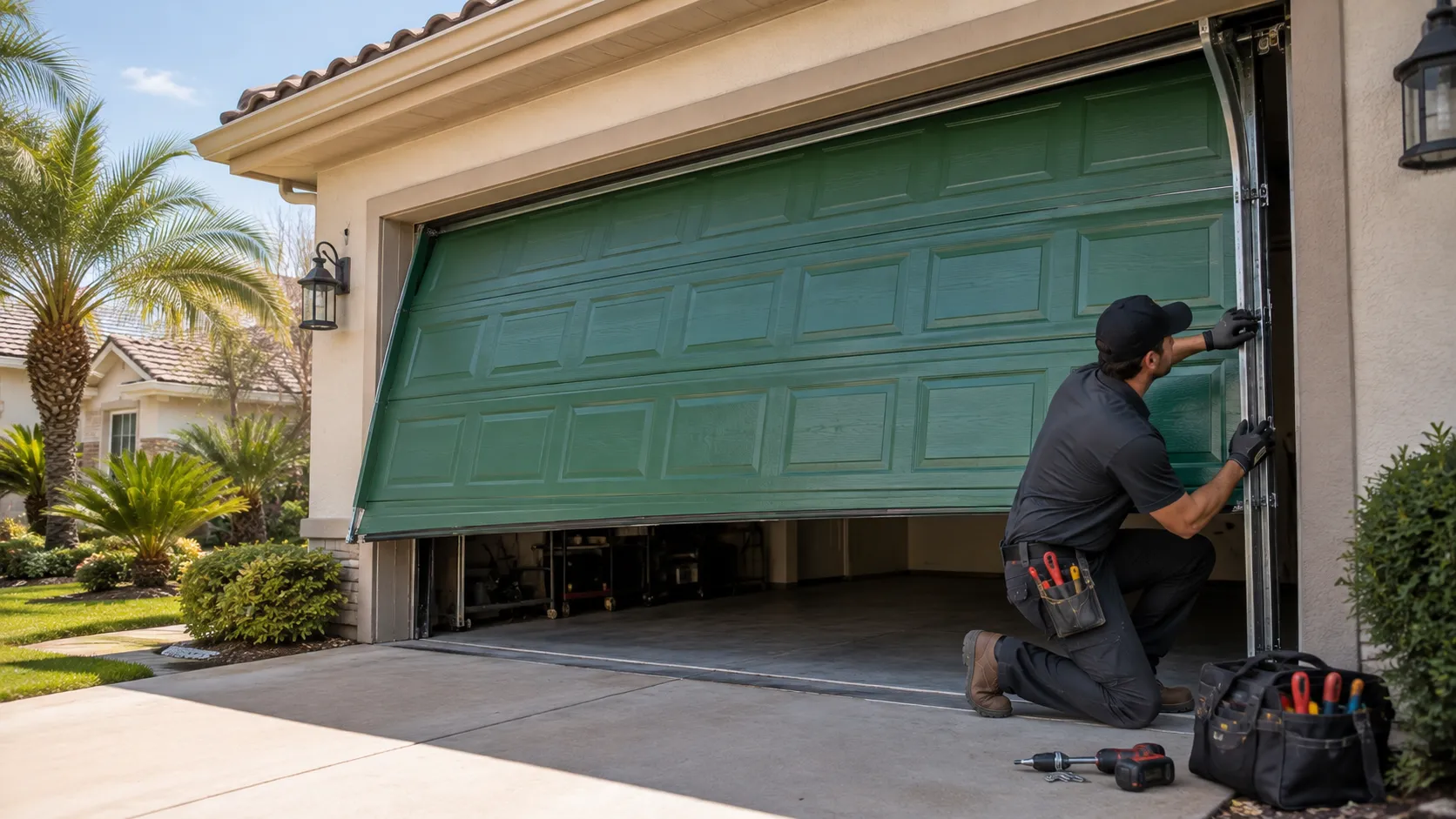
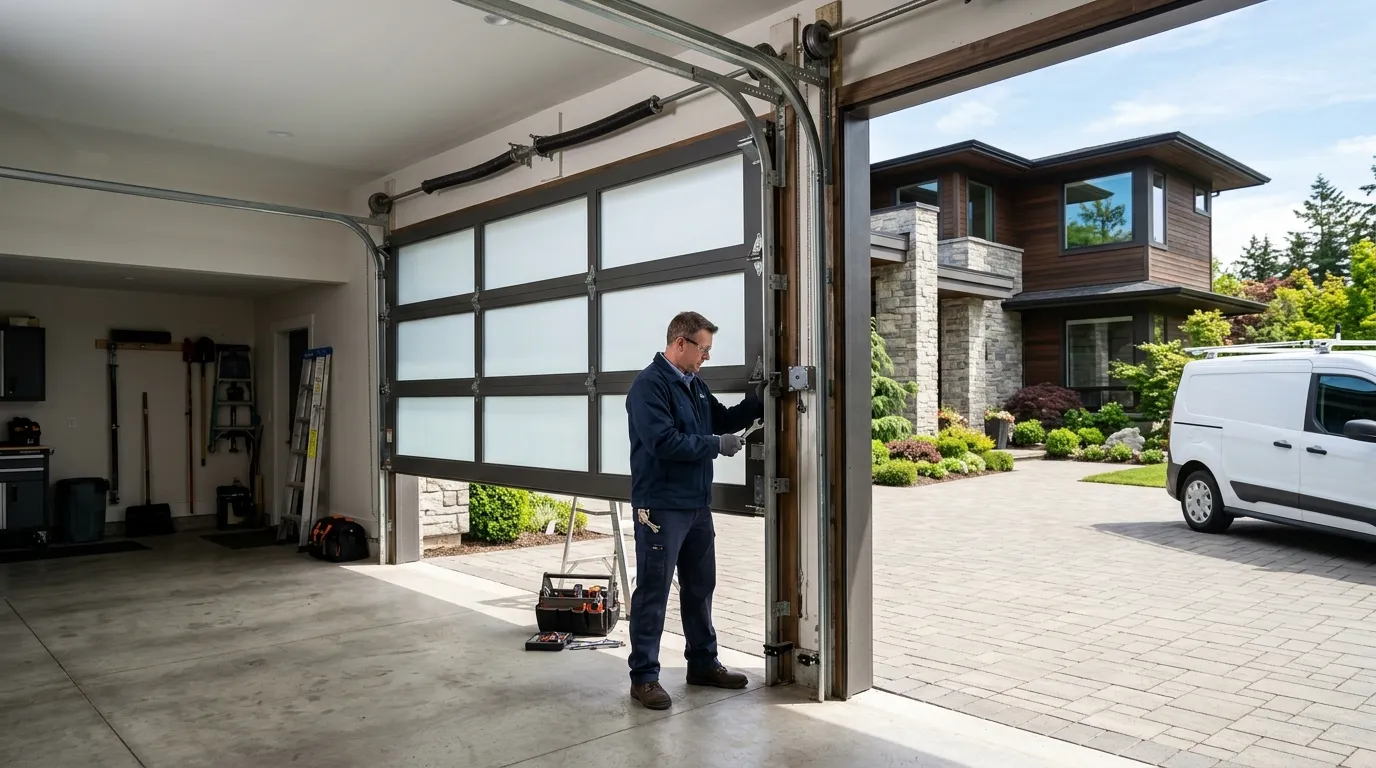
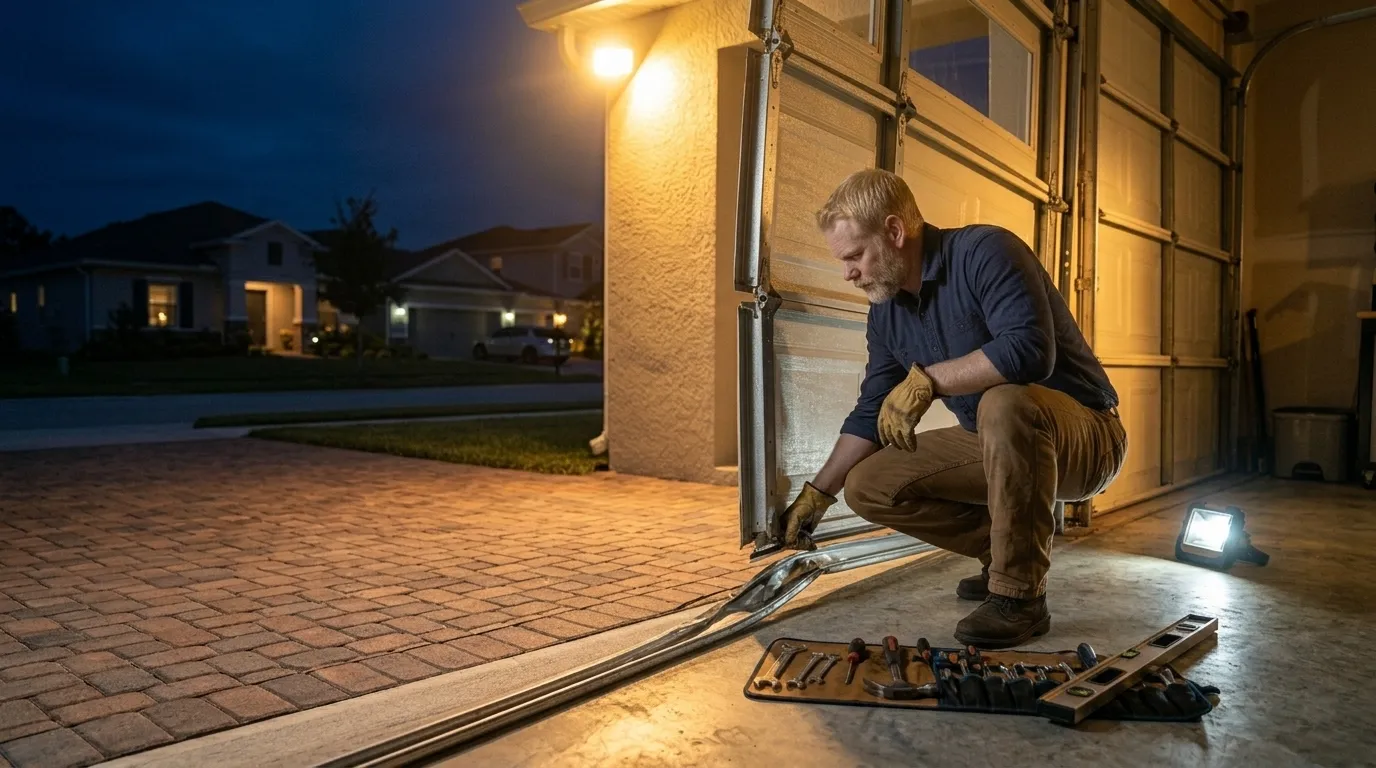
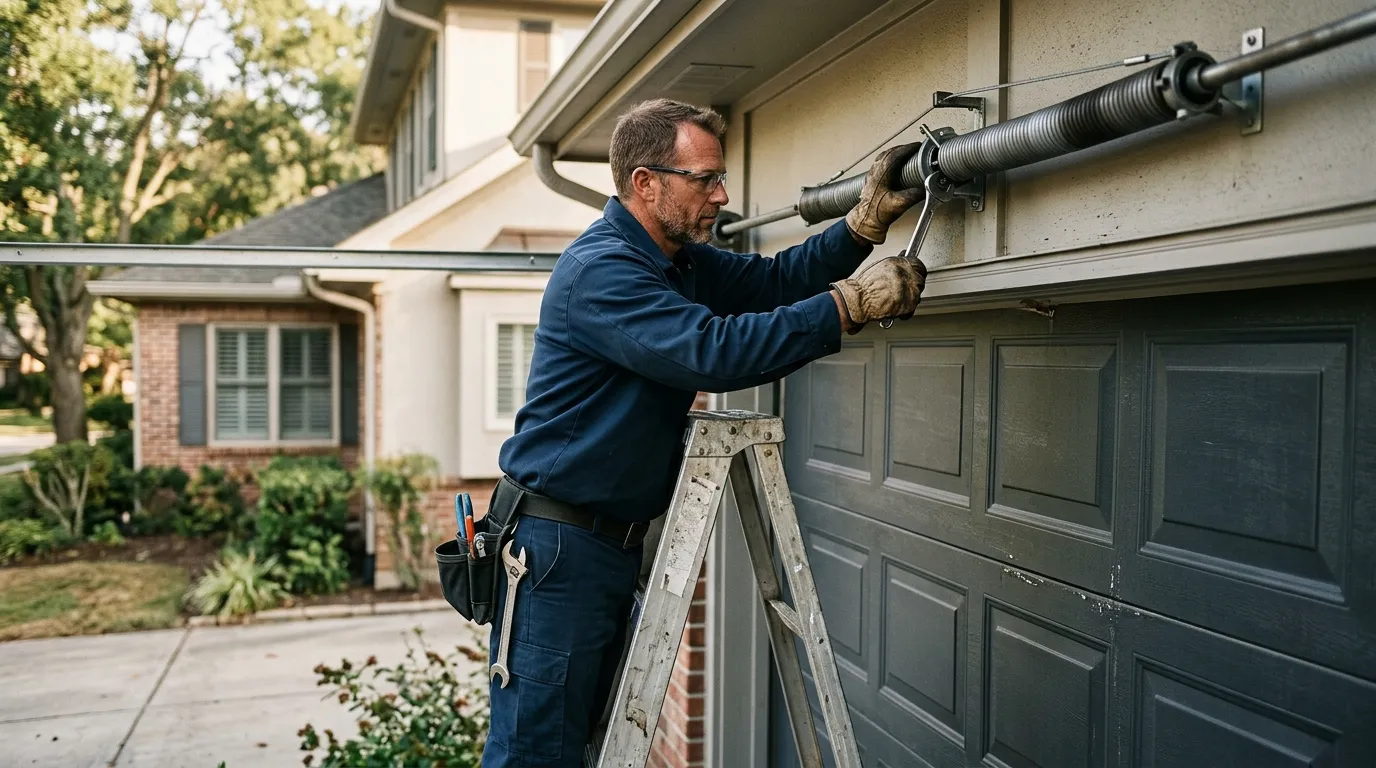
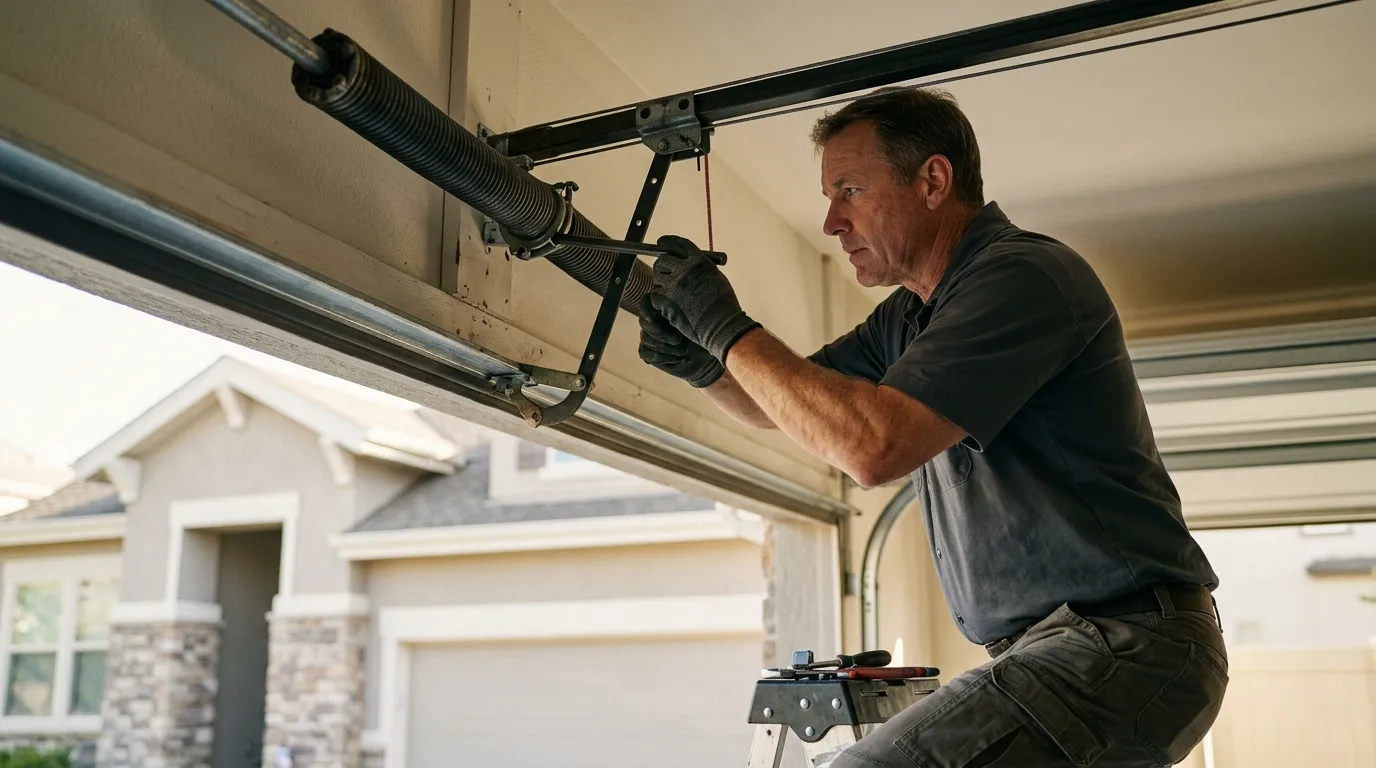
A torsion spring stores tension by twisting around a steel shaft above your door. Steel contracts as the temperature drops, and the lubricant packed into the coils thickens right along with it. In a house built anywhere from 1938 up through the early 2000s - which covers most of Auburn's stock, with the bulk of it going up in the 1980s and 90s - that spring has likely been doing the same job, un-replaced, for a couple of decades. Cold makes the metal less forgiving right at the moment it's asked to flex through its full range, first thing in the morning when the door hasn't moved all night. That's why the break almost always happens on the first cycle of a cold morning, not mid-afternoon. You'll hear a bang like a gunshot, and the door either won't lift or drops fast when you try. Nothing about this means the spring was bad - it means it reached the end of a normal lifespan on a cold day instead of a mild one. The door itself, the track, and the opener are usually fine. It's the spring, and sometimes the cable it snapped against on the way down.
What Local Conditions Do
Auburn sits in a cold-moderate climate band - not the brutal freeze-thaw of the mountains, but enough sustained cold nights each winter to matter for a spring that's already fatigued. The stress on an old torsion spring builds with every temperature swing, and homes here go through that swing every winter for years before anything gives. Add to that the age of the housing: a lot of Auburn garages, especially in the neighborhoods built through the 1980s and 90s, still have the original spring and hardware from construction. Nobody upgrades a spring until it breaks - there's no reason to. So when a cold front moves through, we get a run of calls from houses of a similar vintage, all with the same worn coil finally giving out on the same cold morning. It's less about any one storm and more about decades of temperature cycling catching up with steel that was never meant to last forever.
The Cost of This Job
We don't have a fixed number to quote you here without seeing the door, the spring size, and whether the cable or drum took damage on the way down - torsion springs come in different wire gauges and lengths depending on door weight, and a heavier insulated door built in the 90s isn't sized the same as a lighter older one. What we can tell you is that a straightforward single-spring break, caught before it damages other hardware, is a smaller job than a break that took a cable and a roller with it. That's the honest range this falls into. If you want a number for your specific door, we'd rather look at it than guess.