24/7 Emergency Service Open 7 days · 7am–8pm Serving Auburn, WA & nearby
(253) 559-8642
Auburn, WA

The Noise Your Garage Door Is Making, and What It's Telling You

Grinding, popping, or a slow thud in your Auburn garage door usually traces back to the 1980s-era hardware common across this area. Here's how to tell them apart.

The Noise Your Garage Door Is Making, and What It's Telling You

What Is Going On

Most of the noise complaints we get in Auburn come down to age matching age. Housing across this service area was built mostly between 1938 and 2003, with the median landing around 1983, and a lot of that 1980s-90s stock still has its original hardware or a first-generation replacement from the 90s. That means steel rollers instead of nylon, single-strand torsion springs instead of the dual setups on newer doors, and track brackets that have been shifting slightly for three or four decades.

A sharp bang usually means a spring, either cycling loud right before it lets go or already gone and you're hearing the door drop onto worn cable. A rhythmic thud or squeal on the way up or down is almost always steel rollers in a track that's out of alignment - common on houses from this era because the track hardware wasn't built for 30-plus years of temperature swings. A grinding sound near the motor is usually the opener gear stripping, which tends to show up around the same age as the rest of the door.

We can't tell you exactly what your door is doing over the phone, but the age of your house is a real starting point, and in Auburn that starting point is almost always 1980s hardware doing 1980s-hardware things.

What Local Conditions Do

Auburn sits in a cold-moderate climate band, and that matters more for garage doors than people expect. It's not extreme cold, but it's enough seasonal temperature swing to work steel and lubricant hard, year after year, especially on doors that have been in place since the 80s or 90s stock common across the area's named neighborhoods.

Cold snaps stiffen old grease inside torsion springs and roller bearings, which is why a door that ran quiet in August can start groaning in December - the metal hasn't changed, but the lubricant has thickened and the tolerances built into 1980s hardware were never generous to begin with. Moisture cycling does the same thing to track bolts: they loosen slightly, tighten back down as the wood or framing shifts with humidity, and over enough seasons that produces the popping or ticking sound people hear on the first cold morning of the year.

This isn't a Auburn-specific weather event, just steady wear from a climate that isn't harsh but isn't stable either. On a house built in this era, that slow cycle is usually the reason a door goes from quiet to noisy over one winter rather than failing all at once.

Doing Nothing For Now

Some noises are fine to live with for a while. A door that squeaks on rollers but opens smooth and level isn't an emergency - that's wear, not failure, and it's common enough on 1980s-90s stock that we hear about it constantly without anything actually breaking that week.

What isn't fine to wait on: a spring that's making a sharp, popping or cracking sound on each cycle, a door that shudders or jerks partway through its travel, or cables that look frayed at the drum. Those point to a part near the end of its life, and on original or early-replacement hardware from a house in this age range, "near the end" can mean days, not months.

Here's the honest limitation: we can't tell you over the phone whether your noise is the safe kind or the not-safe kind. Steel roller squeal and a spring about to fail can sound similar to an untrained ear, and guessing wrong on a spring means a door slamming down on whoever's underneath it. If you're not sure which one you have, that's worth a look rather than a guess, especially given how much of the housing stock in this area is old enough to be past its original hardware's expected life.

The Cost of This Job

We don't have a set price to quote you here - what a repair costs depends on whether it's rollers, a spring, cable, or an opener gear, and we're not going to put a number on a job we haven't looked at. What we can tell you is that on a house built in the 1938-2003 range that makes up most of this area, the hardware doing the failing is usually original or first-generation replacement, which means parts that are simple and well-understood rather than exotic.

That's actually good news on cost: a torsion spring swap or roller replacement on a standard door from this era is a known job, not a specialty one. Where cost climbs is when a door's been ignored long enough that one worn part has taken others with it - a stripped opener gear that's also chewed up the drive rail, for example. Catching a noise early, on hardware this common, tends to be the cheaper path more often than not.
How it works

From “it’s stuck” to “it’s fixed”

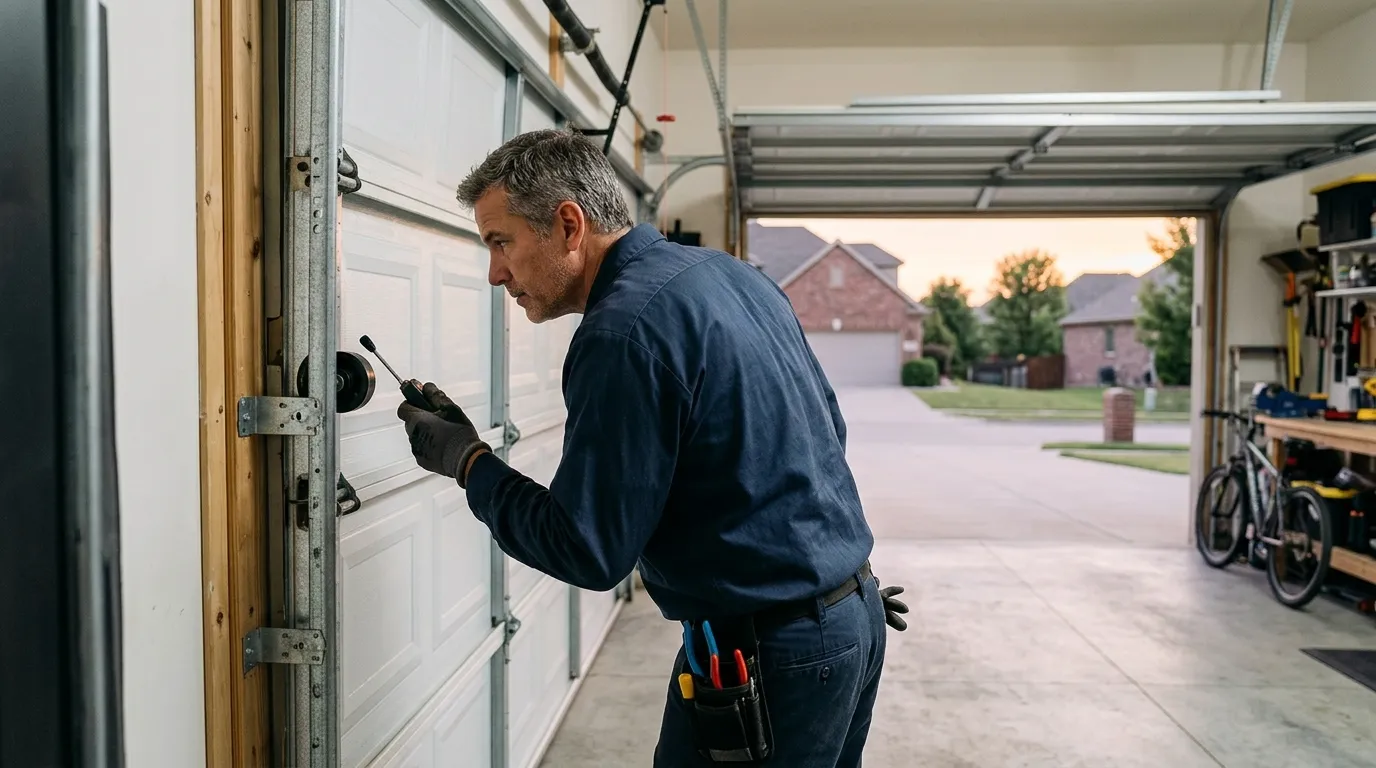
Tell us what’s wrong - Auburn garage door service

Tell us what’s wrong

Describe the symptom - won’t open, loud bang, opener runs but the door won’t move.

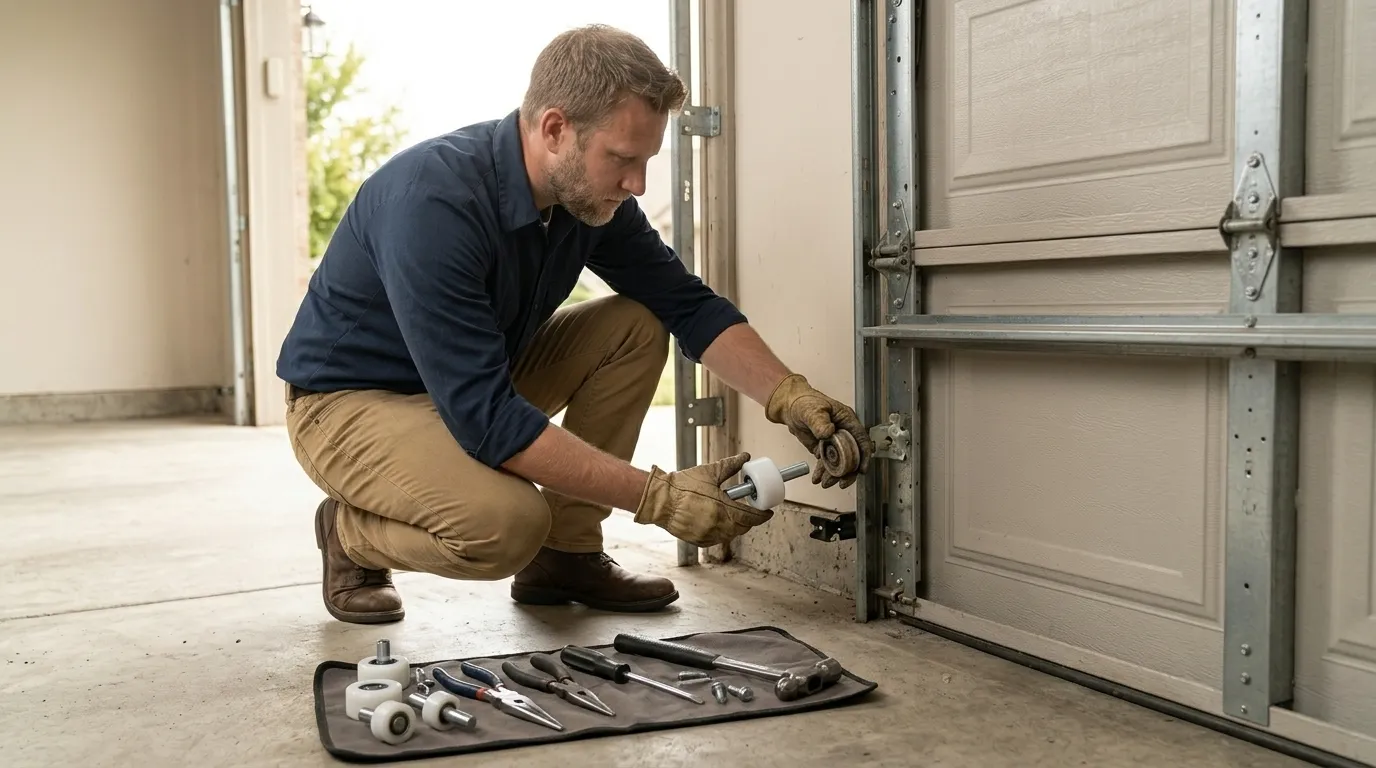
On-site diagnosis - Auburn garage door service

On-site diagnosis

A technician tests the door under power and by hand and finds what actually failed.

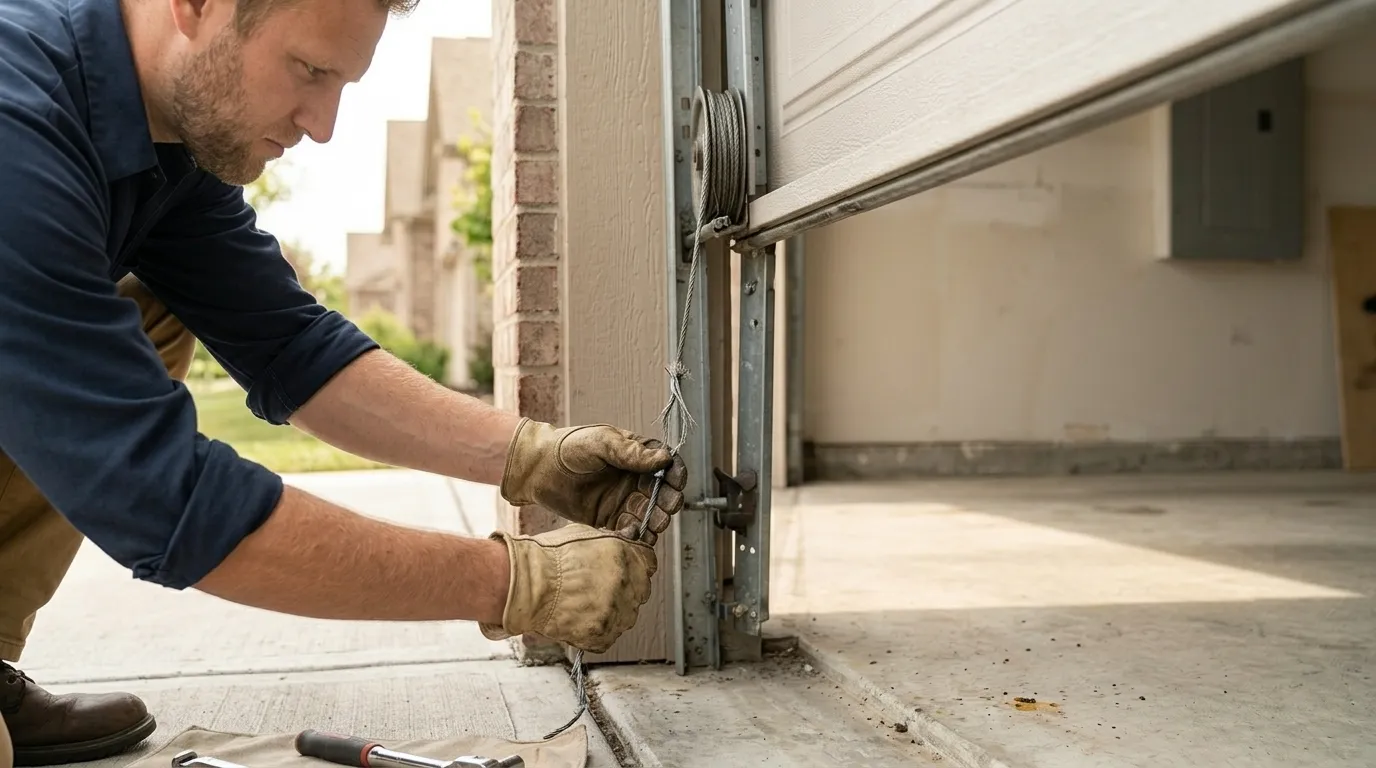
Clear, up-front plan - Auburn garage door service

Clear, up-front plan

You get the fix that’s needed and what drives the cost - before any work starts.

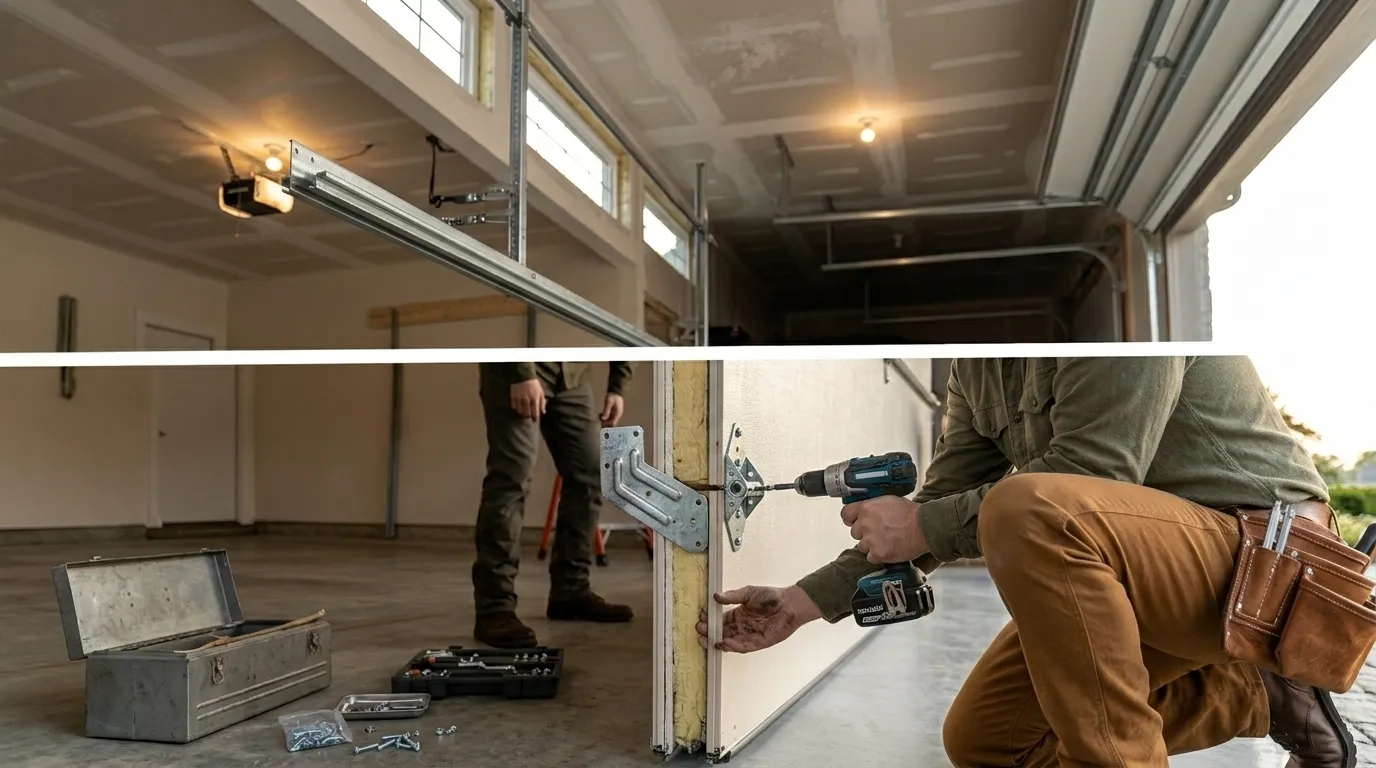
Repaired & tested - Auburn garage door service

Repaired & tested

The repair is done, the door is set true and tested, and the work area left clean.

Serving Auburn, WA - tell us what your door’s doing and we’ll take it from there.

49areas covered
How we work

What to expect

Diagnosis firstEvery visit starts by finding what actually failed - not a pre-written parts list.
The right part for the doorSprings and openers matched to the door’s weight and age, so the fix holds up.
Straight answersWhen a repair makes more sense than a replacement - or the reverse - you hear it plainly.
Clean, careful workTension released safely, hardware set true, the door tested under power before we leave.
Questions

Frequently asked

Straight answers about garage door repair in Auburn. Still unsure? Ask us directly.

My door makes a loud bang once in a while but still opens fine - is that a spring?

It can be. A spring nearing failure often makes a sharp crack or pop sound during a cycle before it actually breaks, especially on original 1980s-90s hardware common in this area. It can also be a loose bracket. We'd want to look at it rather than guess, since a spring failure under tension is a safety issue, not just a noise issue.

Why did my garage door suddenly get noisy this winter when it was fine all summer?

Cold-moderate winters here thicken old grease in rollers and springs and shift track bolts as humidity swings. On hardware from the 1980s-90s stock common across this area, that seasonal change is often what turns a quiet door into a noisy one, even though nothing actually broke.

Is it worth fixing an old, noisy door or should I replace it?

Depends on what's failing. A worn roller or single spring on an otherwise sound door is usually a straightforward repair. If the opener, track, and springs are all original and all near the end of their life at once, replacement can make more sense than repairing each part separately. We'd need to see the door to say which applies to yours.

Ready to get your garage door sorted?

Tell us what it’s doing and where you are in Auburn - we’ll take it from there.

Request a QuoteCall