What Is Going On
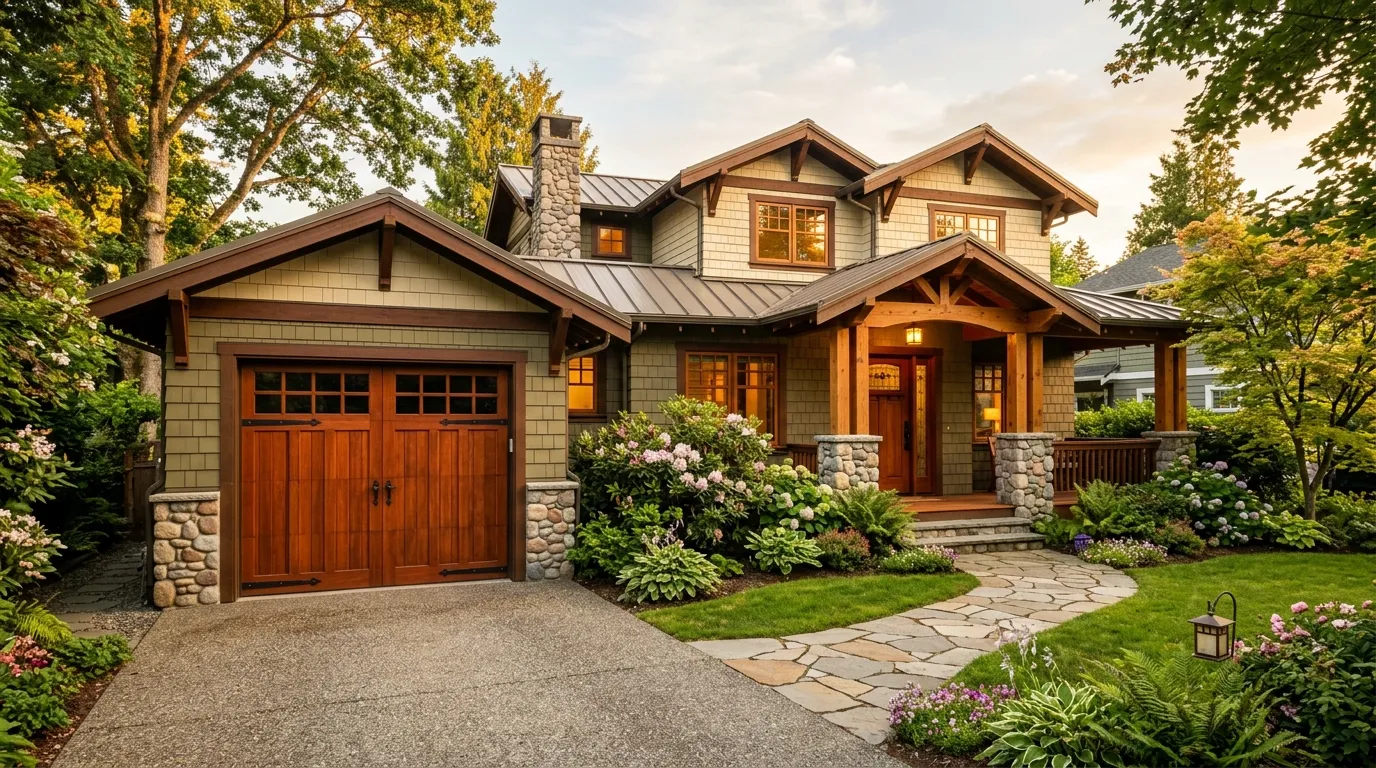
Auburn's housing stock spans 1938 to 2003, with the median build year sitting at 1983, and most of the 47 named areas around here fall into that 1980s-90s wave of construction. That matters more than people think, because insulation requirements for garage doors weren't standard practice when a lot of these houses went up. A single-layer steel door with no insulation core was normal for decades, and if your house was built anywhere near that median year, there's a real chance your original door - or a straight swap for an identical one - never had a thermal break in it. You'll feel it as a cold wall in the garage, condensation on the inside of the panels, or a laundry room above the garage that never quite warms up. This isn't a defect. It's just what building practice looked like before codes caught up, and it's common enough in this area that we see it on a regular basis.
What Local Conditions Do
We're in a cold-moderate climate band here, not the kind of extreme cold that cracks concrete, but enough sustained cold and damp to matter over a 30-to-80-year-old door. An uninsulated steel panel flexes more in temperature swings, and on houses from that 1938-2003 range, the weatherstripping and bottom seals have usually been replaced once or twice already, sometimes with parts that don't quite match the original track spacing. Cold moderate conditions also mean condensation is a bigger issue than heat damage - moisture sits on an uninsulated panel's interior face, and on wood-framed openings from the older end of that build range, that moisture works into the jamb over time. It's not dramatic, it's slow, and it's the kind of thing that gets ignored until the door starts binding on the track.
The Cost of This Job
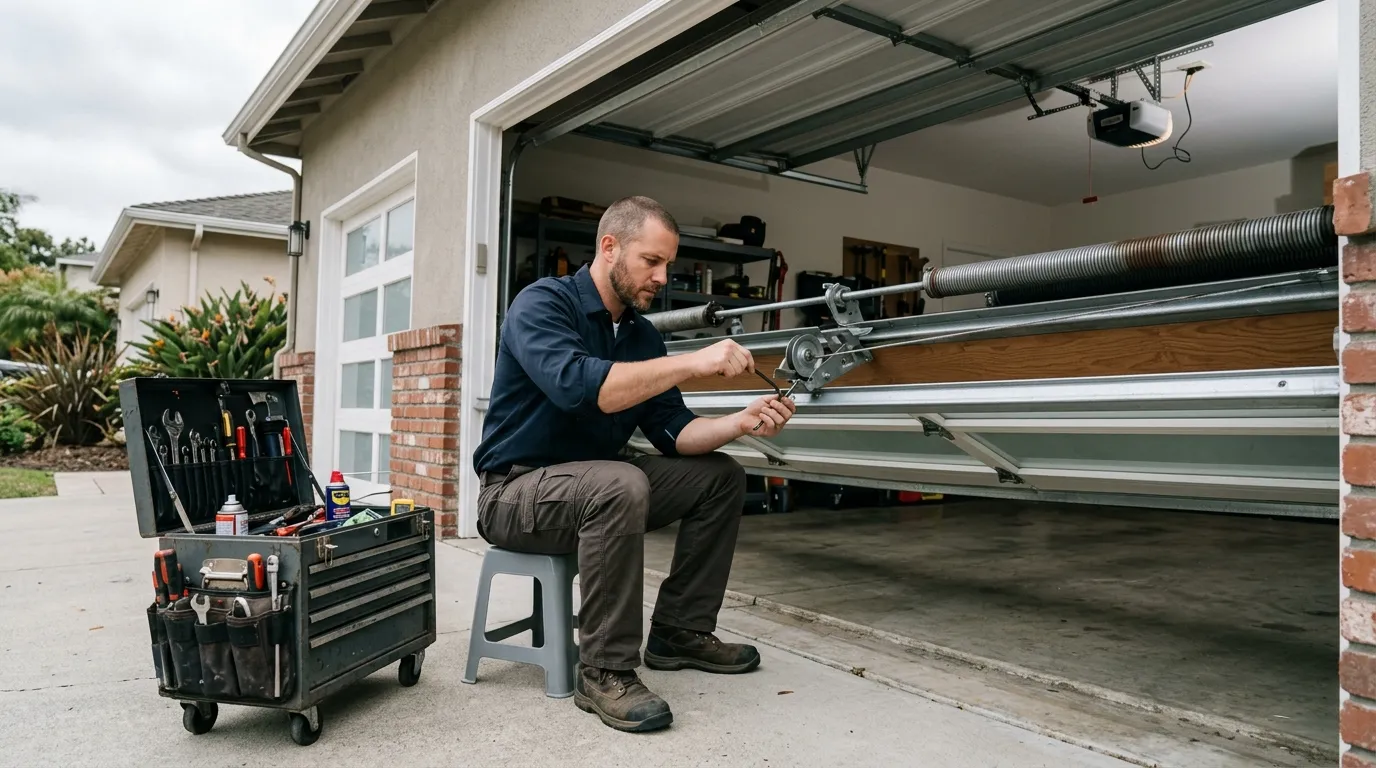
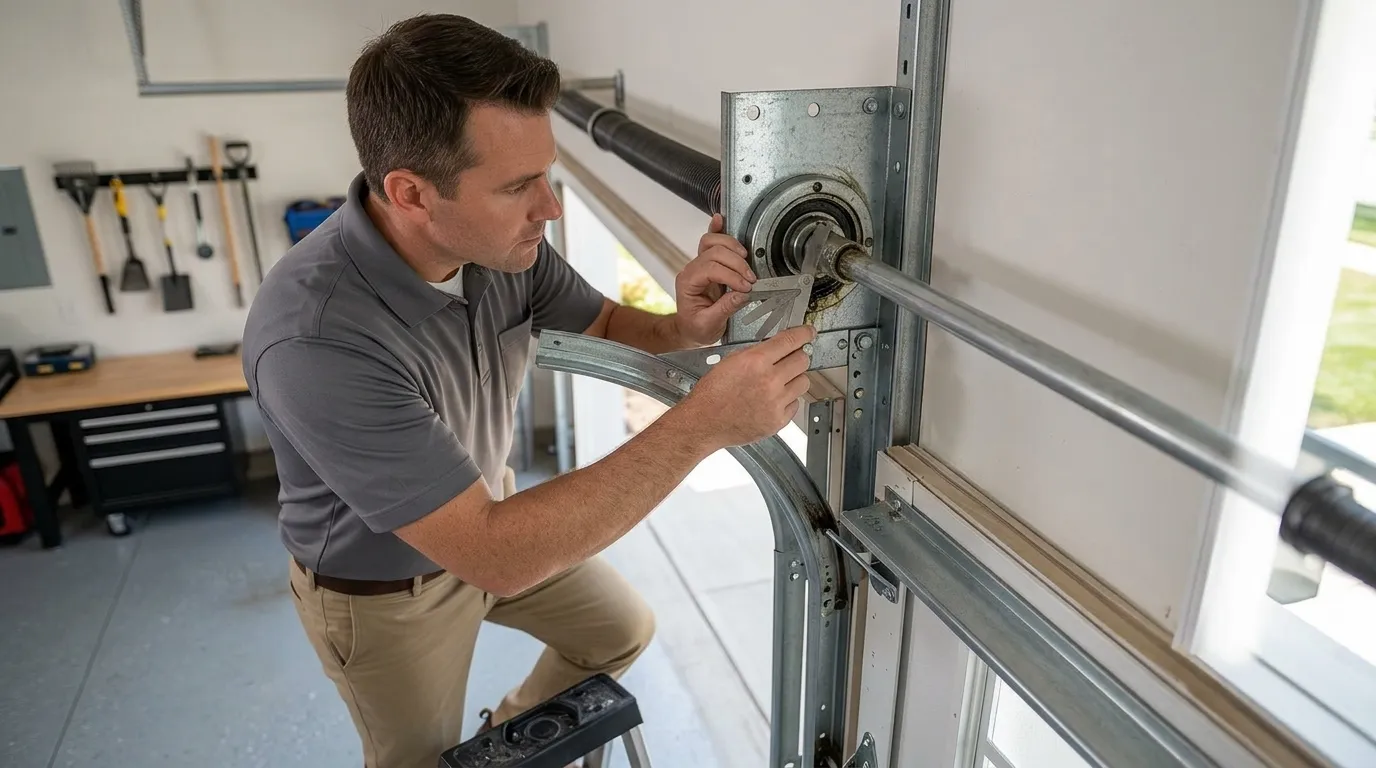
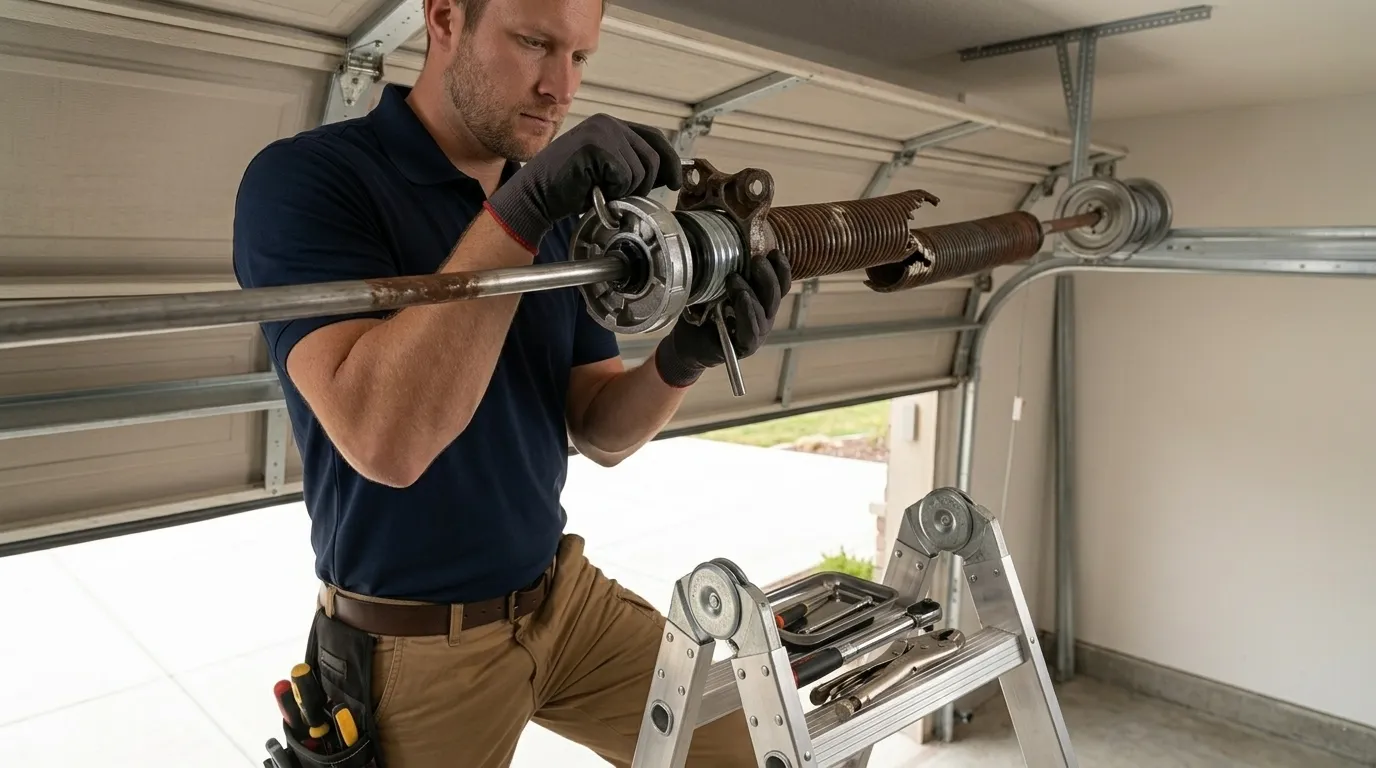
We don't have a set price to quote here without seeing the door - torsion spring jobs, seal replacement, and full insulated-door swaps land in very different cost brackets, and giving you one number for all of them would be a guess dressed up as a fact. What we can tell you is that on houses from Auburn's older build range, the job usually starts with an honest look at whether the track and jamb are still square, since a door built before insulation rules often sits in an opening that's shifted slightly over the decades. If the frame's still true, a seal and weatherstrip job is the cheaper fix. If the panel's rusted through or the frame's out of square, that's when full replacement actually makes sense, and we'll say so rather than sell you a patch that won't hold.