What Is Going On
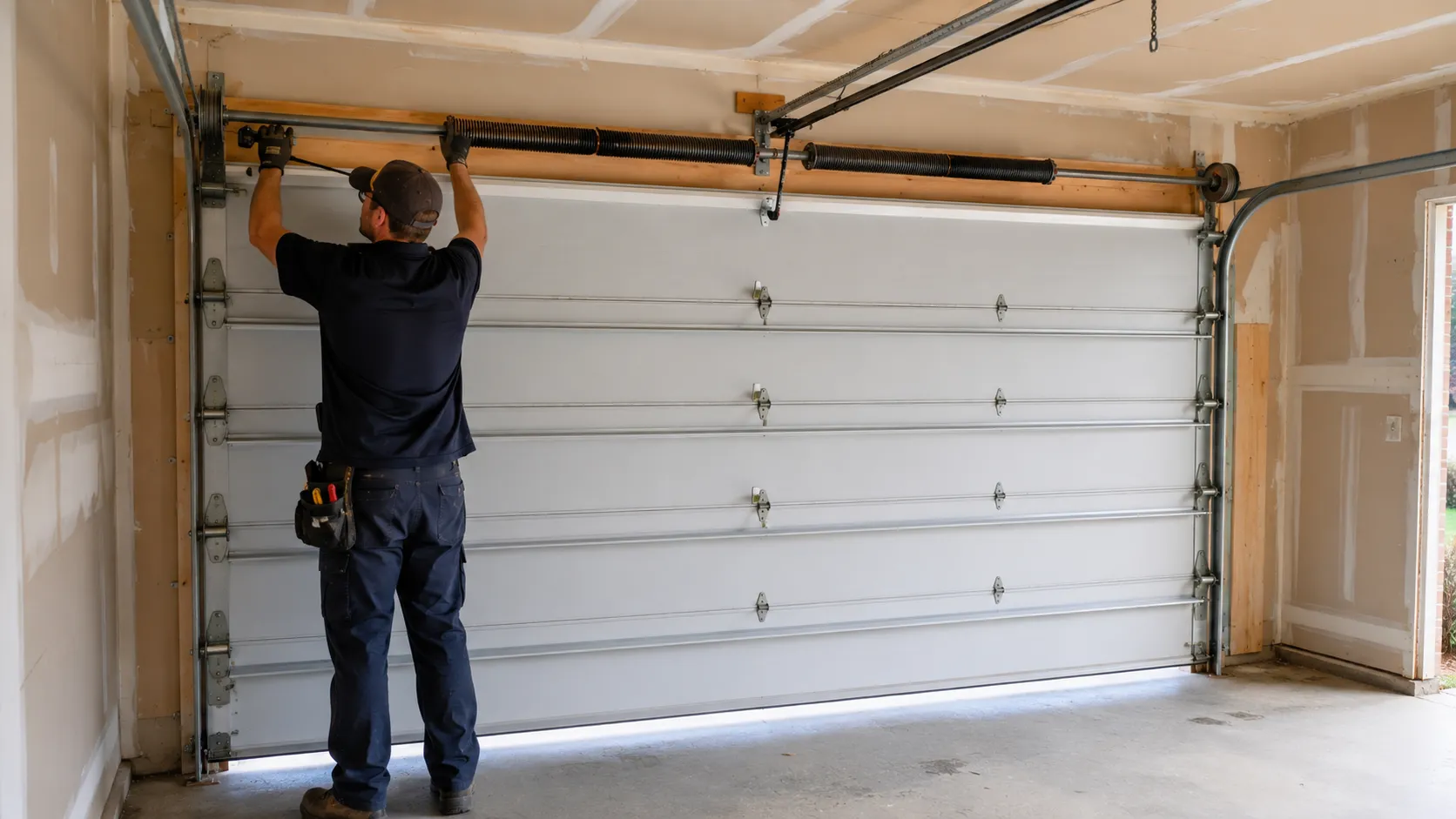
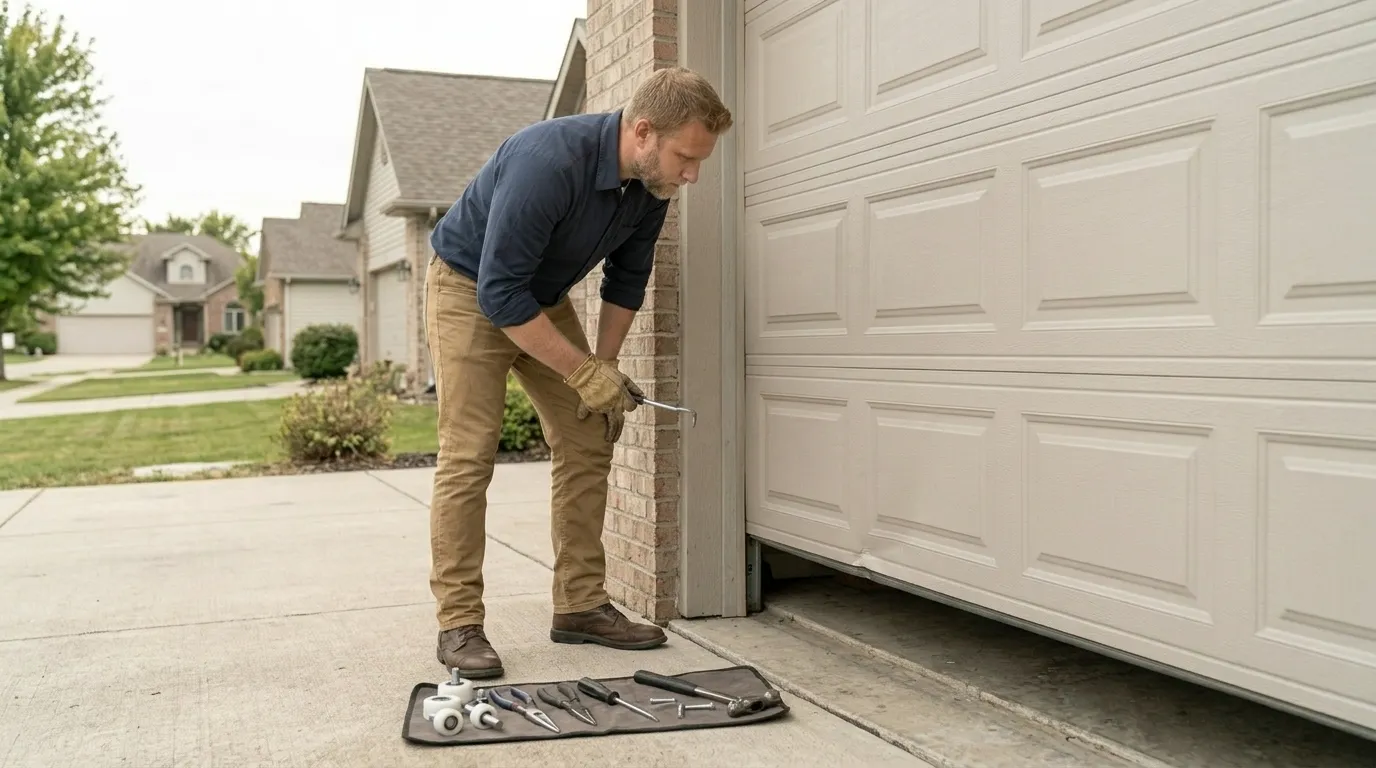
Most of the houses we get called to sit on stock built between 1938 and 2003, with the bulk going up in the 1980s and 90s across the 47 named areas that make up this part of the valley. That range matters because a door bought in 1985 was sized to openings that stock doors today don't always match without trim work. Steel gauges got thinner through the 90s to cut cost, then thicker again as insulation codes changed, so a door that looks fine from the driveway can be running a spring rated for a panel weight nobody makes anymore. When a homeowner tells us the door "just stopped working," it's usually one of two things: a torsion spring that was sized for 1980s steel and finally gave out, or an opener bracket mounted to framing that was never meant to carry a heavier retrofit panel. Buying a replacement door here isn't just picking a color and R-value off a brochure. It means matching the opening, the header framing, and the track drop to what's actually behind the drywall in a house that's been standing for thirty to eighty years. We measure before we quote, because guessing on an opening this age costs more than the door.
What Local Conditions Do
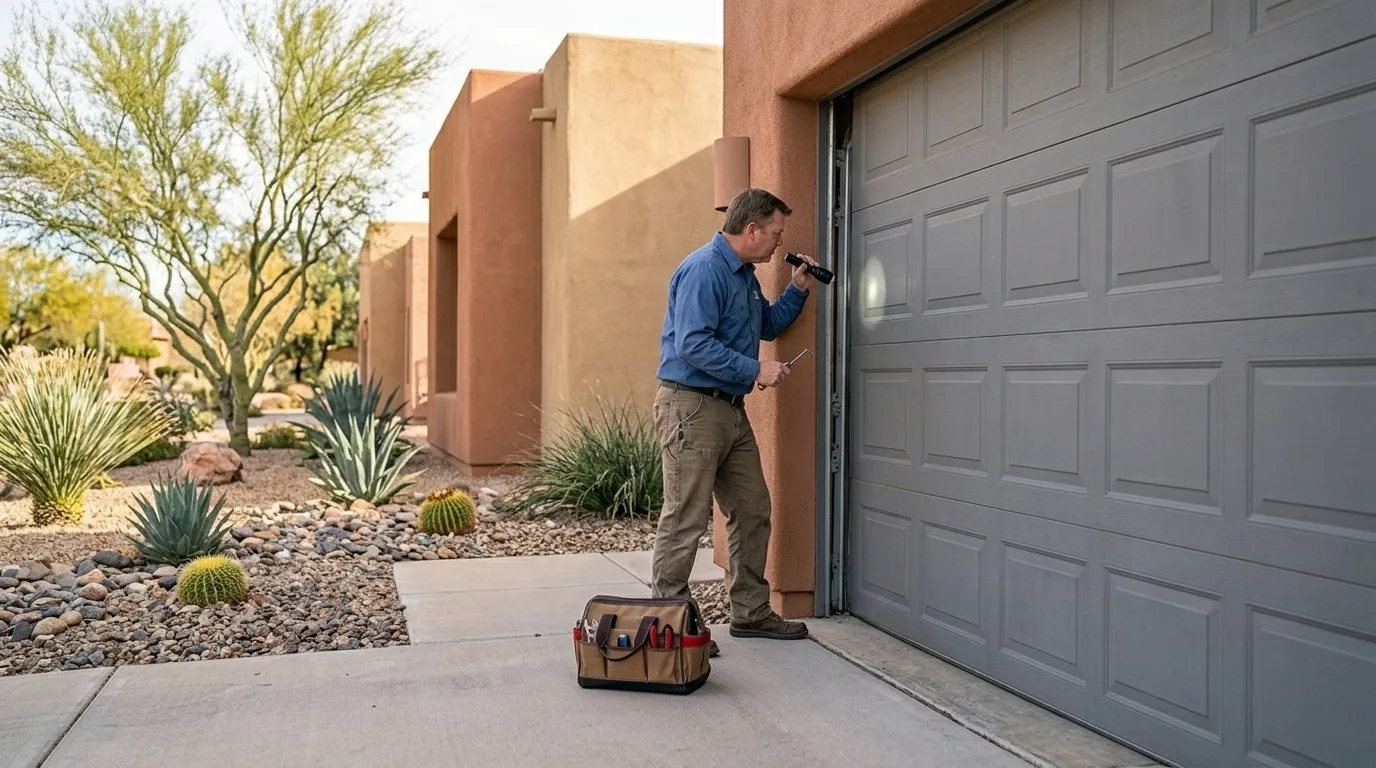
This area sits in a cold, moderate climate band, which means the door lives through freeze-thaw cycles on the track and rollers every winter, not one-time extreme cold like you'd get further inland. That cycling is what actually wears hardware down here: moisture gets into the roller bearings, freezes overnight, and loosens the fit by spring. On a door that's already twenty or thirty years old, that's often the difference between a smooth roll and a track that binds every time it drops below freezing. It's also why we see more cable and roller failures than spring failures on the oldest stock in this area - the metal fatigues from repeated damp-cold cycling rather than snapping under load. If you're replacing a door rather than repairing it, this is worth asking about: not every stock door on the shelf comes with sealed bearings rated for that cycling, and the cheaper models often don't.
The Cost of This Job
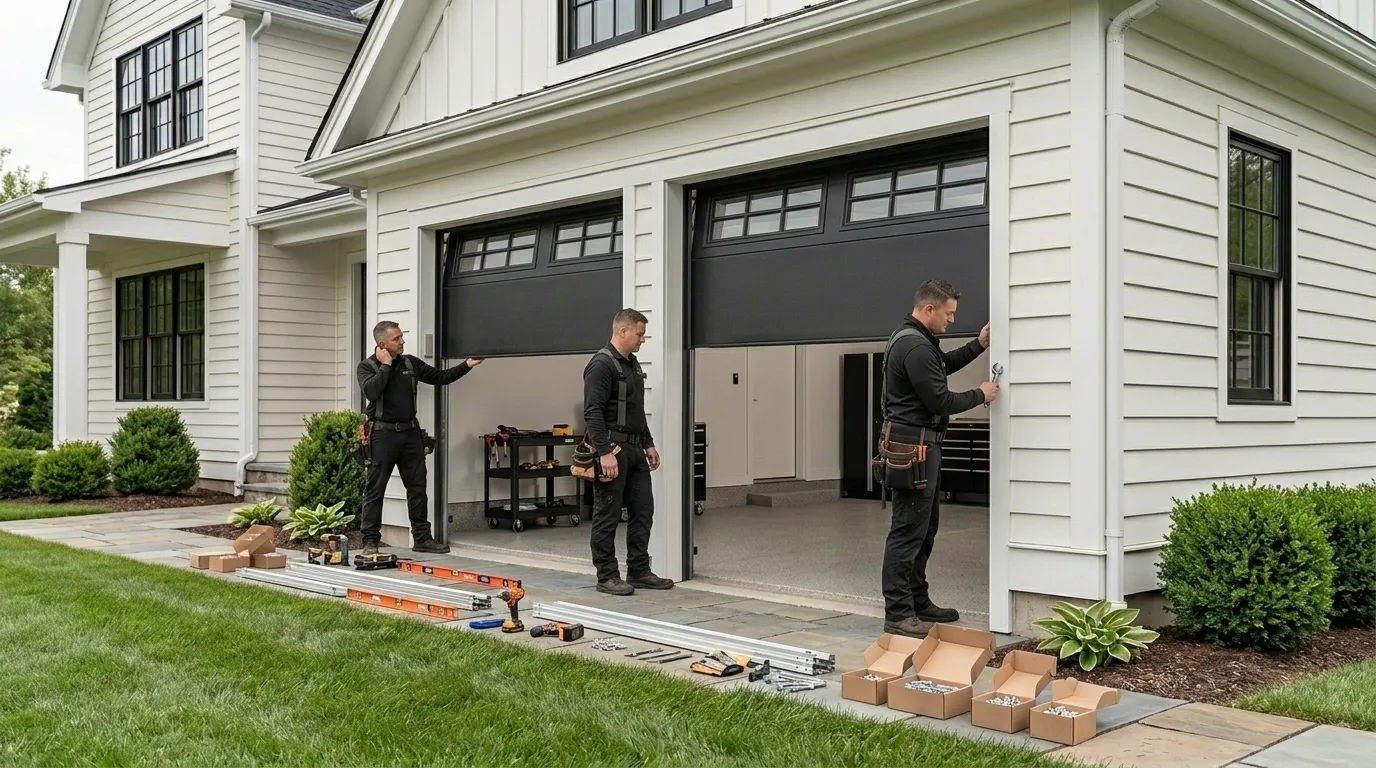
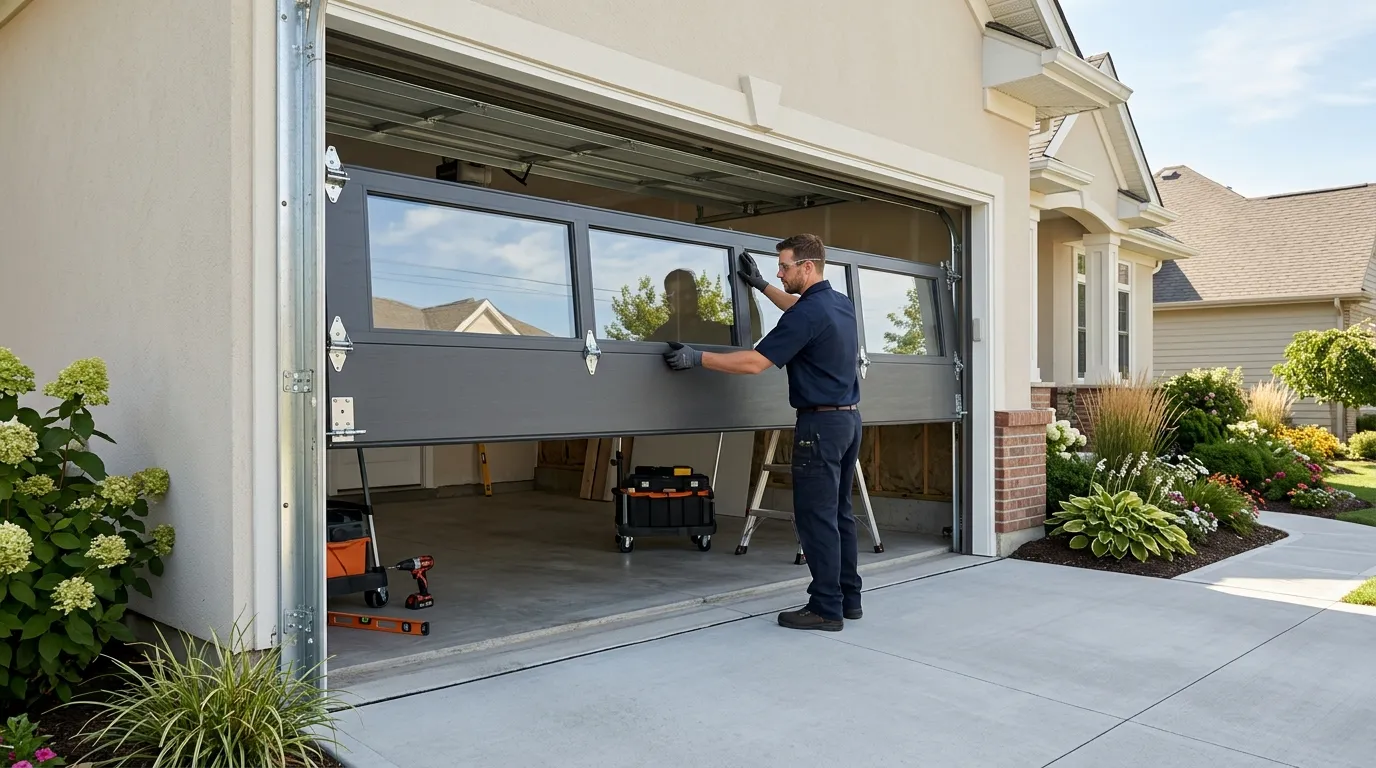
We don't quote a number without seeing the door and the opening, but a few things about this area shape what a job costs. Median household income across the service area runs around $109,235, and most of the roughly 147,257 owner-occupied houses here were built in an era - 1938 to 2003 - where opening sizes and header heights vary more than in a newer subdivision built to one plan. That variation is the biggest cost driver we see: a standard 16-by-7 double door install runs straightforward, but a house with a nonstandard 1980s opening or low headroom clearance can need extra track hardware or a low-headroom kit, and that's a different line item. Insulation choice matters too, given the cold band this area sits in - an insulated steel door costs more up front but holds up better against the freeze-thaw cycling that chews up bearings and seals on uninsulated stock doors. We'll walk the opening, tell you what it actually needs, and price from there rather than a phone-quote guess.