How That Shows Up in the Door
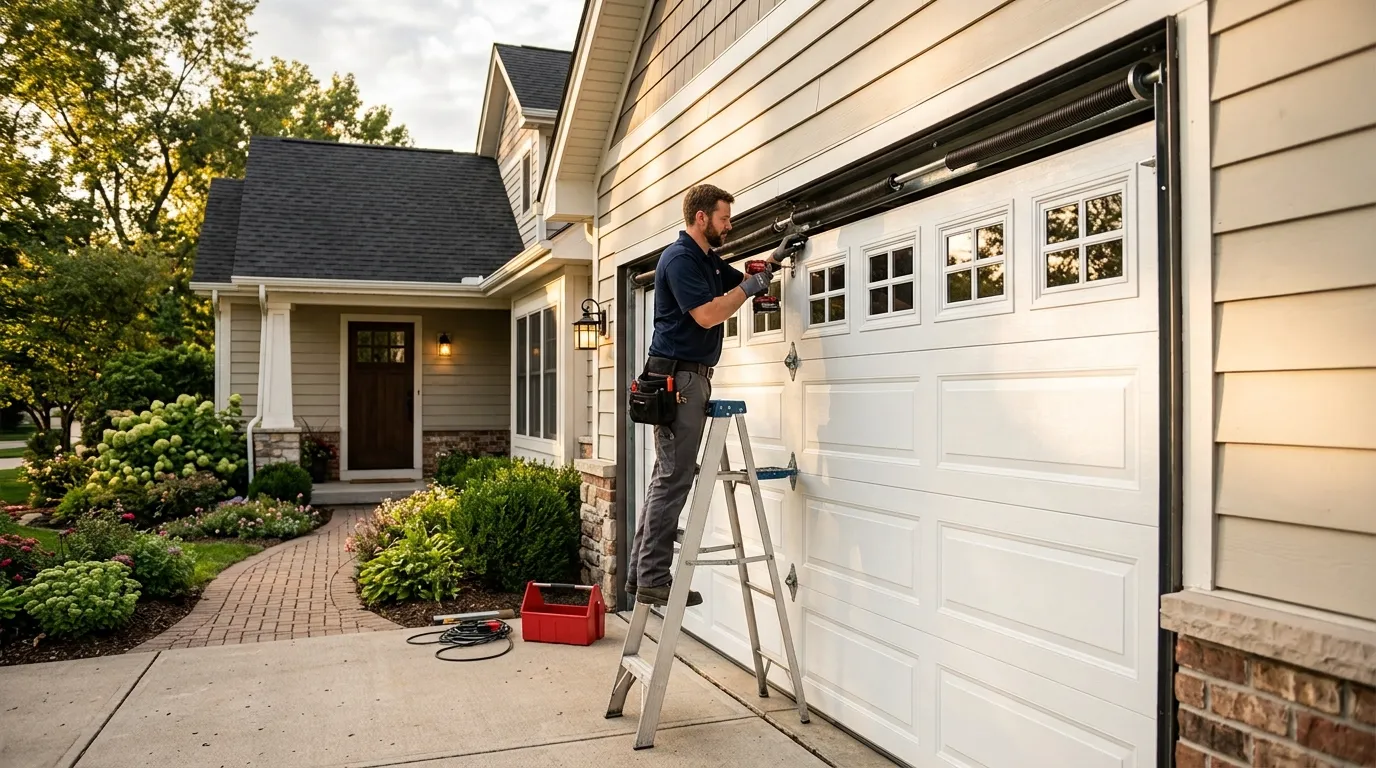
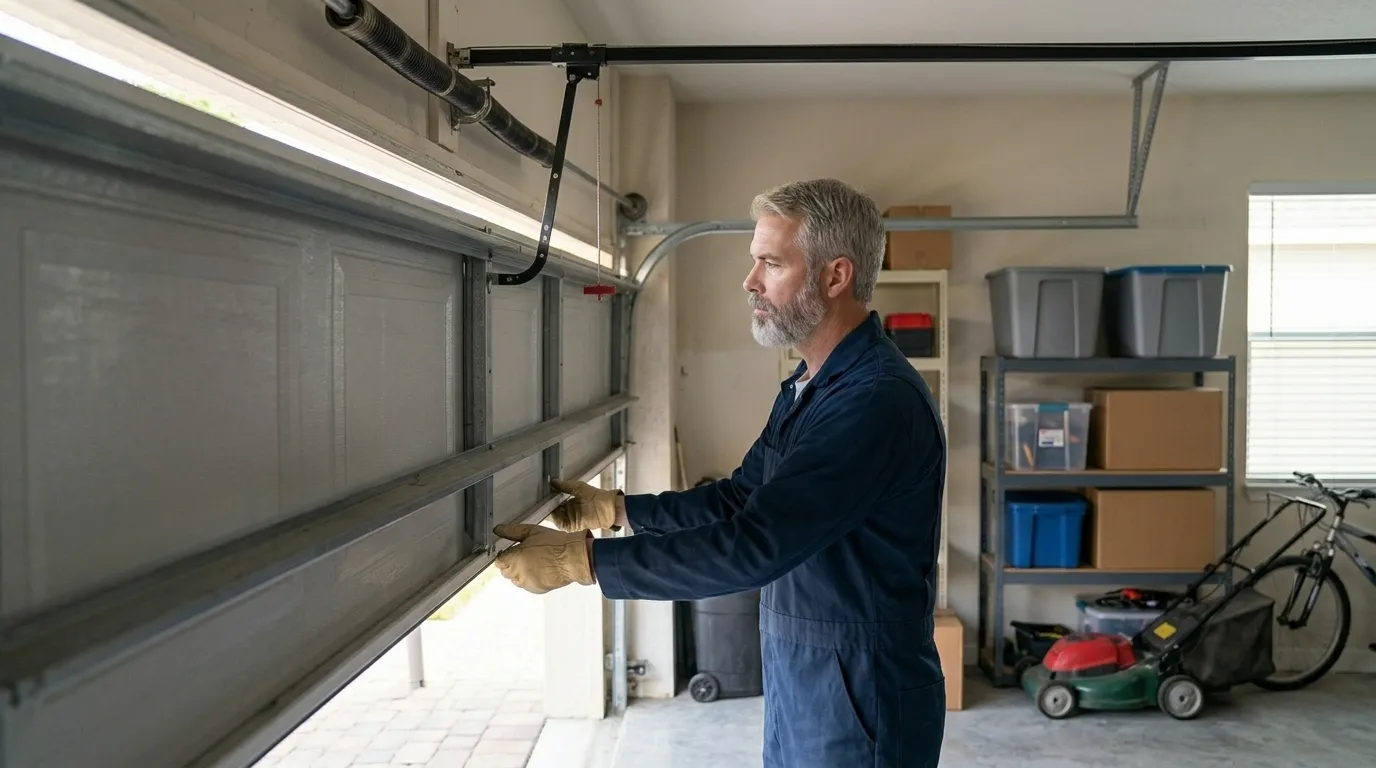
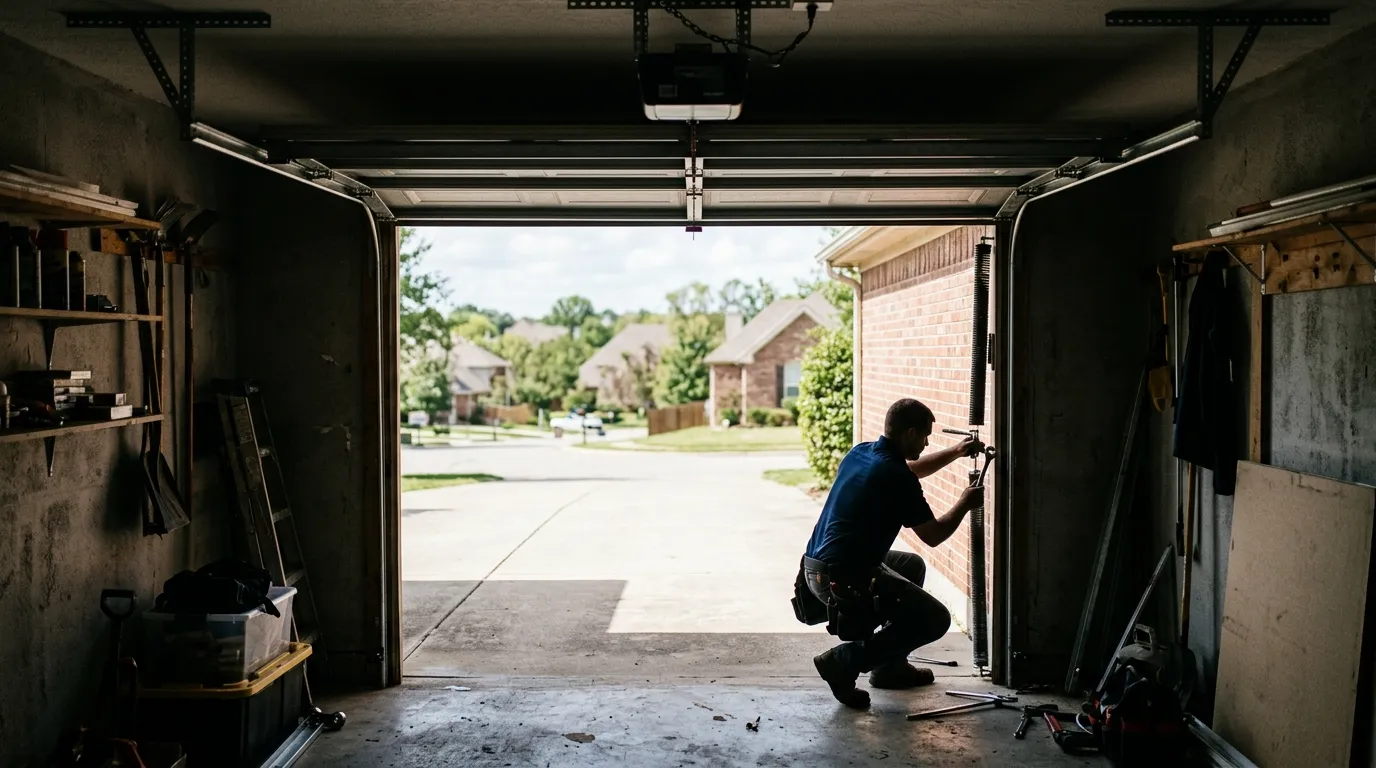
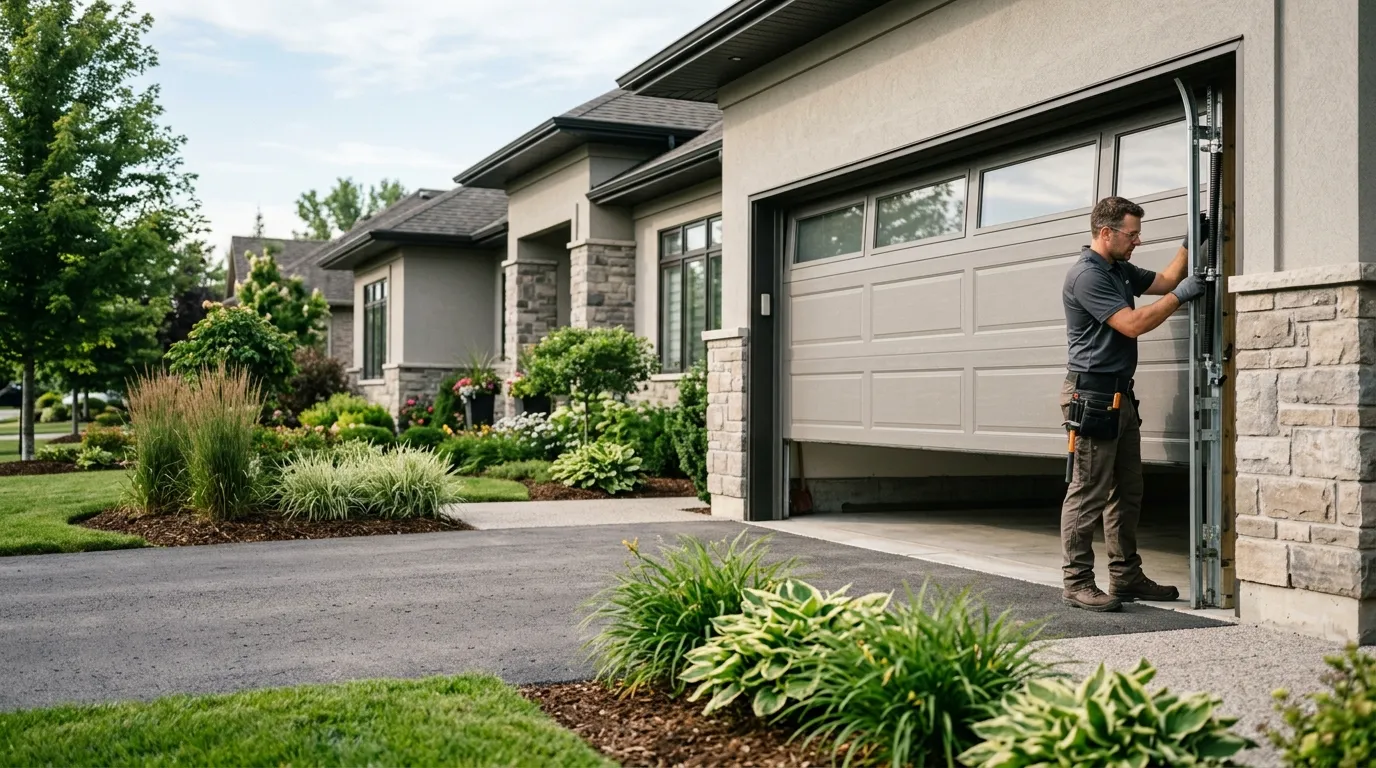
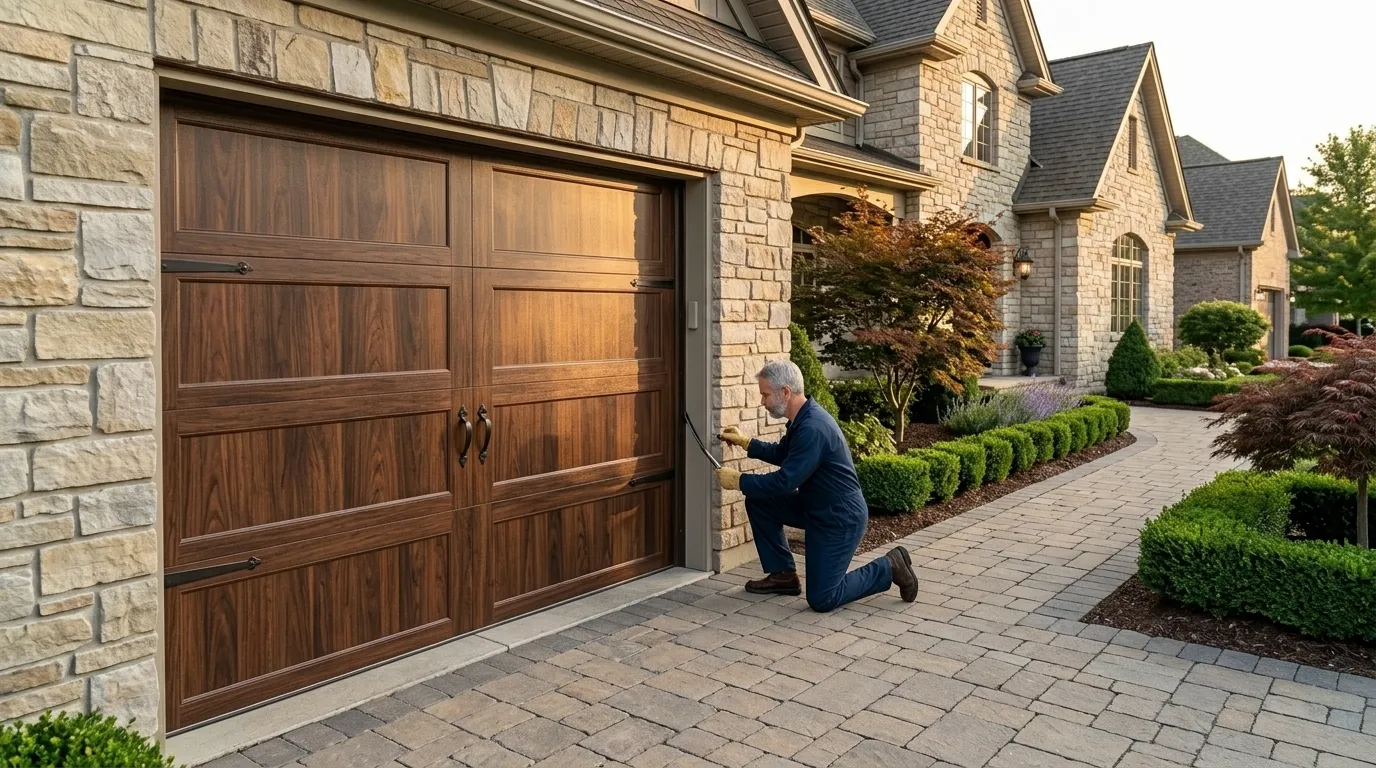
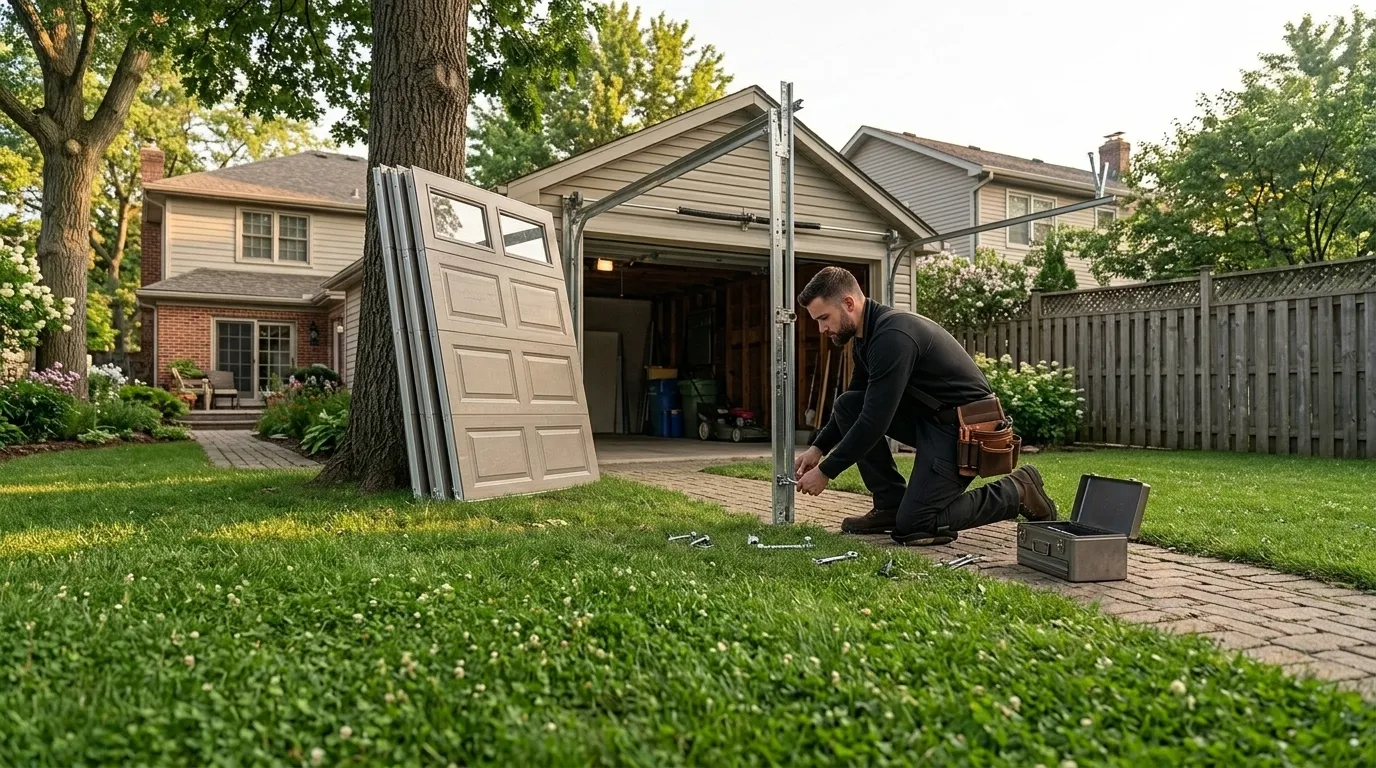
Most of the houses out here went up around 1974, a good decade ahead of the median build year across the rest of our coverage area. That gap matters more than it sounds like. A door installed in the early-to-mid 1970s usually came with a steel torsion spring sized to lift a heavier, thinner-panel door than what gets manufactured now, and the hardware that holds it - end bearing plates, stationary cones, sometimes the drum diameter - doesn't always match what's common on the trucks that service 1980s and 90s stock, which is most of the rest of the service area. That means a call out here is more likely to turn into a parts-order situation than a same-visit fix, especially on an original door that's never been swapped out. We're honest about that: if your spring or drum is an older size, we may need to order it rather than pull it off the truck, and that adds a day or two.
Openers have usually been replaced at least once by now, so that part of the job tends to look like anywhere else. It's the door itself - panel gauge, track width, the way the spring's wound - where the age shows.
This Area's Housing
This part of the service area has 4,423 households, a smaller pocket compared to the roughly 298,442 households spread across the wider coverage territory. Income here runs higher too, at a median of $115,750 against $109,235 for the broader area. That combination - fewer households, higher income, older median build year - tends to mean more owners who've kept an original door or opener working past when someone in a newer subdivision would have already replaced it, either out of preference for the look or because nobody's gotten around to it. We see both: doors that have had zero maintenance since installation, and doors that were replaced once in the 90s and are now due again.
The housing stock across the full service area spans 1938 to 2003, with a median around 1983. This area sits well on the older side of that range, which is worth knowing before you call around - a shop quoting parts prices based on newer stock may be quoting the wrong hardware for what's actually on your garage.
The Drive Over
Fourteen miles from Auburn is the distance we're working with to get out to this area, and that's built into how we schedule the day rather than something we pretend isn't there. We don't run a depot on this side, so what we can promise is a truck that shows up with the common torsion spring sizes and opener parts covered, and a straight answer if what your door needs isn't one of those.
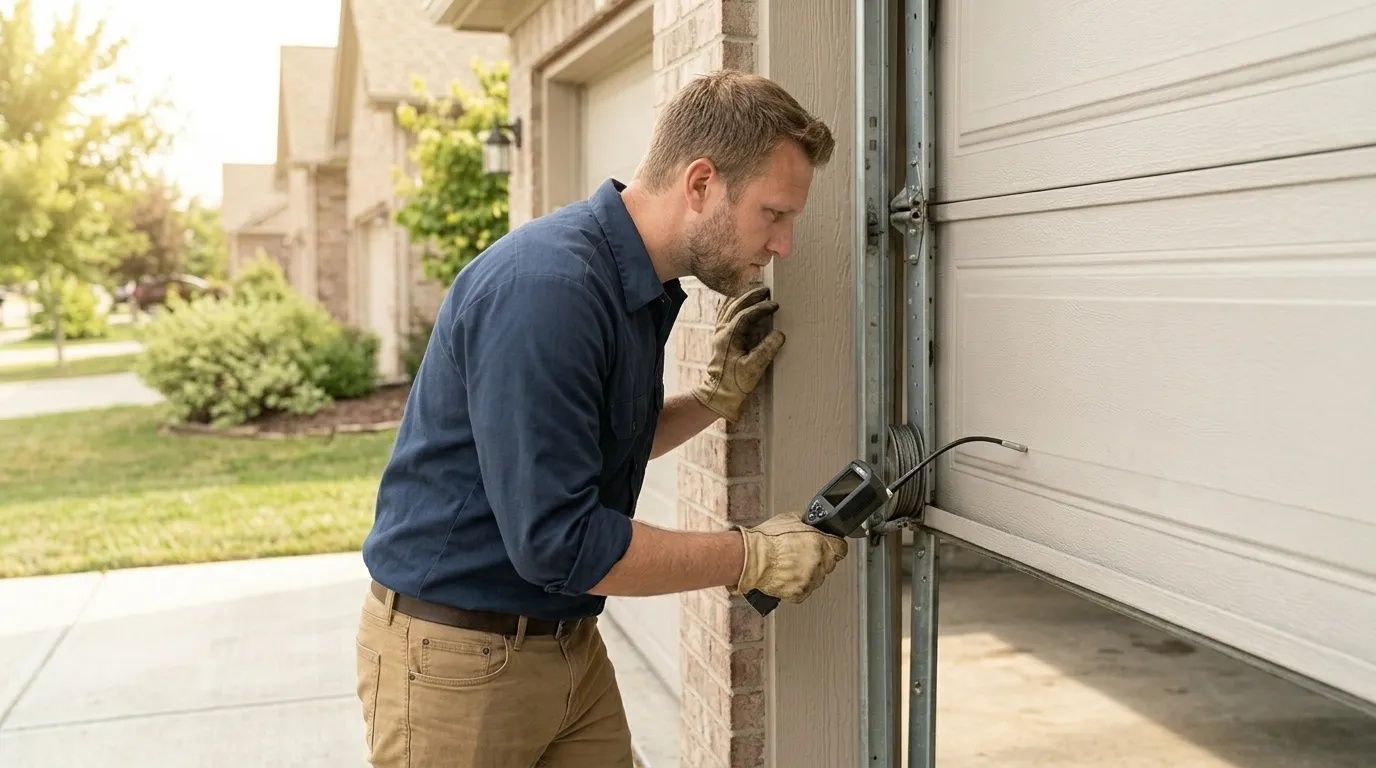
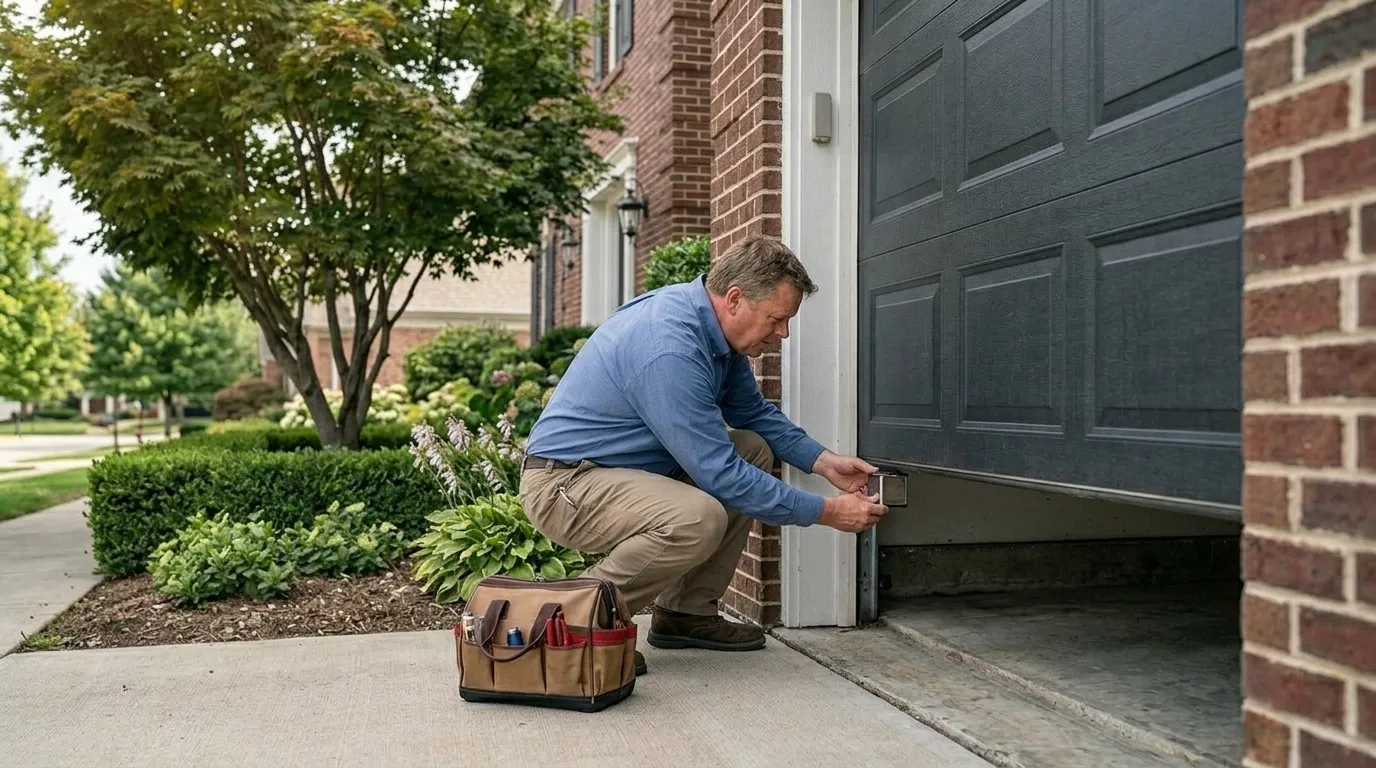
If you're calling about a door that's been making noise or dropping unevenly, that's worth flagging when you call - a 1970s-era door with an original spring is a different job than a garage that's had its hardware updated, and knowing which one you've got before we drive out saves everyone time.