What the Fix Involves
Lake Morton-Berrydale sits about five miles out from our Auburn shop, which is close enough that a truck can carry both the opener and the bracket kit for your specific door on the same run, rather than making two trips. That five miles matters less for the drive itself and more for what it means on a job: if the mounting bracket that came with the new opener doesn't match what's already bolted to your joist, we've got the truck stock to adapt on site instead of turning the job into a second appointment.
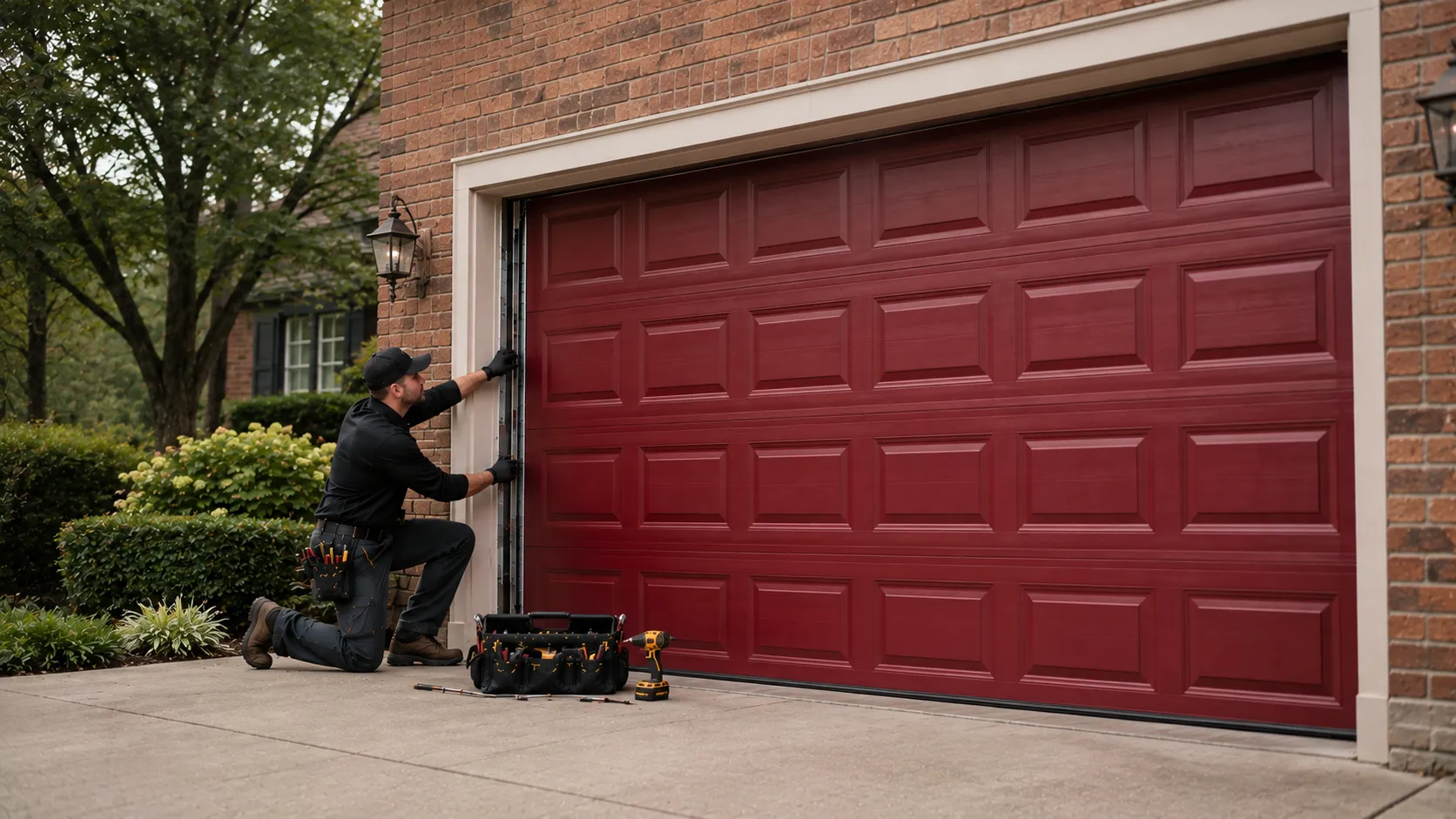
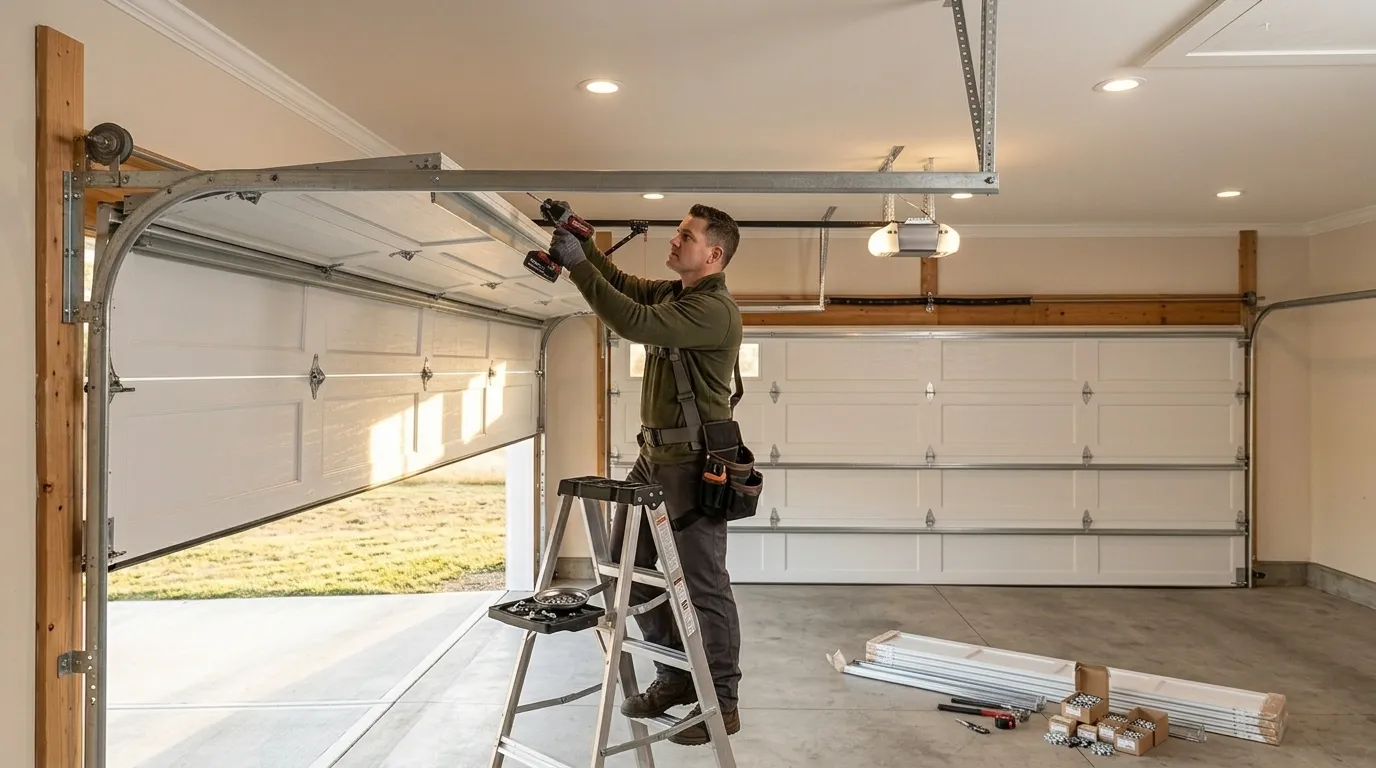
Most houses in this pocket of the service area went up in the early-to-mid 1980s, which is right in the middle of the wider 1938-2003 range we see across the territory. That era usually means a single-panel or an early sectional door on a chain-drive opener that's been swapped once already, if it's been swapped at all. The install itself is straightforward: pull the old unit, check the header for rot or old lag bolts that won't hold a new mount, run power if the outlet's died or was never up to code, and set the travel limits and force settings so the door doesn't slam the floor or stall halfway.
We don't touch the door panel itself in this job. If the springs or the track are also shot, that's a separate repair, not part of an opener swap.
What You Are Seeing
The usual signs by the time someone calls: the opener runs but the door doesn't move, the motor hums and stops, or the remote works from the driveway but not from inside the car. On houses from this build era, a common culprit is a worn drive gear inside an old chain-drive unit - the motor spins but nothing pulls the chain. Some owners also notice the opener light flickers even when nothing's wrong with the door, which usually points to a failing circuit board rather than the door hardware.
Grinding or a delayed start when you hit the button is another one. If the opener hesitates for a second or two before it engages, that's often the capacitor giving out, not the motor itself, but by the time a capacitor goes, the rest of the unit usually isn't far behind, so replacement tends to make more sense than another part swap.
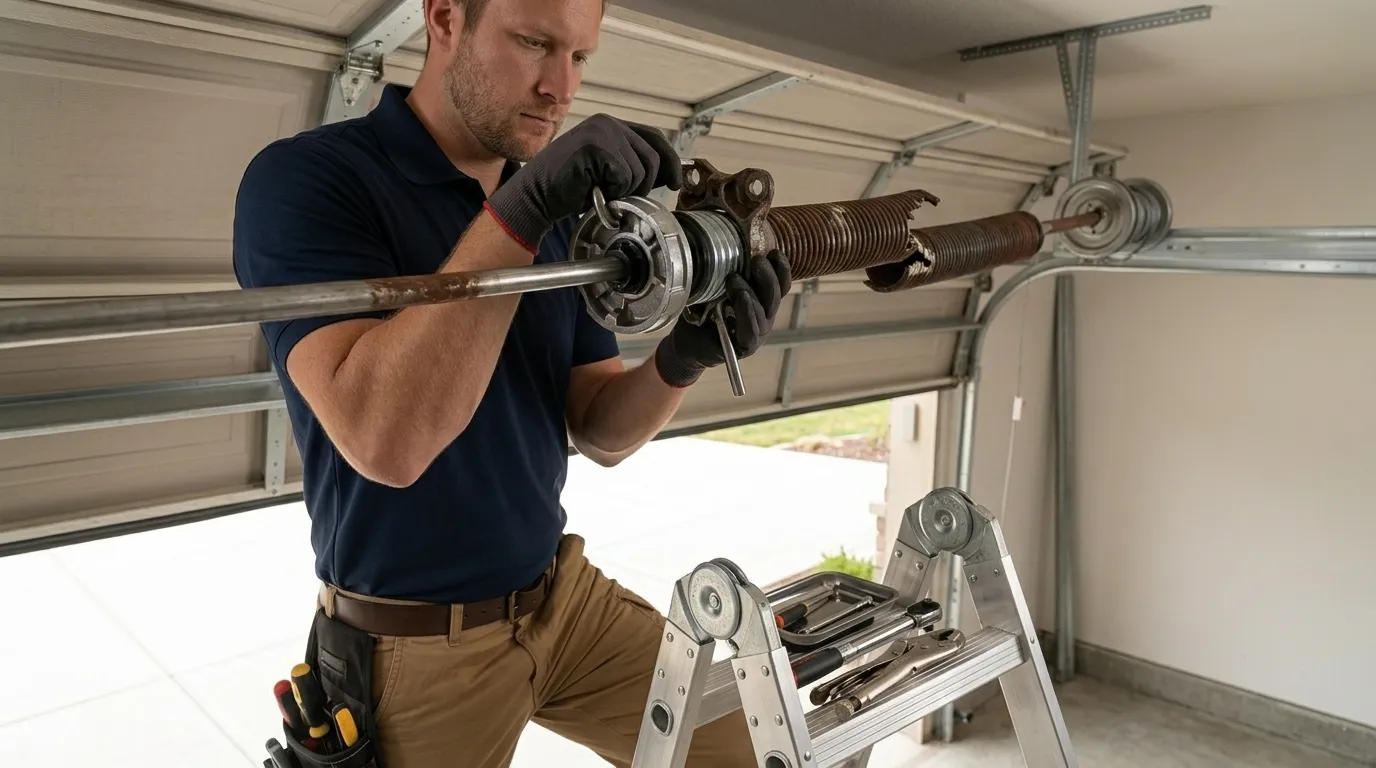
One thing that's not an opener problem no matter how it looks: a door that's heavy to lift by hand, or drops fast when disconnected from the opener manually. That's a spring, not a motor, and swapping the opener won't fix it.
Can You Do This Yourself
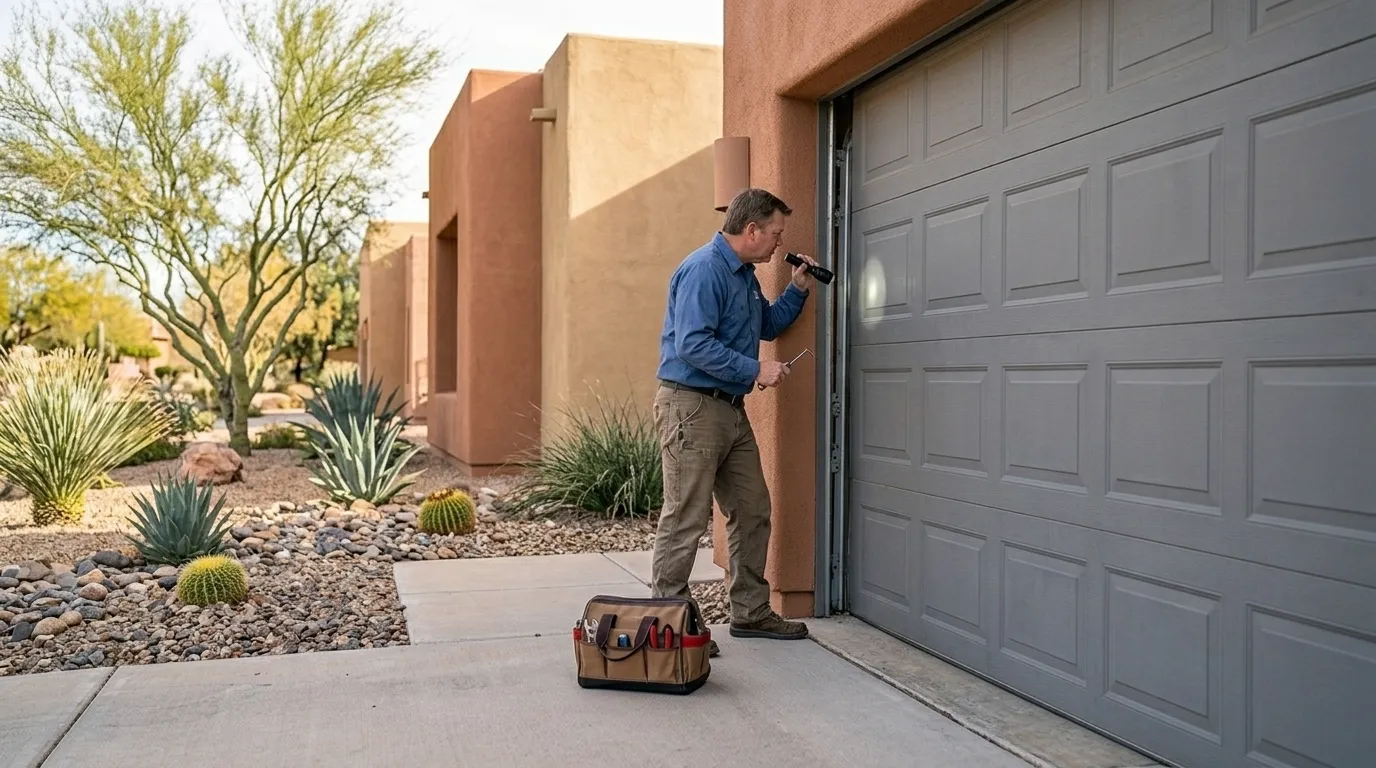
If you're comfortable on a ladder and know how to safely disconnect an opener before pulling the old unit, the install part isn't out of reach - a lot of the work is bracket alignment and running a new travel cycle. Where people get hurt is with the header mount: if the wood's soft or the old bolts stripped the hole out over forty years, a new opener bolted into a bad header is a door that comes loose under its own weight later, sometimes without warning.
Wiring is the other spot to be careful. If your outlet's on an old circuit that was never grounded to current code, that's not a garage door problem, that's an electrical one, and it's outside what an opener install should try to solve on the fly.
Our honest limitation: we don't do emergency same-day electrical work, and if your garage doesn't have a working outlet near the opener mount, that's a separate call to an electrician before we can finish the install.