What the Fix Involves
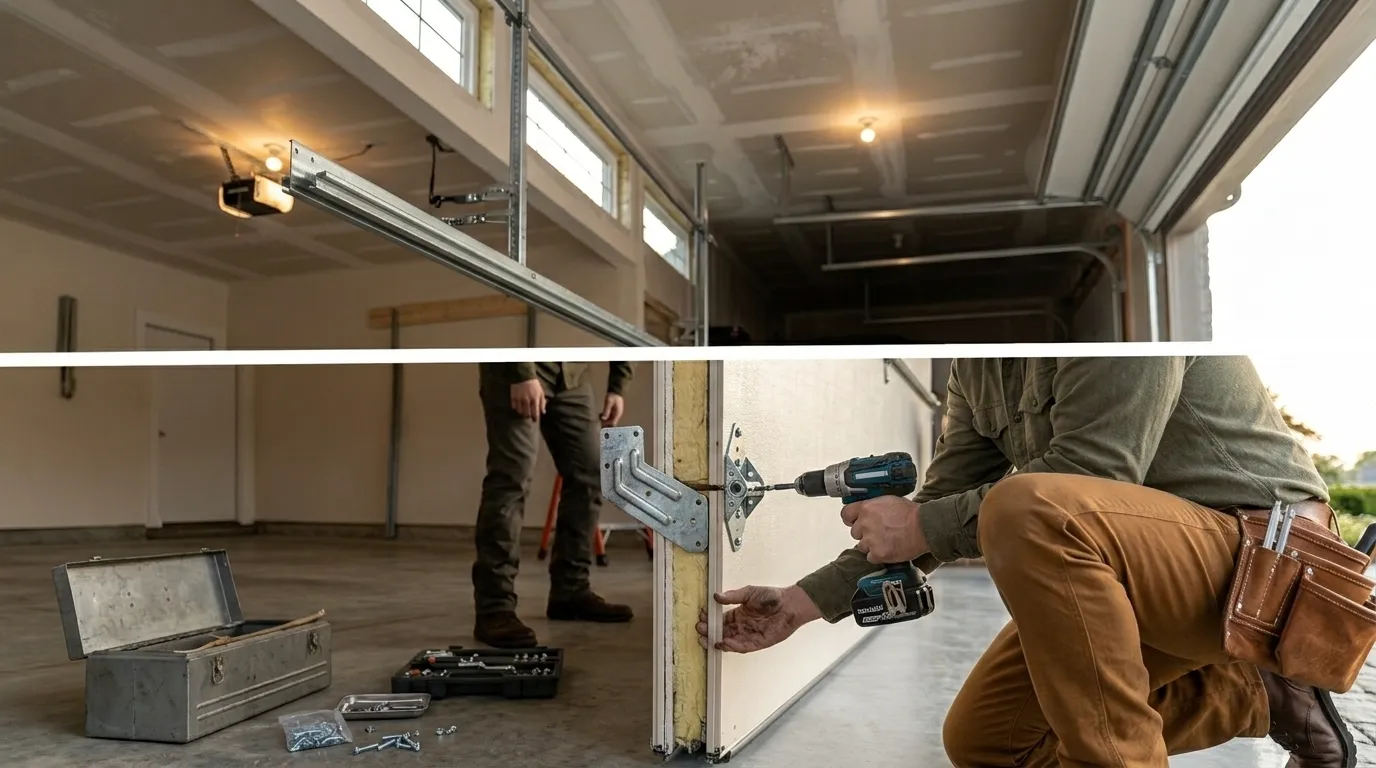
Most houses in this pocket went up around 1983, and on a lot of those garages, nothing above the slab has ever been swapped out. Same torsion spring, same steel tracks, same opener bracket bolted into framing that's now four decades old. A new install here usually starts with pulling all of that rather than just hanging a door on what's there.
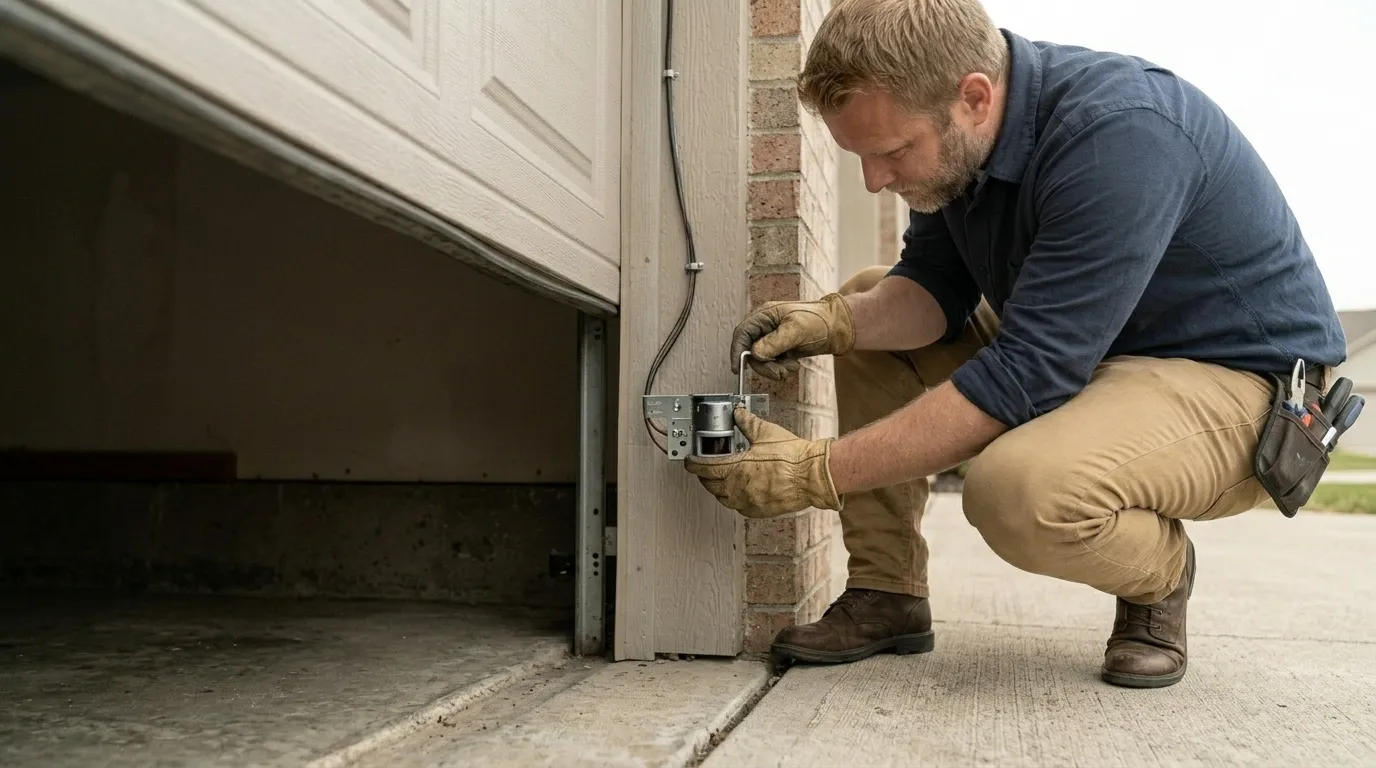
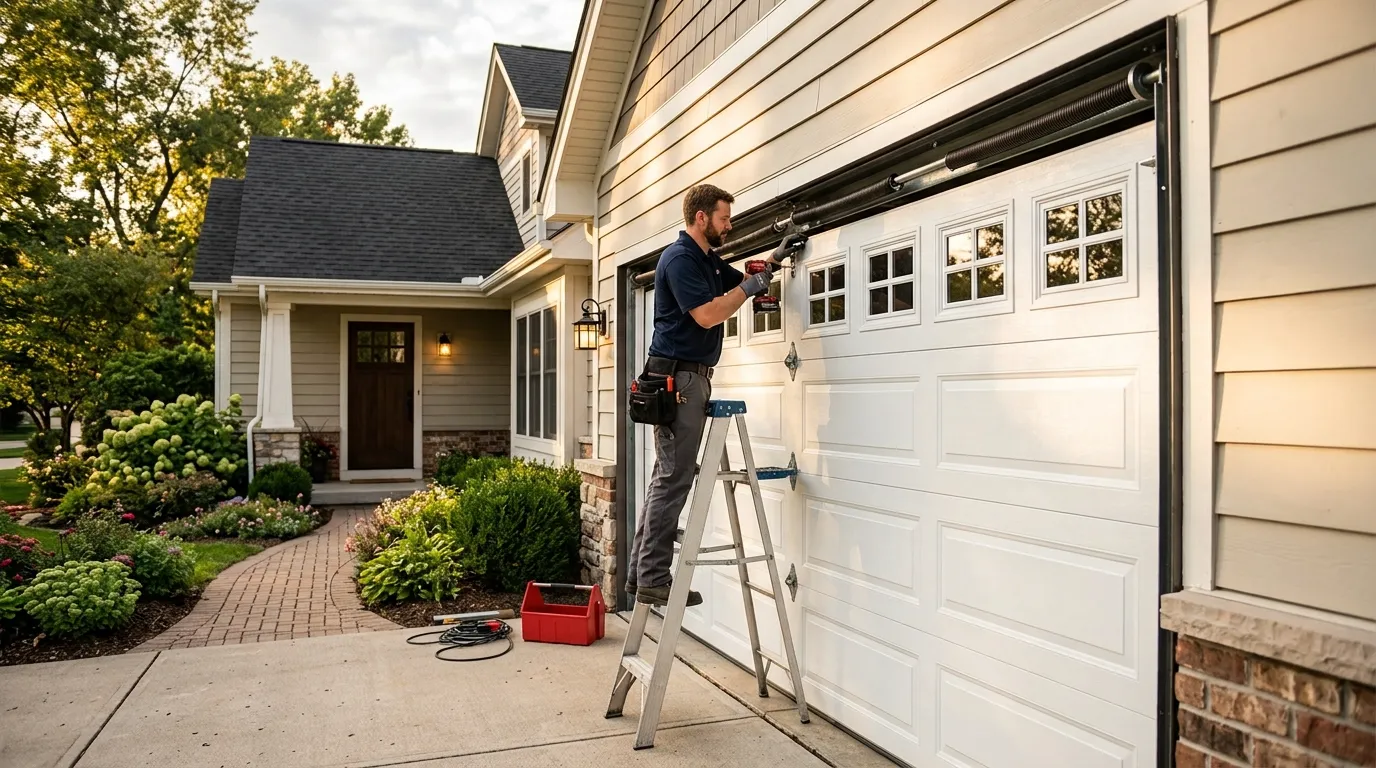
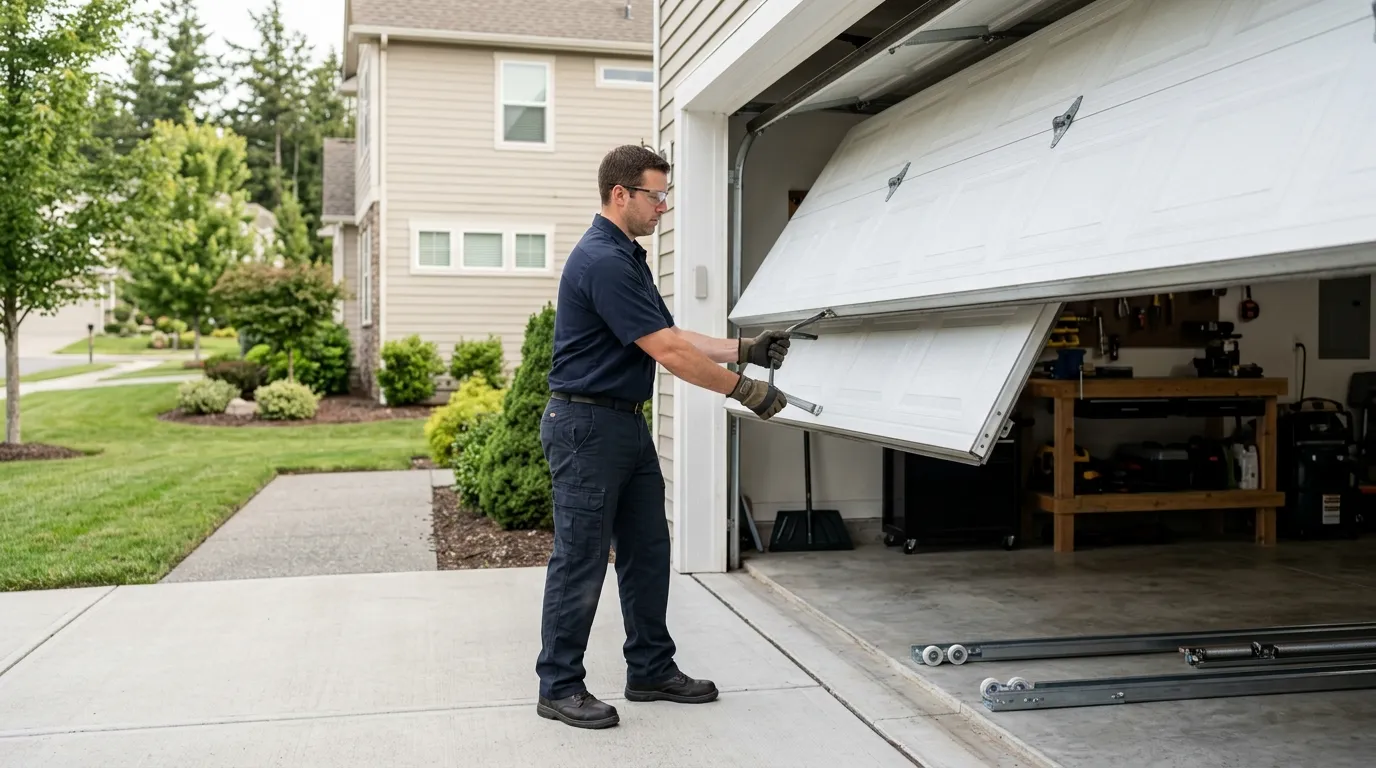
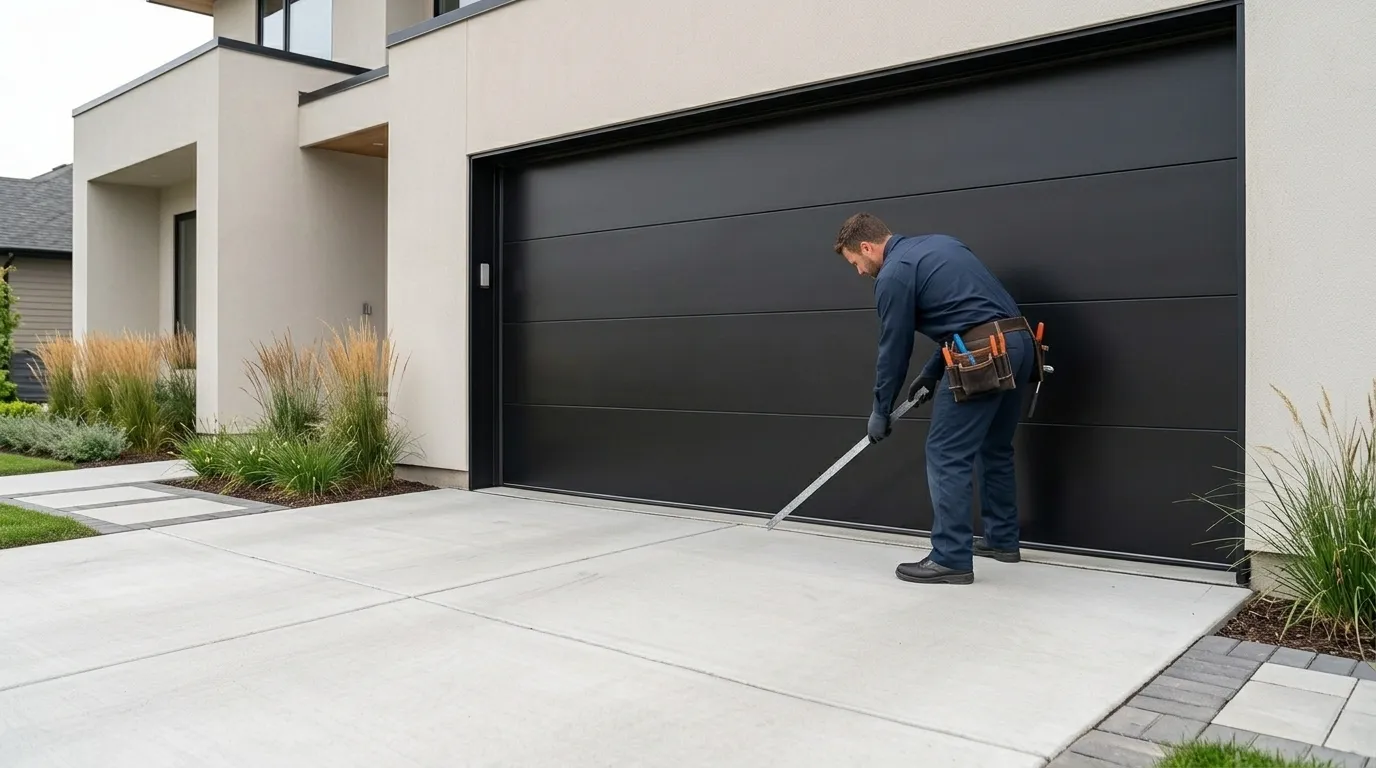
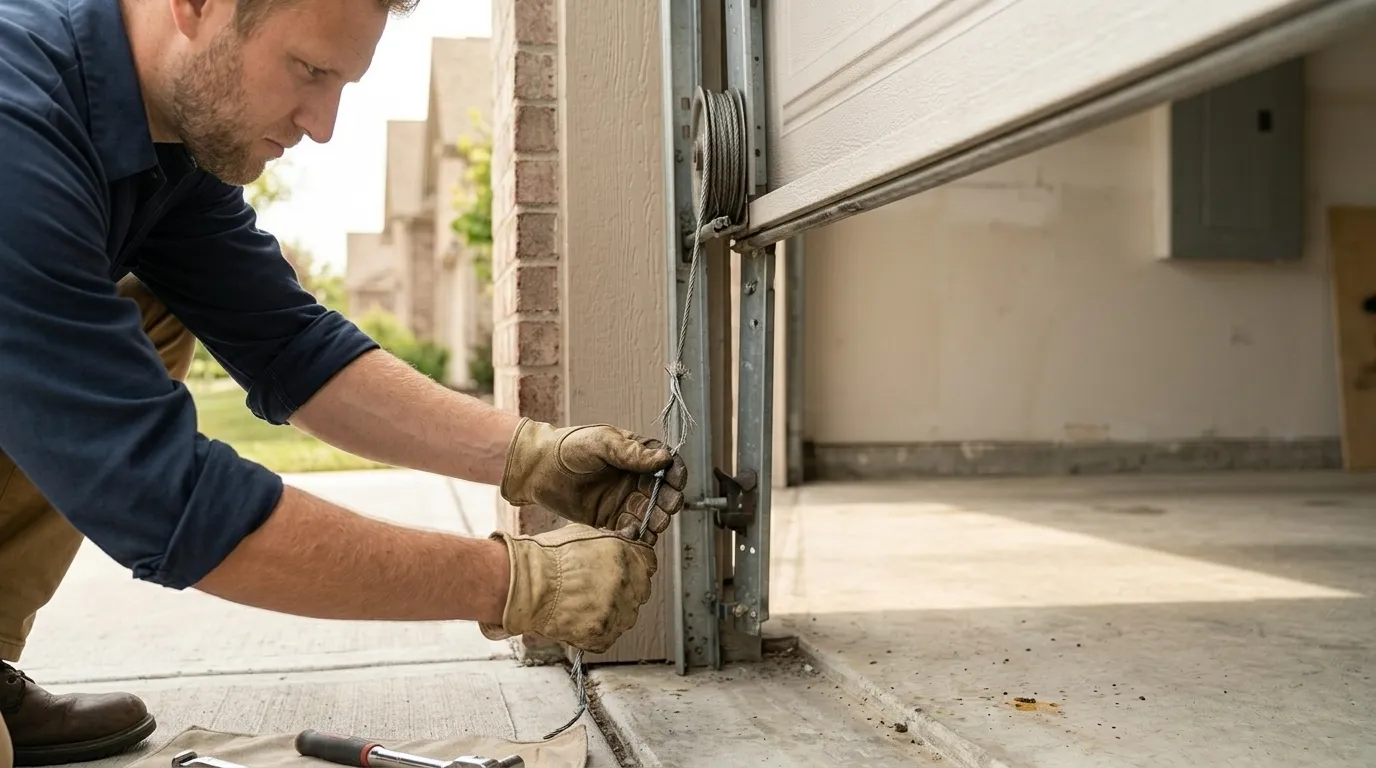
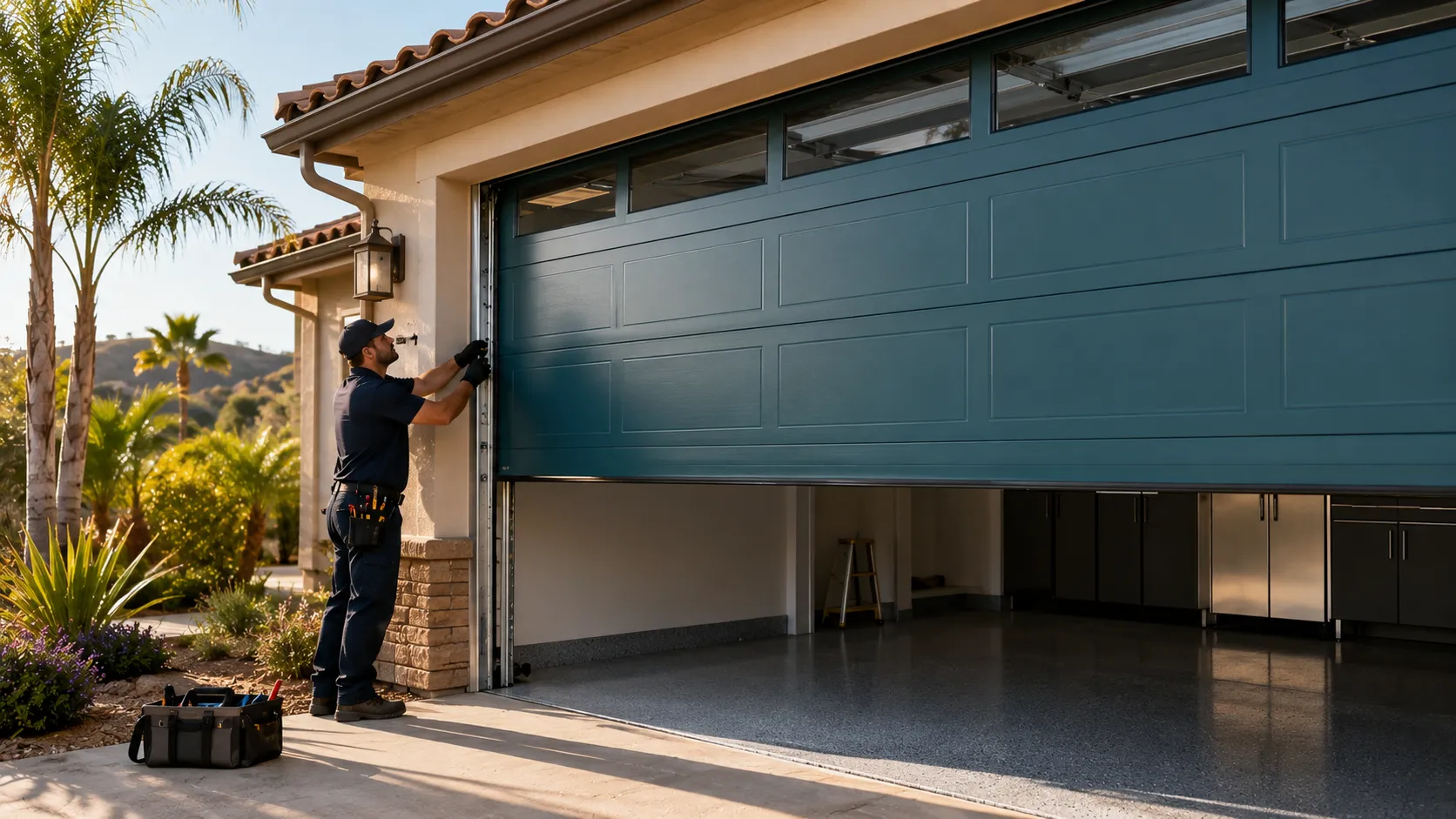
We strip the old track and drums, check the header for rot or sag (common once framing hits this age), and set new jamb brackets before the door itself goes up. If the opener is original, the rail and logic board are almost always the weak point, not the motor housing, so we look at replacing that as part of the same job rather than a separate call later. Insulated steel or a composite panel are the two paths most owners here land on, mostly because of the temperature swing between a heated house and an unheated garage bay.
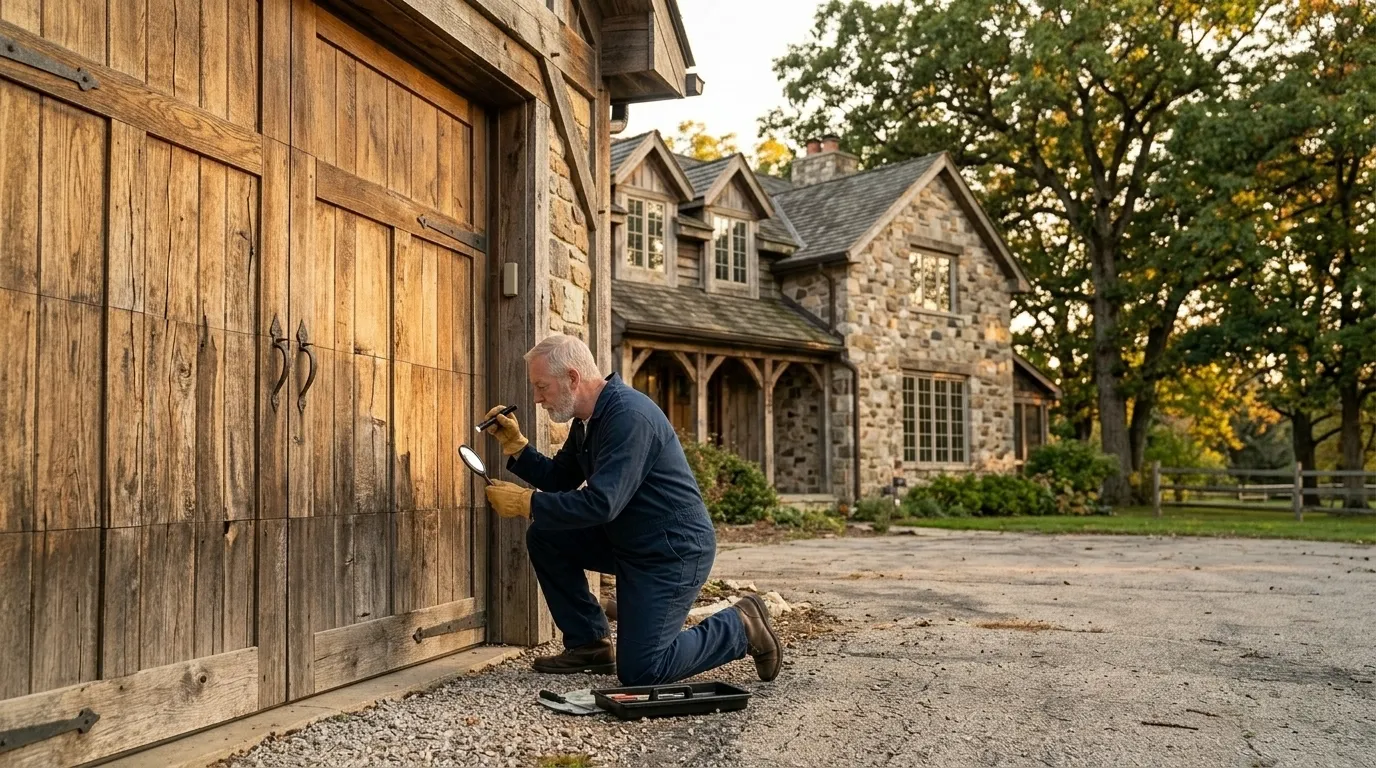
We don't put a new door on rotted framing and call it done. If the jamb needs rebuilding, that's a conversation before install day, not a surprise on the invoice.
What You Are Seeing
On a house built in 1983, the giveaway isn't always a dead spring. It's usually the door sagging slightly at one corner when it's halfway open, or a track that's worked loose from the jamb because the original lag bolts have backed out over the years. Panels from this era are often plain steel with no foam core, so if the garage feels noticeably colder than the rest of the house, that's original construction, not a new problem.
Openers from the same build year are chain-drive and loud, and a lot of them still run on the same remote that came with the house. If yours only opens partway, or reverses without touching anything in its path, that's worn logic hardware, not the motor failing.
Household income in this part of the service area runs $127,074, well above the $109,235 median across the broader Auburn coverage area, and we mention that only because it tends to mean owners here replace before a spring actually breaks and traps the car inside. That's the smarter order of operations if you can manage it.
Can You Do This Yourself
Hanging the door panels themselves isn't the hard part. What gets people on a house this age is the spring - a torsion spring under full tension can put someone in the hospital, and on a build from 1983 that spring has never been touched, which means it's original and its tension is unknown until it's off the drum.
If you're comfortable with the mechanical side, swapping a low-voltage opener logic board or reprogramming a remote is reasonable DIY. Pulling old track, resetting jambs, or handling anything under spring tension isn't, and we'd rather get a call for that piece than have you improvise it.