What Causes It Around Here
Most of the housing stock in this service area went up between 1938 and 2003, with the median build year landing around 1983. That matters for cable failure because a lot of those garages still run the lift cable and drum setup that was standard for that era - thinner gauge steel cable than what's used today, riding on a drum that was never built with today's heavier insulated doors in mind. Add in the cold moderate climate this part of the state sits in, and you get a cable that spends every winter tightening and relaxing as temperature swings work on the strands. That cycling is what turns a smooth cable into a frayed one, one wire at a time, until you get the telltale curl near the bottom bracket or a sudden snap when the door's halfway up.
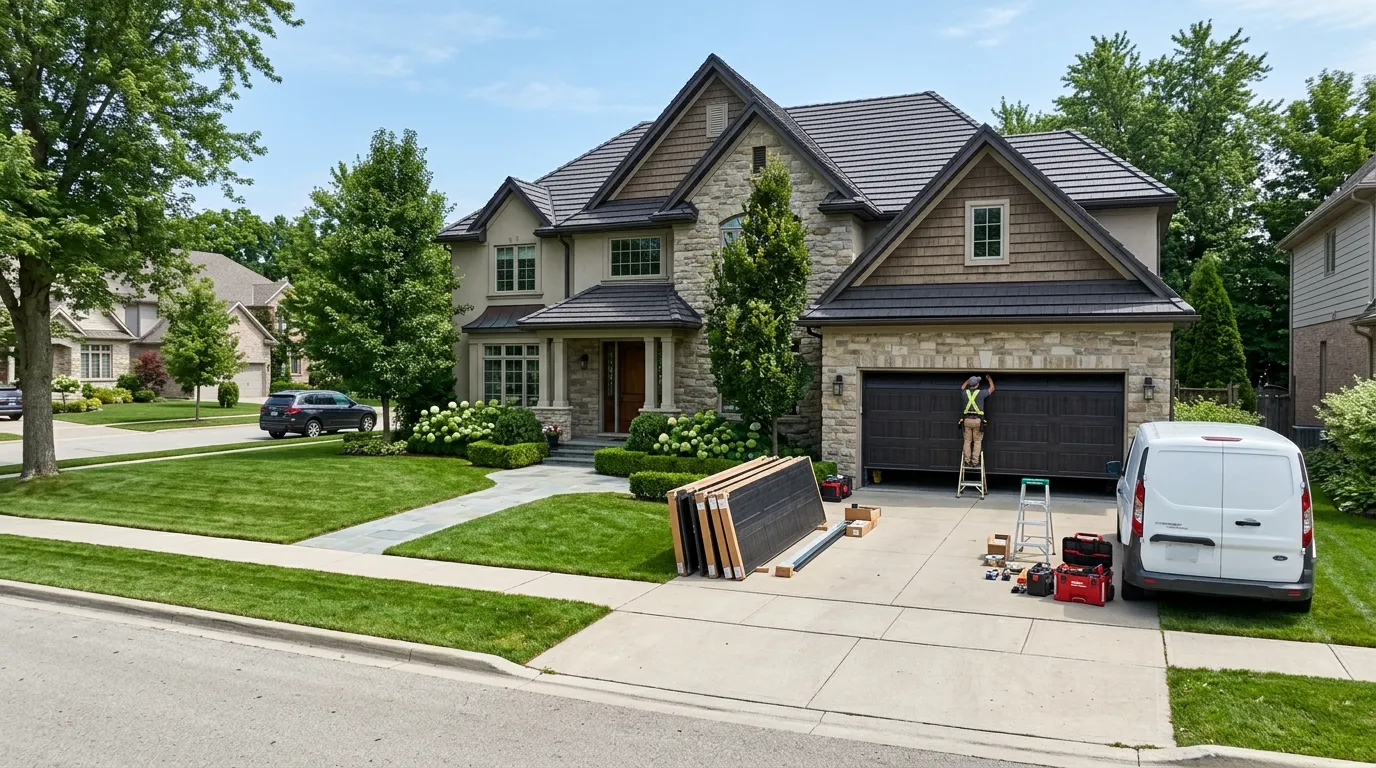
Across the 47 named communities in this service area, the pattern repeats because the building stock is consistent: mostly 1980s and 90s construction, garages sized and engineered for the doors of that period. A door that's been upgraded to a heavier insulated panel without a hardware check is running old cable under a new load it wasn't sized for. That mismatch, more than age alone, is what we see snap first.
The Complications
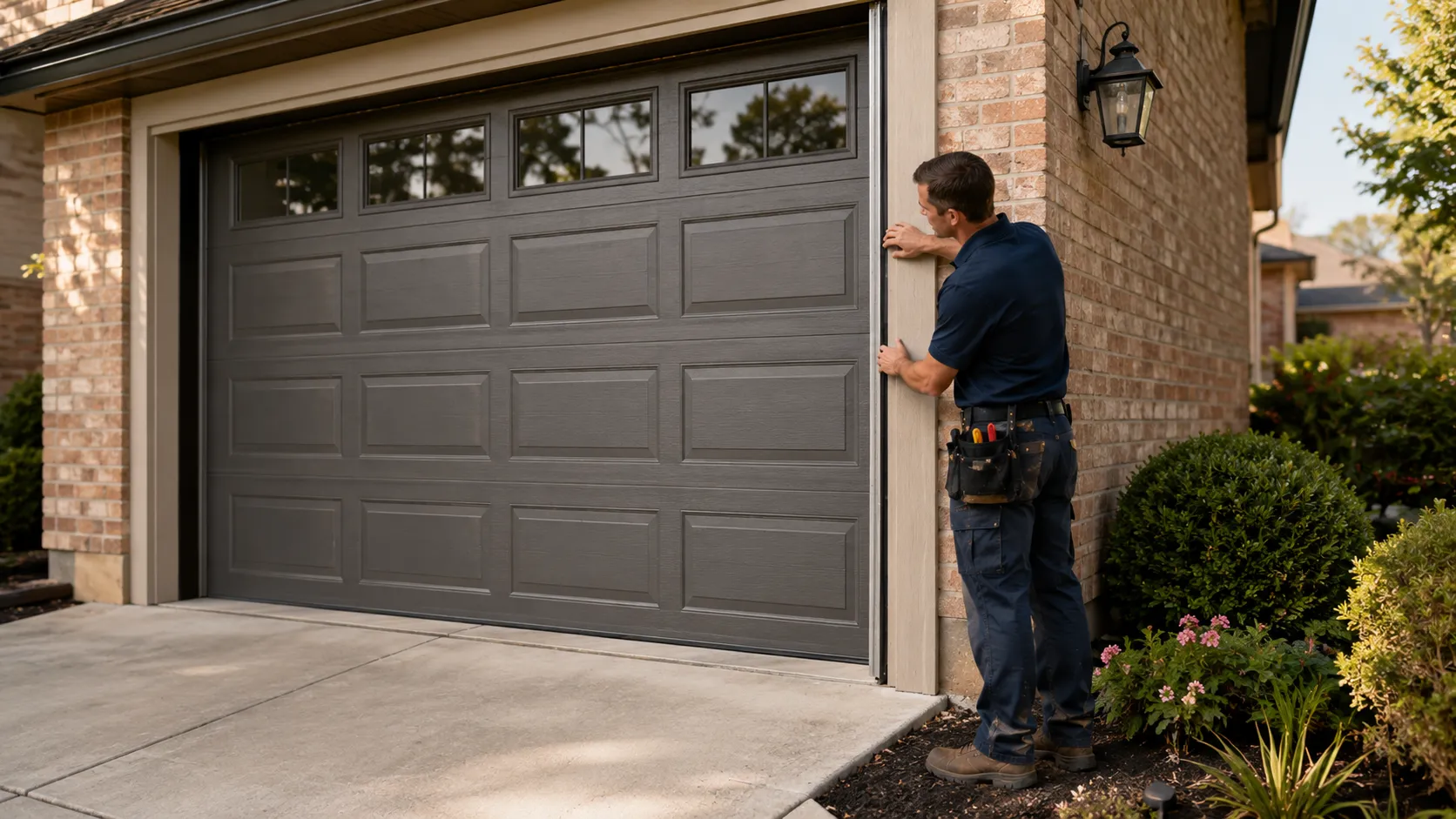
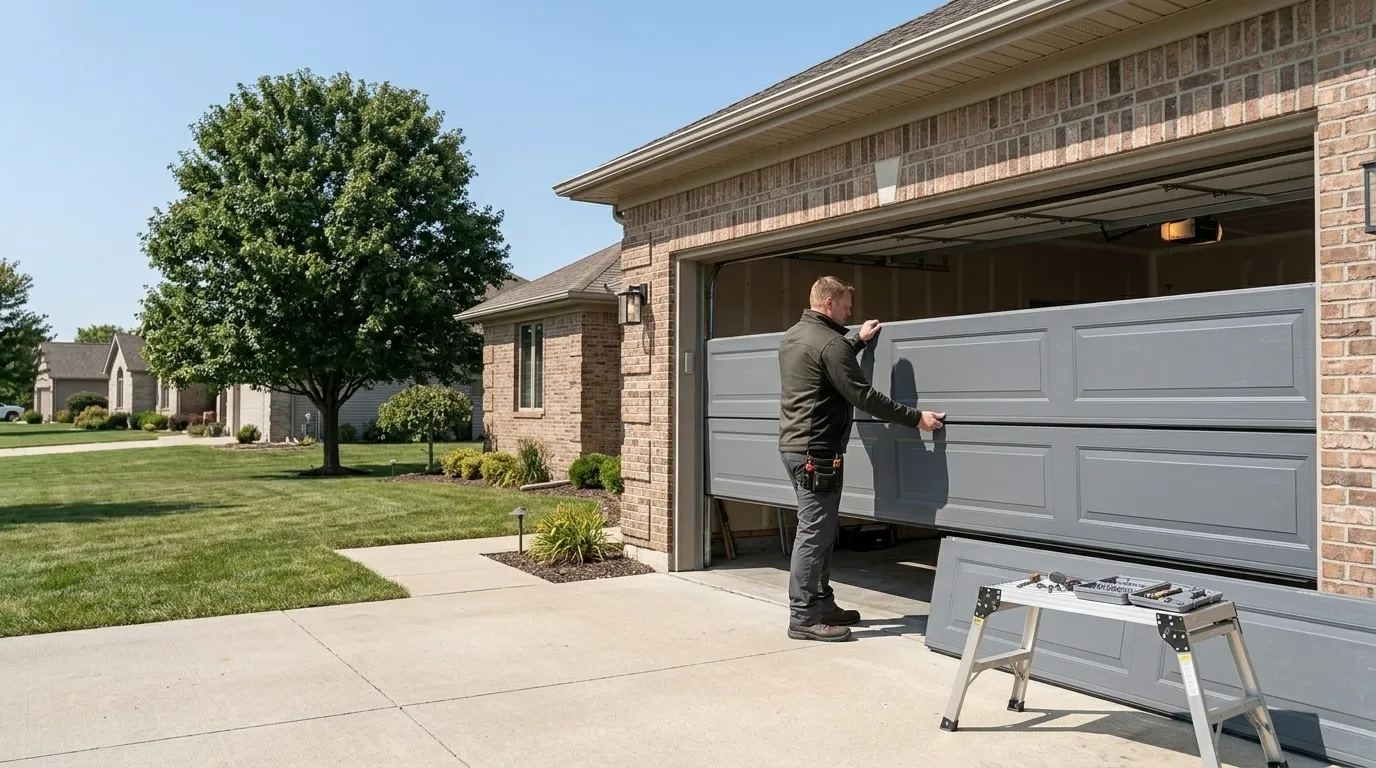
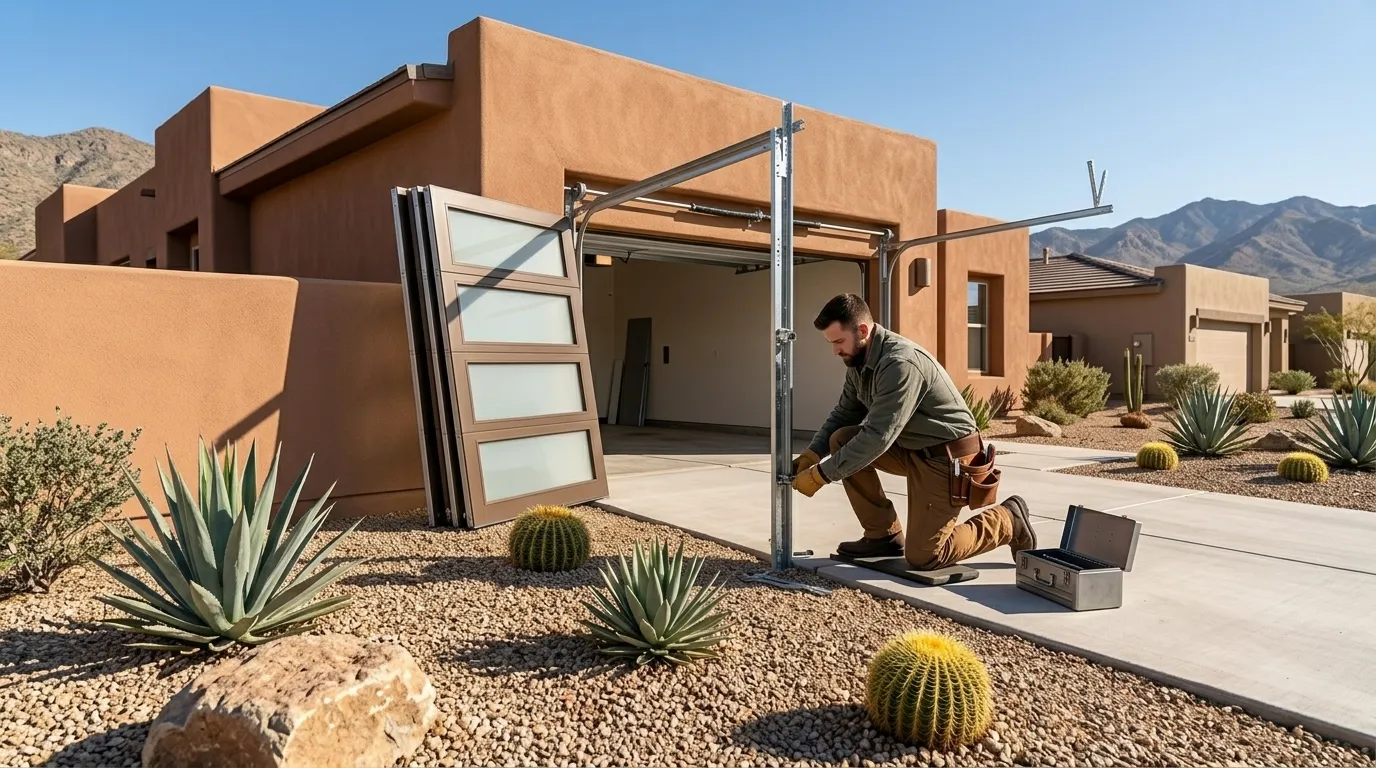
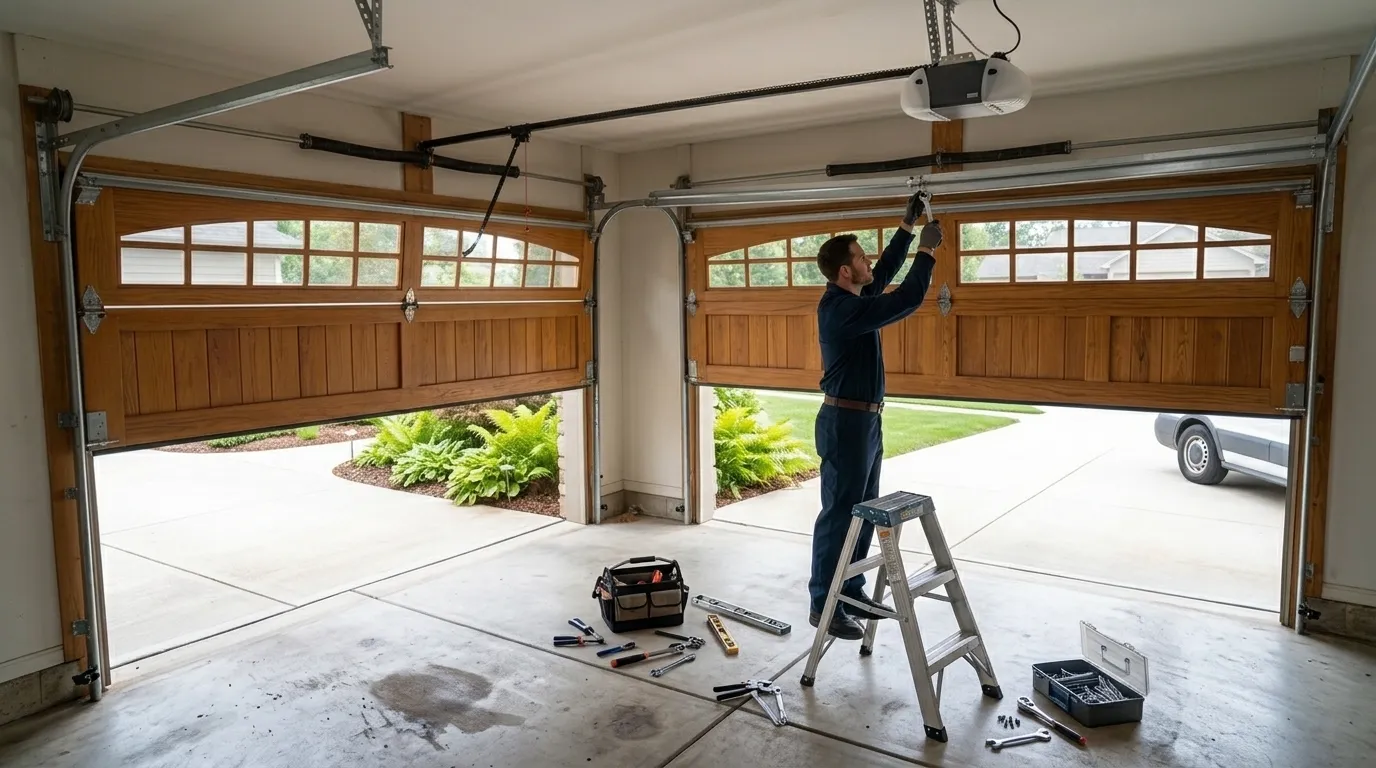
A cable rarely fails on its own. When one side frays, the door starts racking - traveling unevenly in the tracks because one cable is carrying more load than the other. Left alone, that uneven pull stresses the rollers, bends the track, and can crack a bottom panel corner. On a door that's original to a house built in the 1938-2003 range, you're also dealing with hardware that may not match anything on a current parts shelf; drums, sheaves, and cable diameters weren't standardized the way they are now.
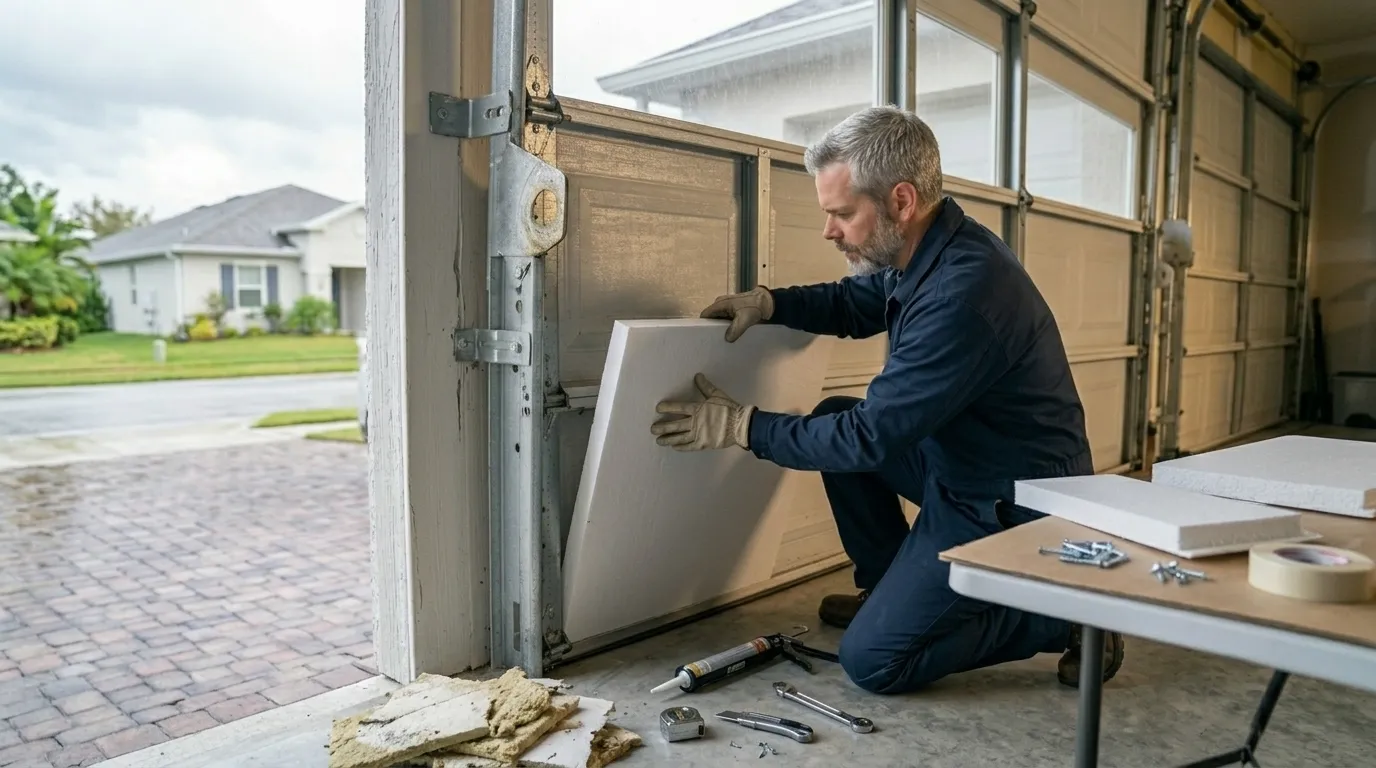
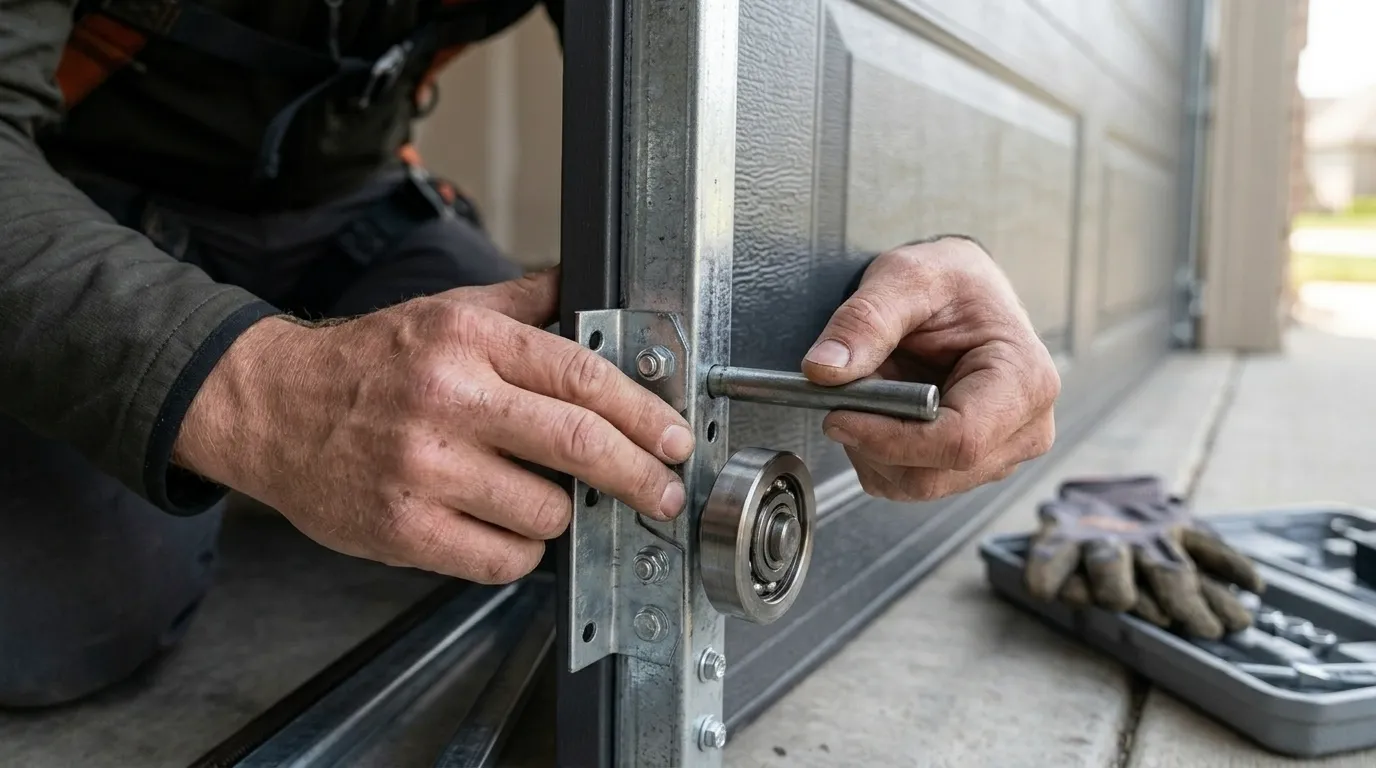
The other complication is the spring. Cables and torsion springs work as a system - a spring under tension with a snapped cable is not a stable object, and the door can drop hard and fast. If your opener kept trying to run the door after the cable went, you may also have stripped the drive gear or bent the arm, which turns a cable job into a two-part repair. We check the whole lift system, not just the broken strand, because fixing one cable and sending you off with a stressed spring or a bent track just means a second call.
What You Are Seeing
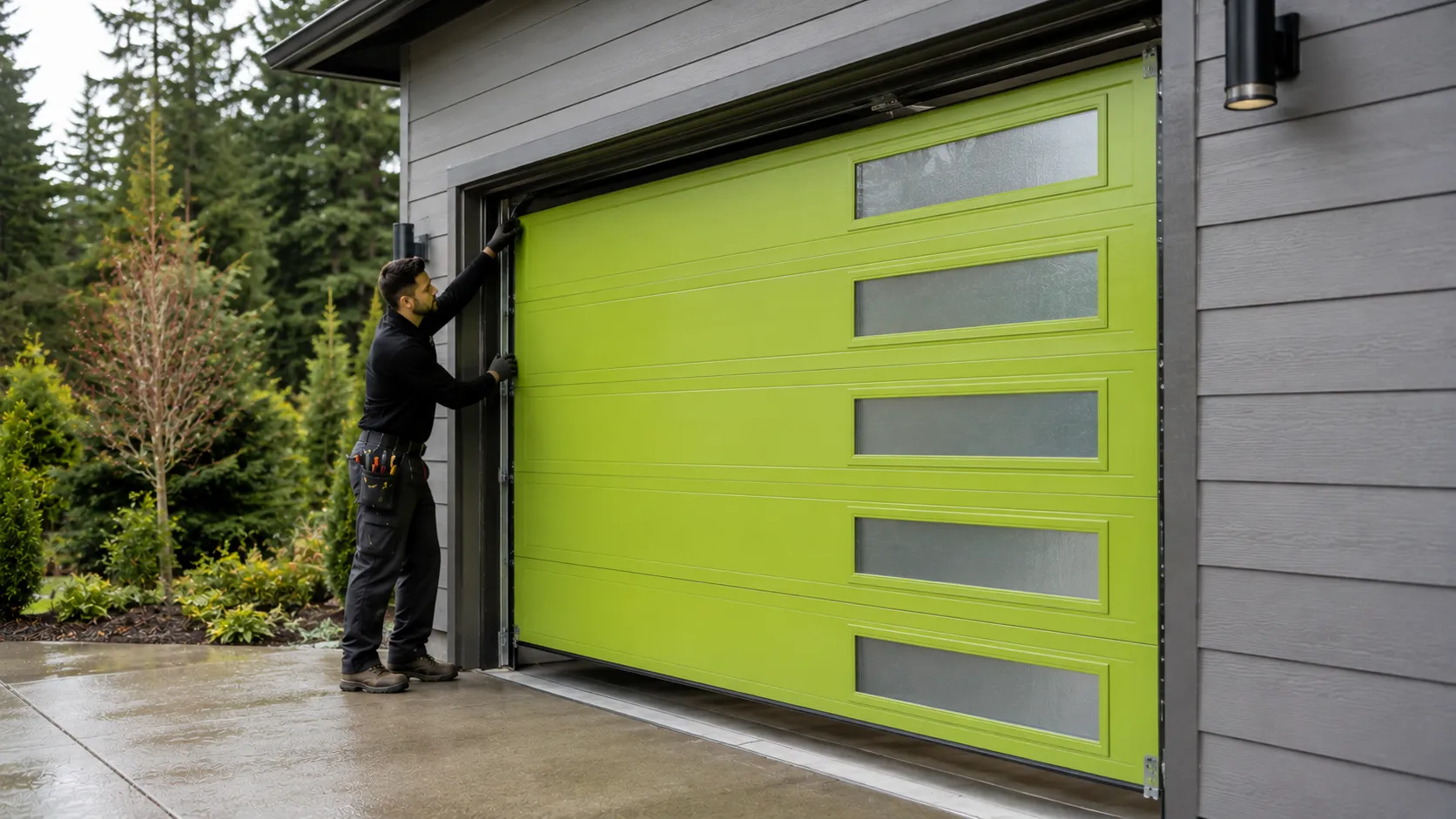
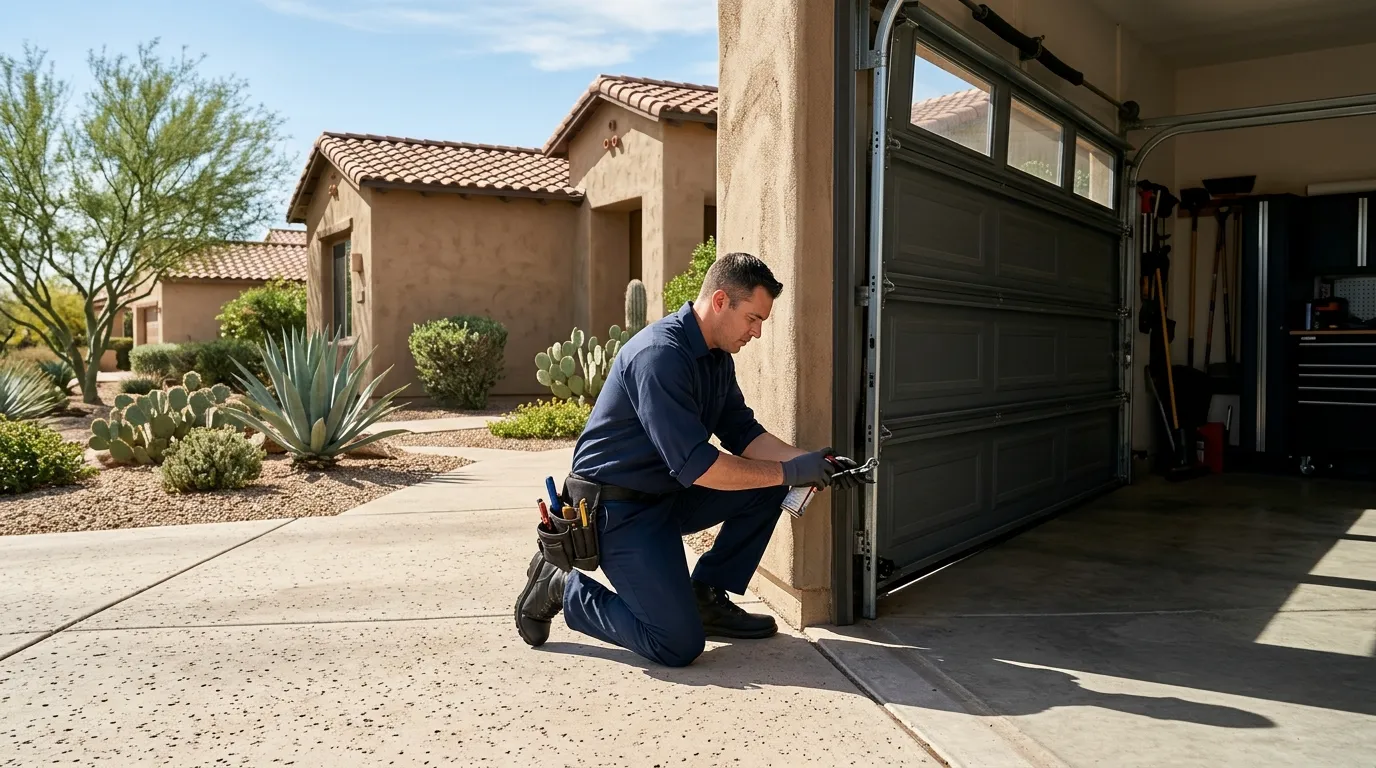
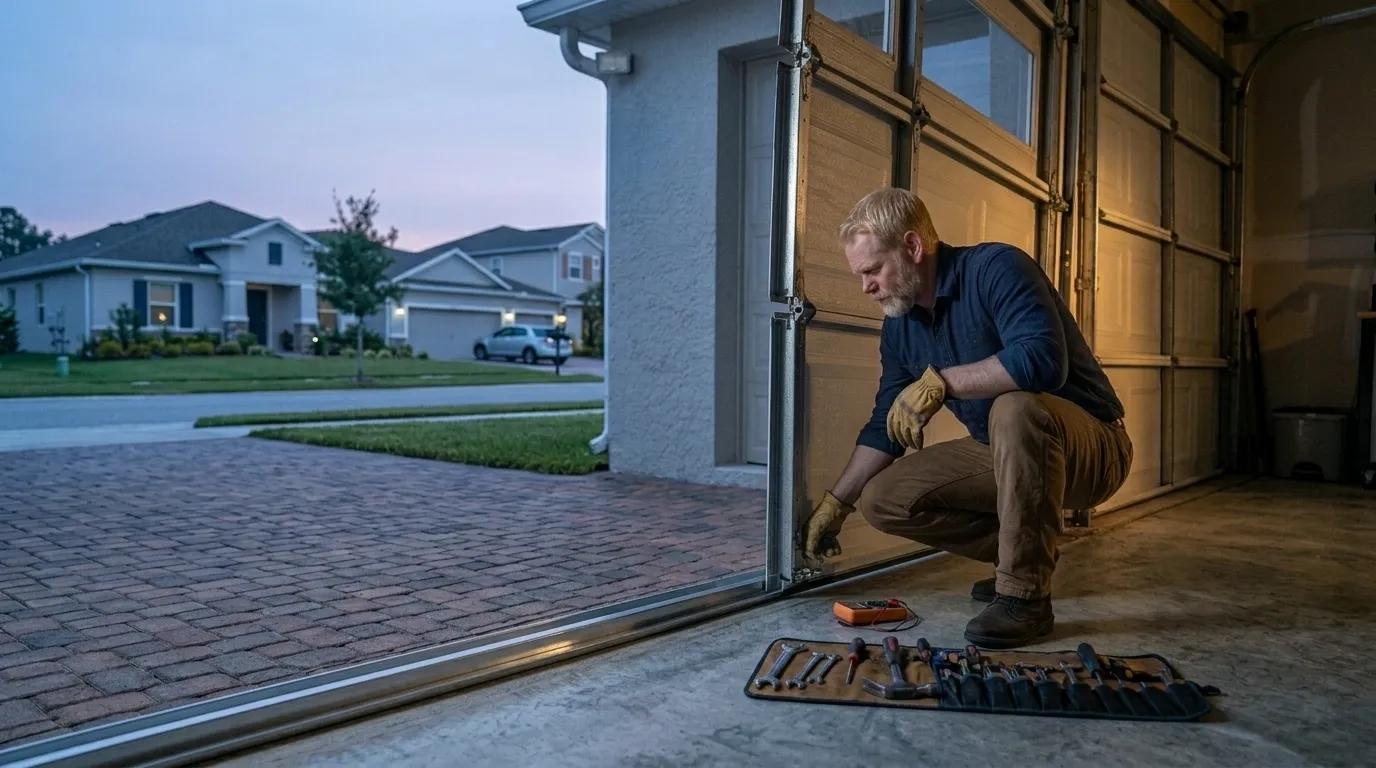
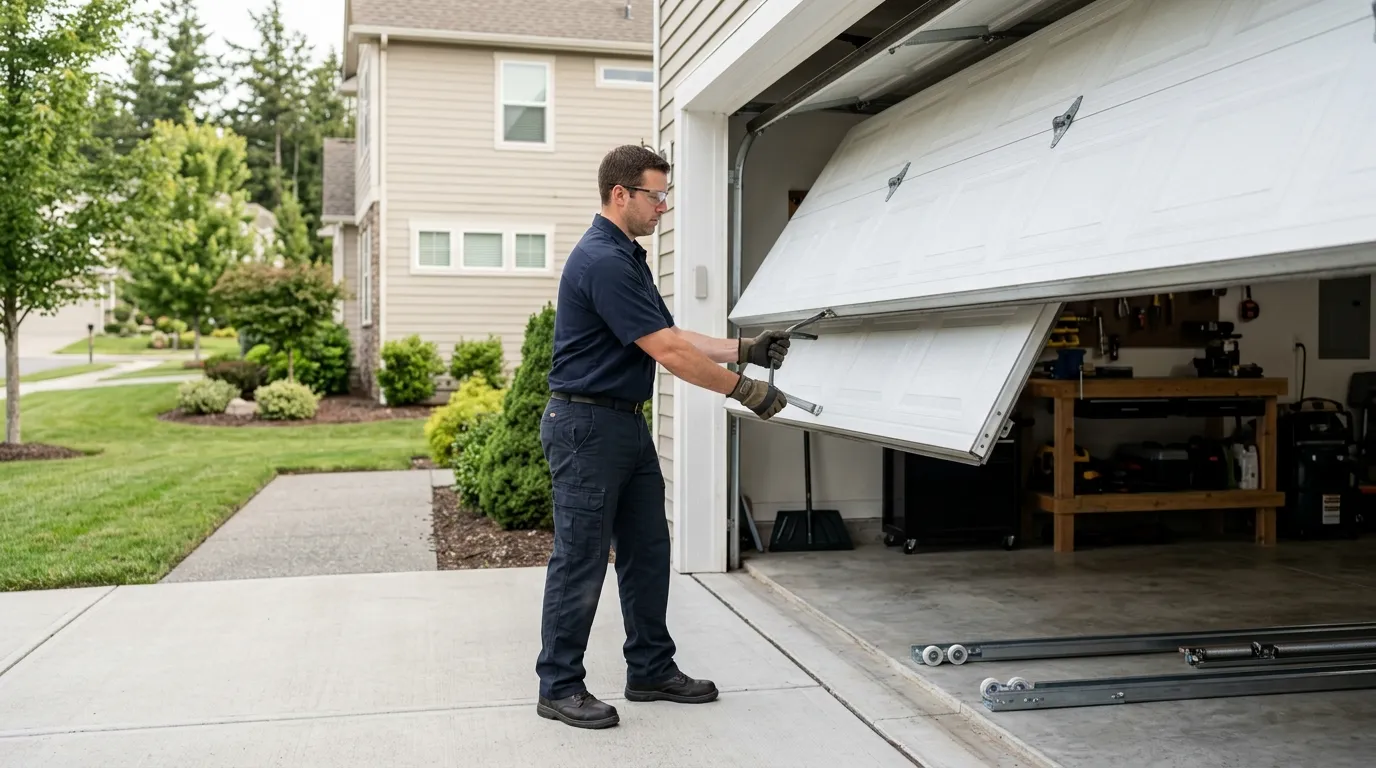
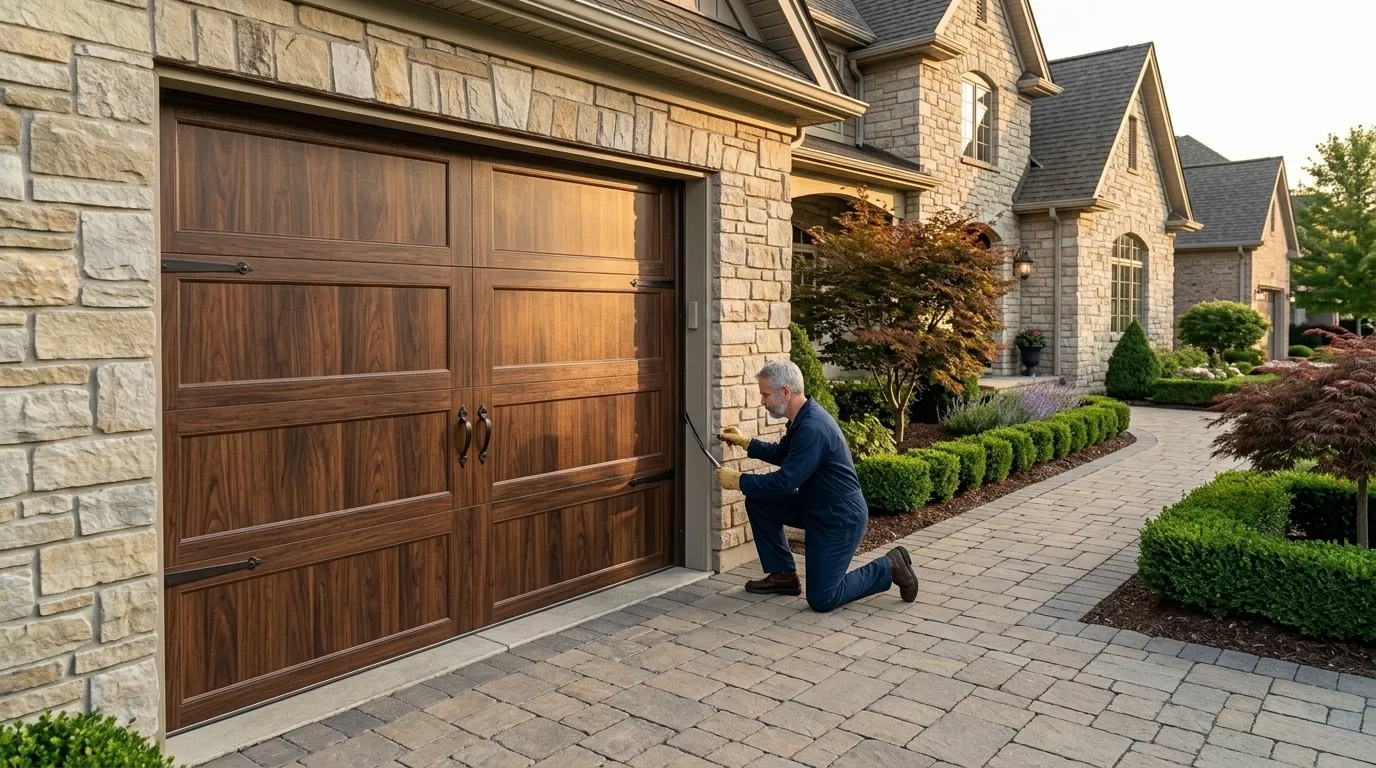
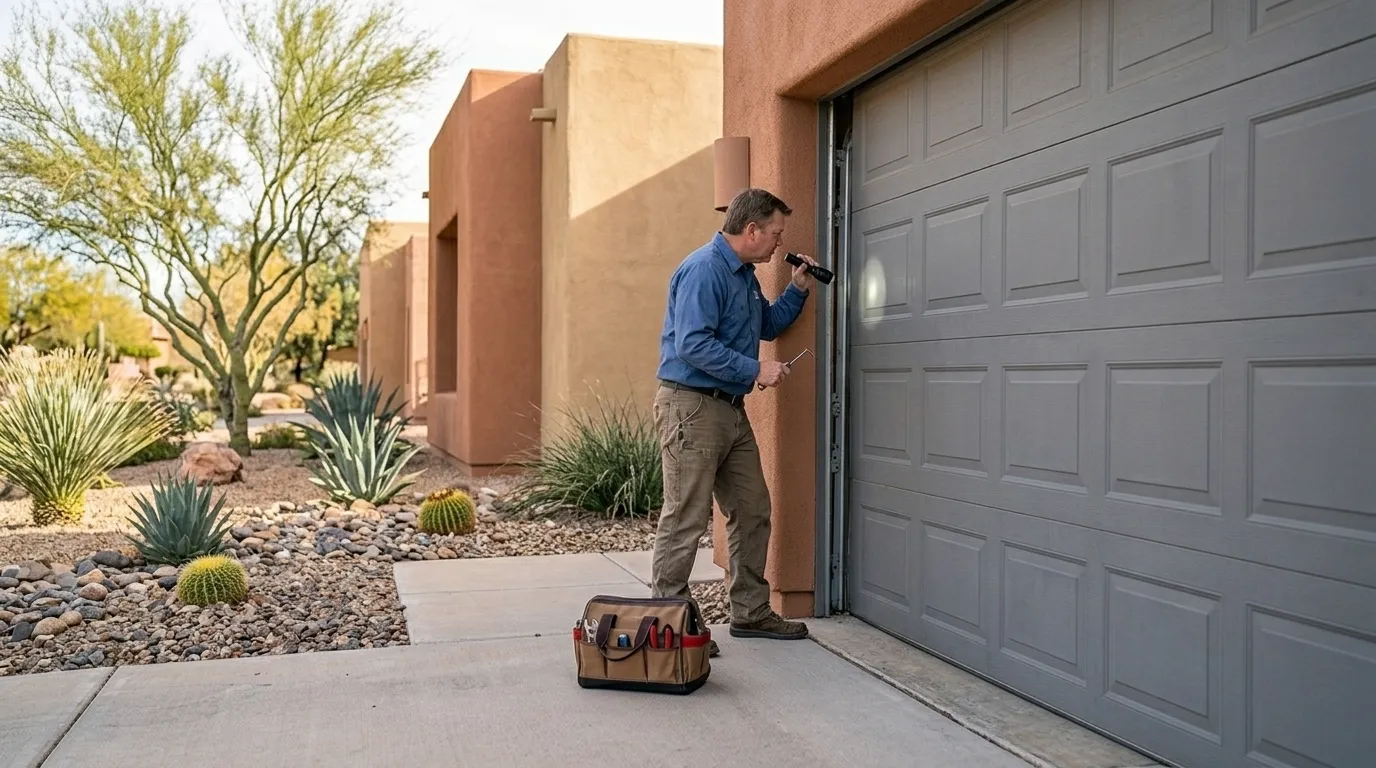
If your door is sagging to one side, stuck a few inches off the floor, or came down with a bang instead of its usual slow roll, a snapped or badly frayed cable is the most common cause we find on doors from this era of construction. You might also notice the cable itself curled loosely at the bottom bracket, or a visible gap where it should be wound tight around the drum near the top corner.
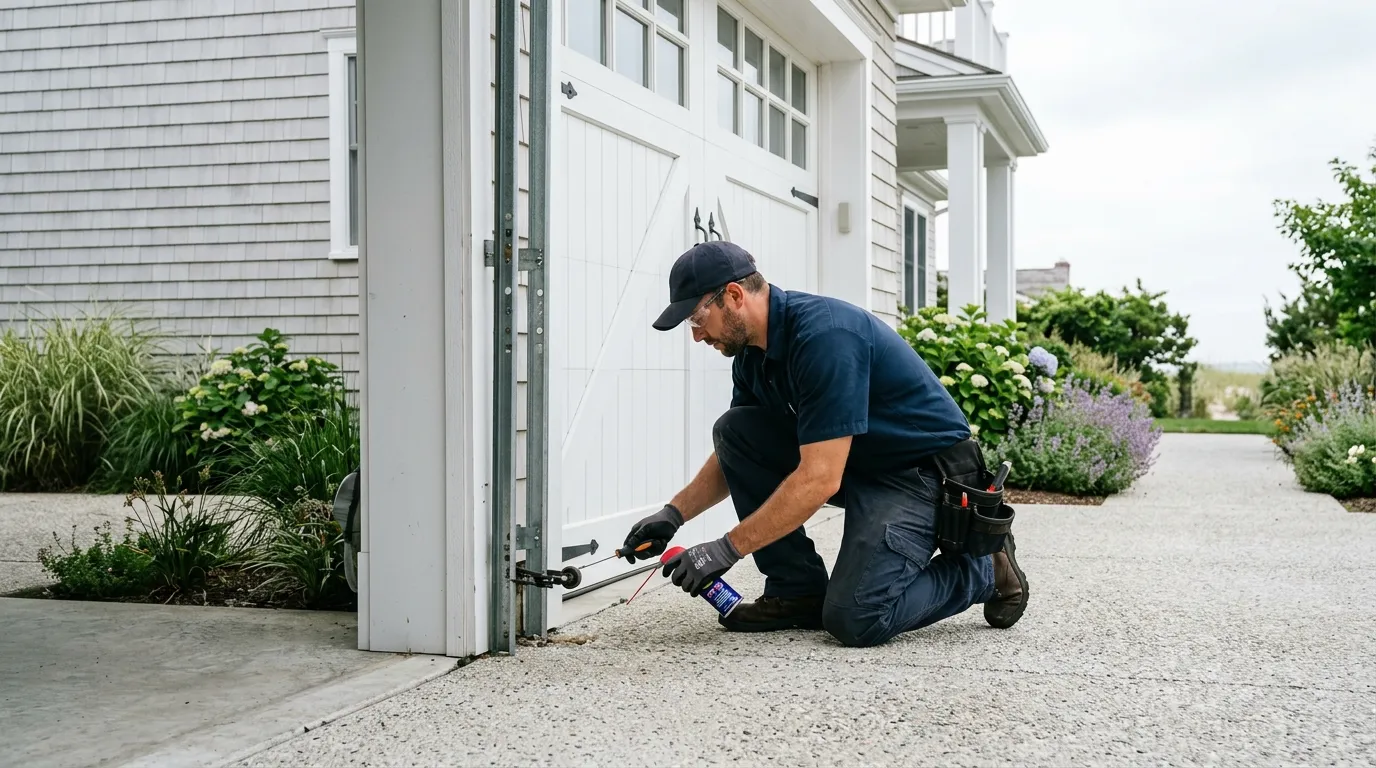
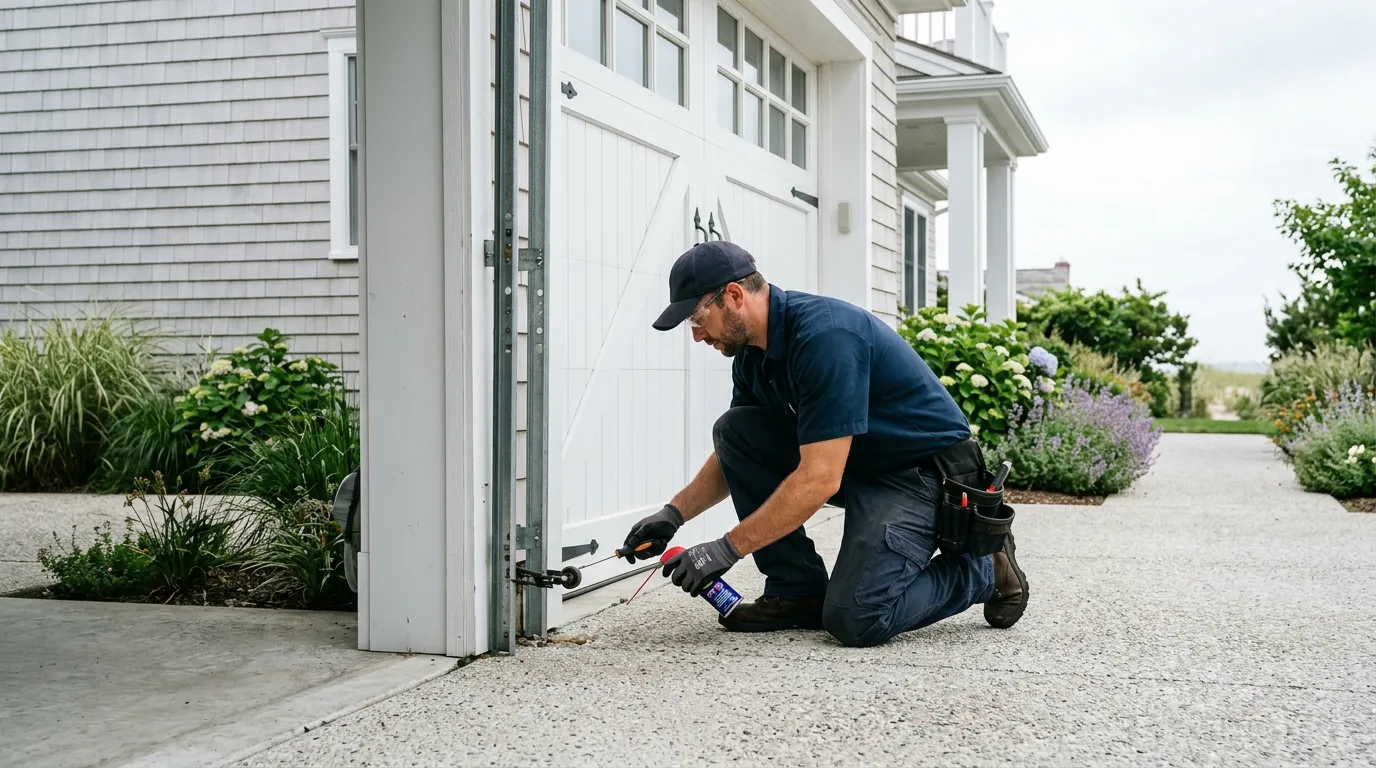
On homes with the original hardware from the 1938-2003 build range, we usually replace both cables as a pair even if only one has failed, since the other side has logged the same years of freeze-thaw cycling and is close behind. Given the median household income of $109,235 across this service area, most owners we talk to would rather pay once for a matched pair than call us back in six months for the second side. We'll walk you through what we find before doing anything, and if the drum or spring needs attention too, we'll tell you that up front rather than after the fact.