What Causes It Around Here
Most of the houses we get called to were built somewhere between 1938 and 2003, with the bulk of that stock going up in the 1980s and 90s. That matters for panels because doors from that era are mostly steel sandwich construction with a foam core, and after three or four decades that foam bonds get brittle. A panel that flexes fine in July can crack clean through in January.
The climate here is cold-moderate, not brutal, but it's enough freeze-thaw cycling over a winter to work on a seam that's already stressed. Add in the ordinary stuff - a bumper tap backing out of the driveway, a basketball, a ladder leaned against the wrong spot - and you get a dent or a split panel on a door that's otherwise sound.
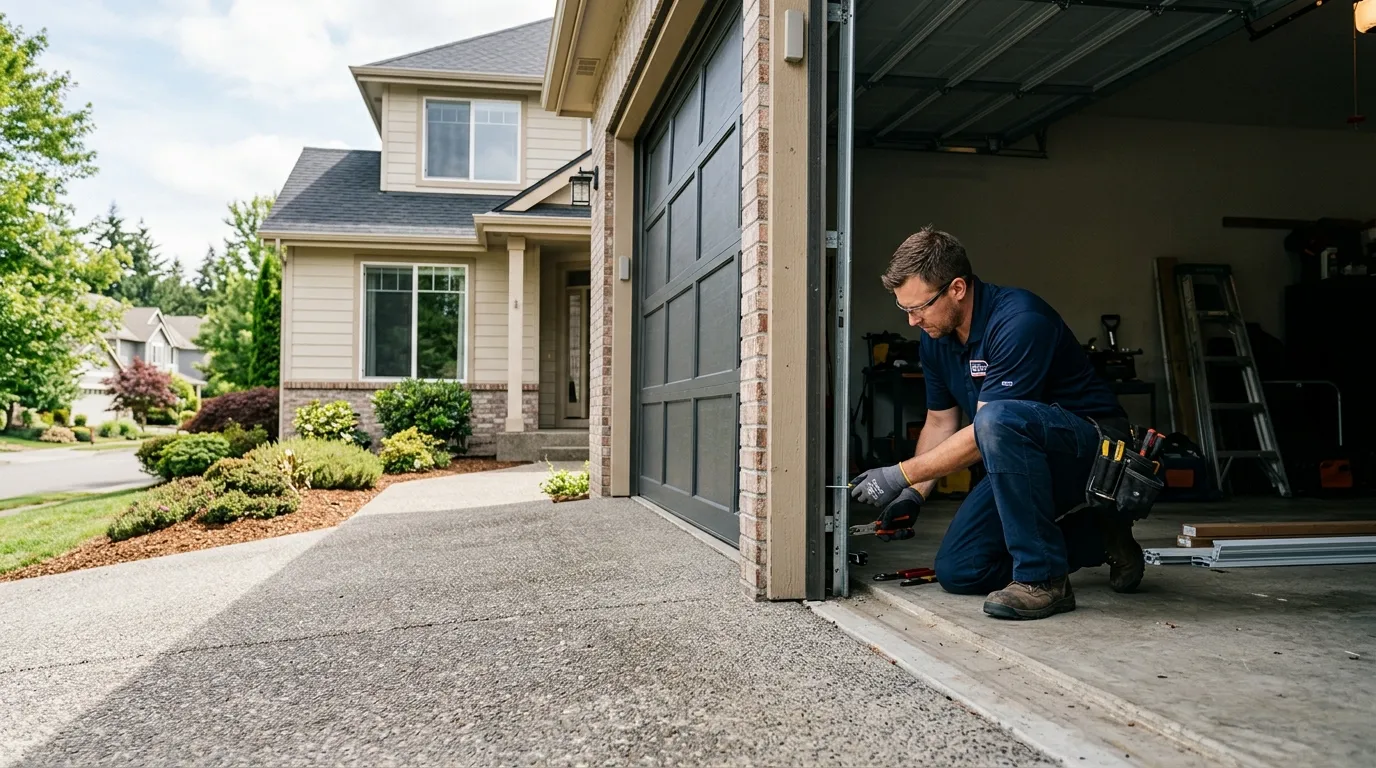
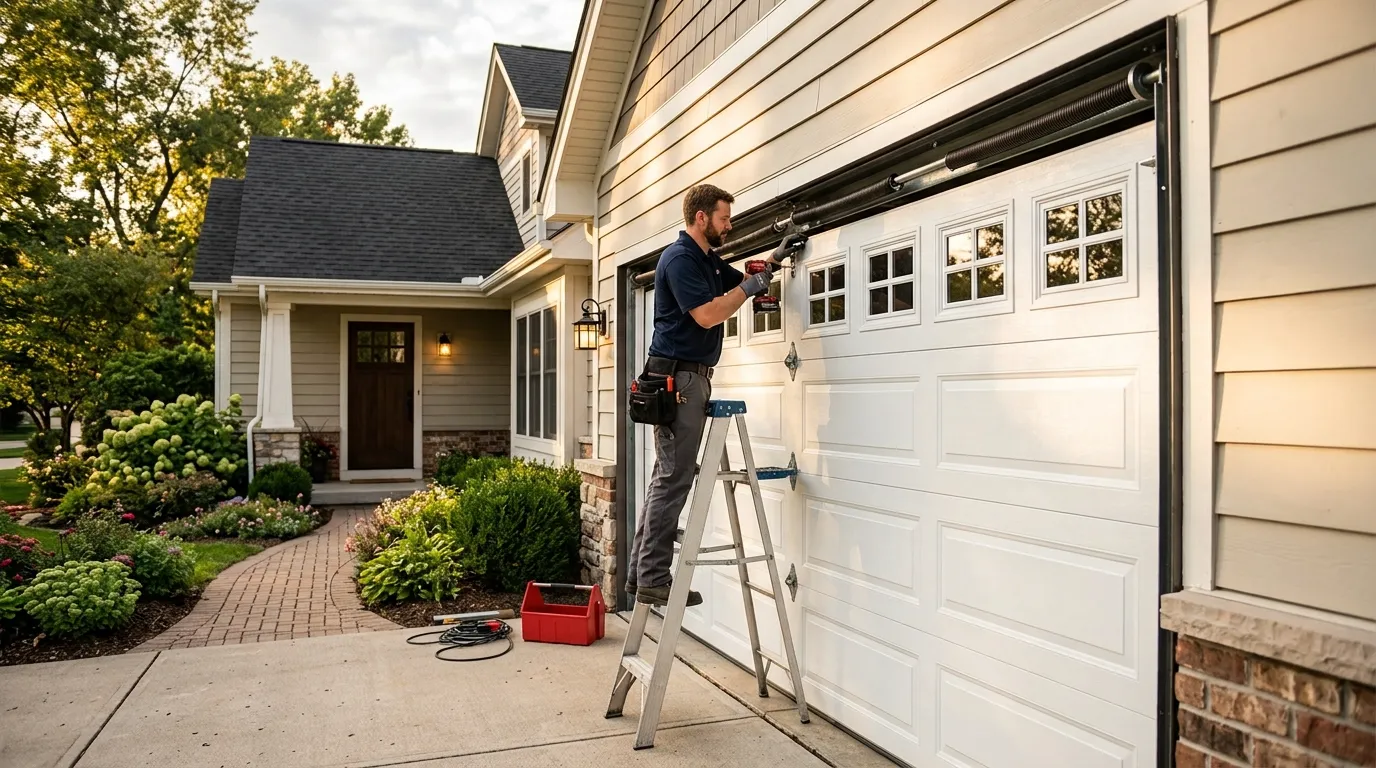
We see this across the whole service area, not just one neighborhood. Whether the door sits on a house from the early 80s or one built closer to 2000, the panels tend to fail the same way: at a seam, at a corner, or where a hinge bolts through. The rest of the door - track, springs, opener - is usually fine, which is exactly why panel replacement instead of a full door swap makes sense so often out here.
The Complications
The hard part isn't taking the bad panel off. It's finding one that matches. A door installed when the neighborhood was built in the 80s or 90s may use a panel profile the manufacturer stopped making years ago, or a color that's faded enough that a new panel looks wrong next to the old ones even if the model number matches.
We also run into doors that have been repainted or resealed over the years, which changes how a matched panel sits next to the original ones - the fit is right but the finish reads differently until it weathers in.
On some of the older builds in this area, insulation specs or panel gauge changed mid-run, so two doors that look identical from the street can take different replacement parts. That's not something you can tell from the driveway - it takes pulling the section and checking.
One honest limitation: if your door is old enough that the manufacturer has discontinued the line entirely, we may not be able to get an exact match. In that case we'll tell you straight - full door replacement is the better call rather than a panel that never quite matches.
What You Are Seeing
A cracked panel usually shows as a straight split along a seam or a stress line running diagonally from a corner - that's the foam core telling you it's given up, not just cosmetic damage. A dent that's pushed the steel skin away from the foam will often show as a slightly different sheen in that one spot, especially in low morning light.
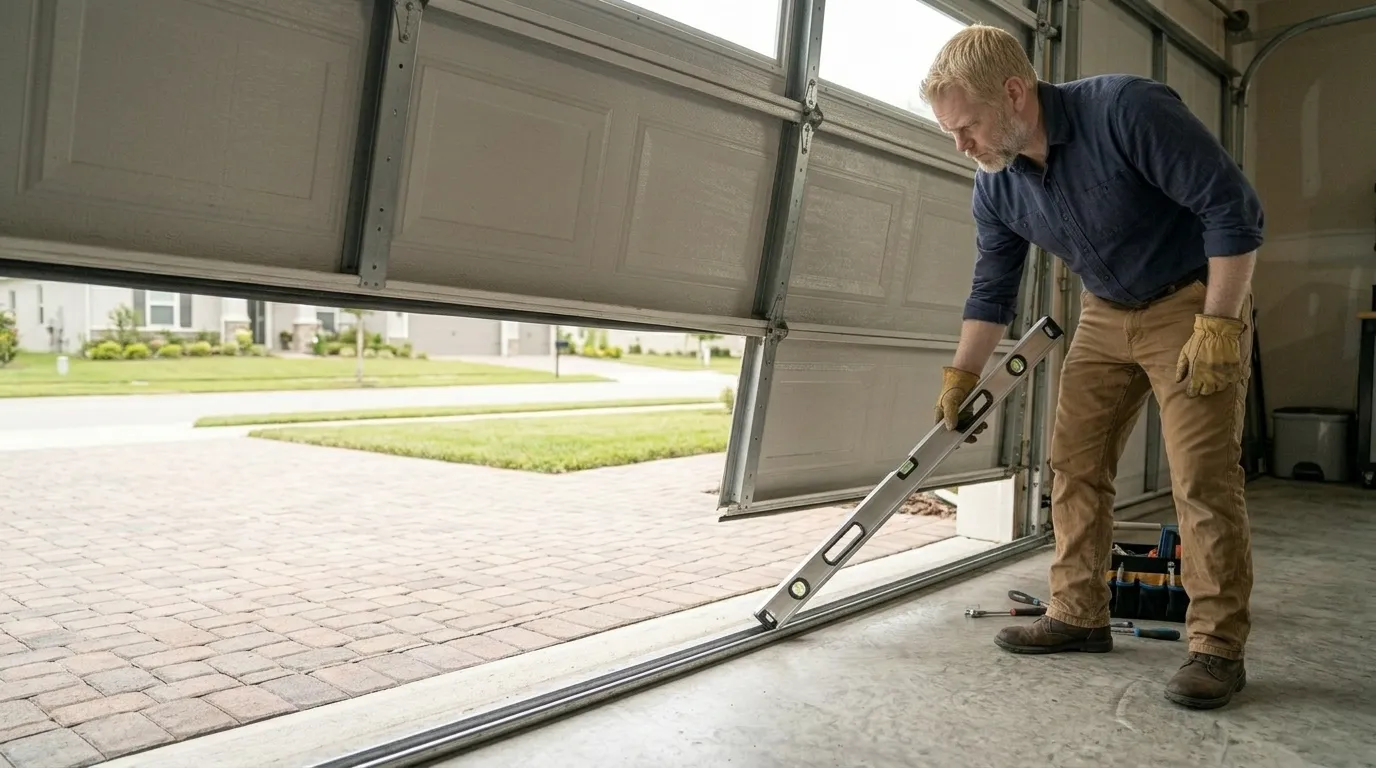
If a panel is bowing outward when the door is closed, or you can see daylight at a seam that used to be tight, the panel itself has likely separated from its frame internally even if the paint looks fine. That's more common on doors from the earlier end of the 1938-2003 range, where the original panel material has simply aged out.
Rust bleeding through paint at a panel's bottom edge is different - that's usually water sitting at the bottom rail over multiple winters, and it tends to show up on doors that don't get much sun exposure. None of these are emergencies the way a broken spring is, but a compromised panel does affect how the door tracks, and it's worth having someone look before it gets worse.