What Causes It Around Here
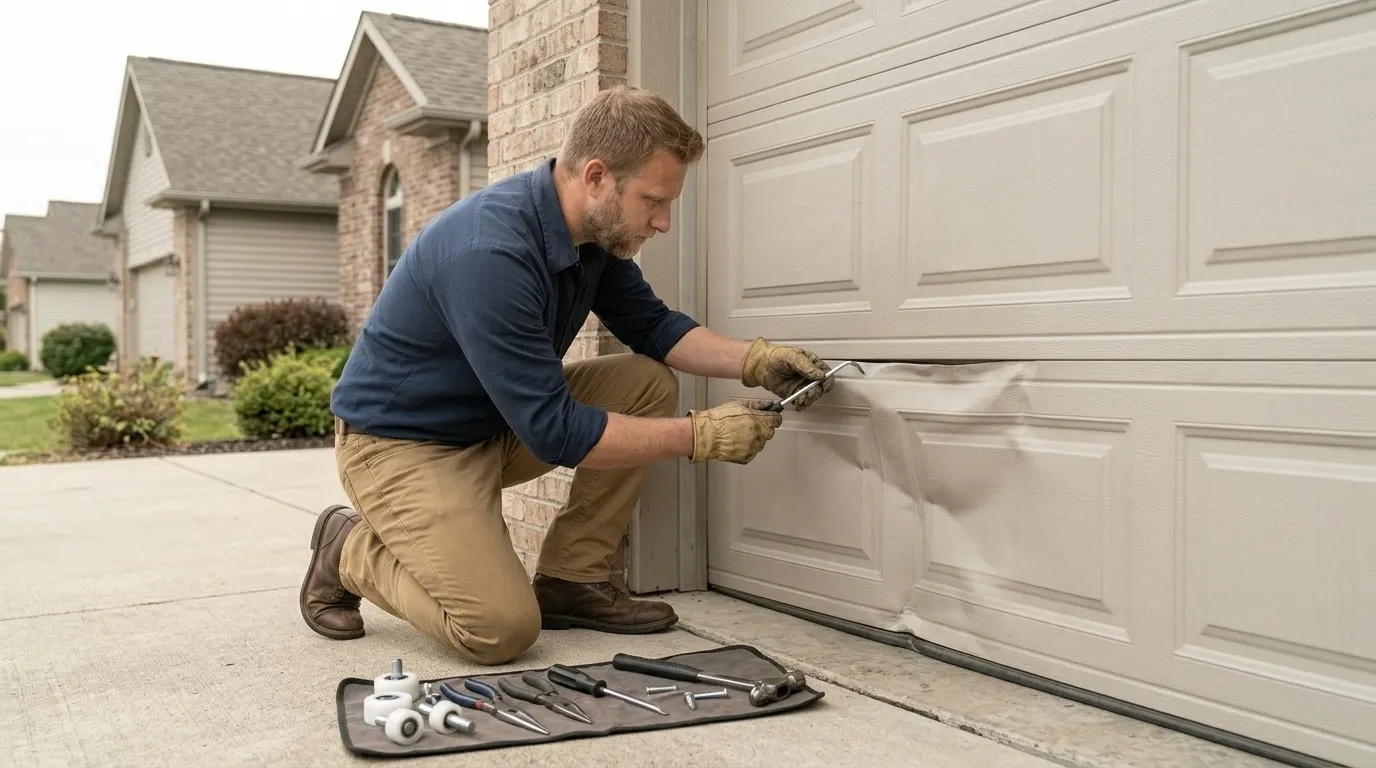
Most of the housing stock through this service area went up between 1938 and 2003, with the bulk of it dating to the 1980s and 90s across the 47 named areas we cover. That means a lot of doors out there are still running on the steel rollers that came with the original builder-grade opener package - not nylon, not sealed bearings, just bare steel on a steel track. Thirty-plus years of daily cycling wears a groove into those rollers until they're no longer round, and a roller that isn't round doesn't roll, it clunks and drags.
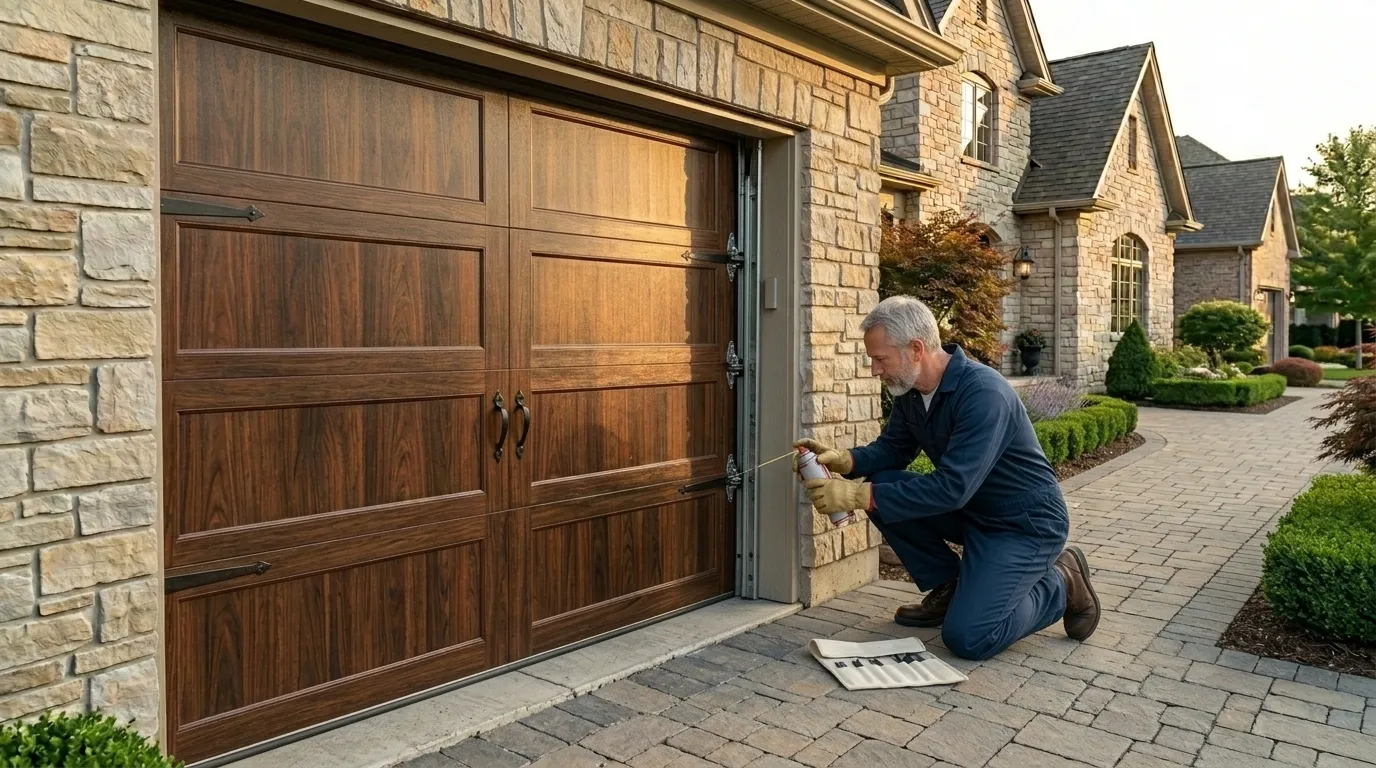
Our climate band here is cold-moderate, which matters more than people think. Steel rollers contract in cold weather and the dry grease inside the stem thickens up, so the door that rolled fine in August starts grinding and hesitating once temperatures drop. Add in a few decades of dust and old lubricant baked onto the track, and you get the stiff, jerky travel that brings most of these calls in. This isn't a defect in any one house - it's the predictable result of original-era hardware meeting our winters, and it shows up on the same schedule across the whole area we serve, not just one street.
The Complications
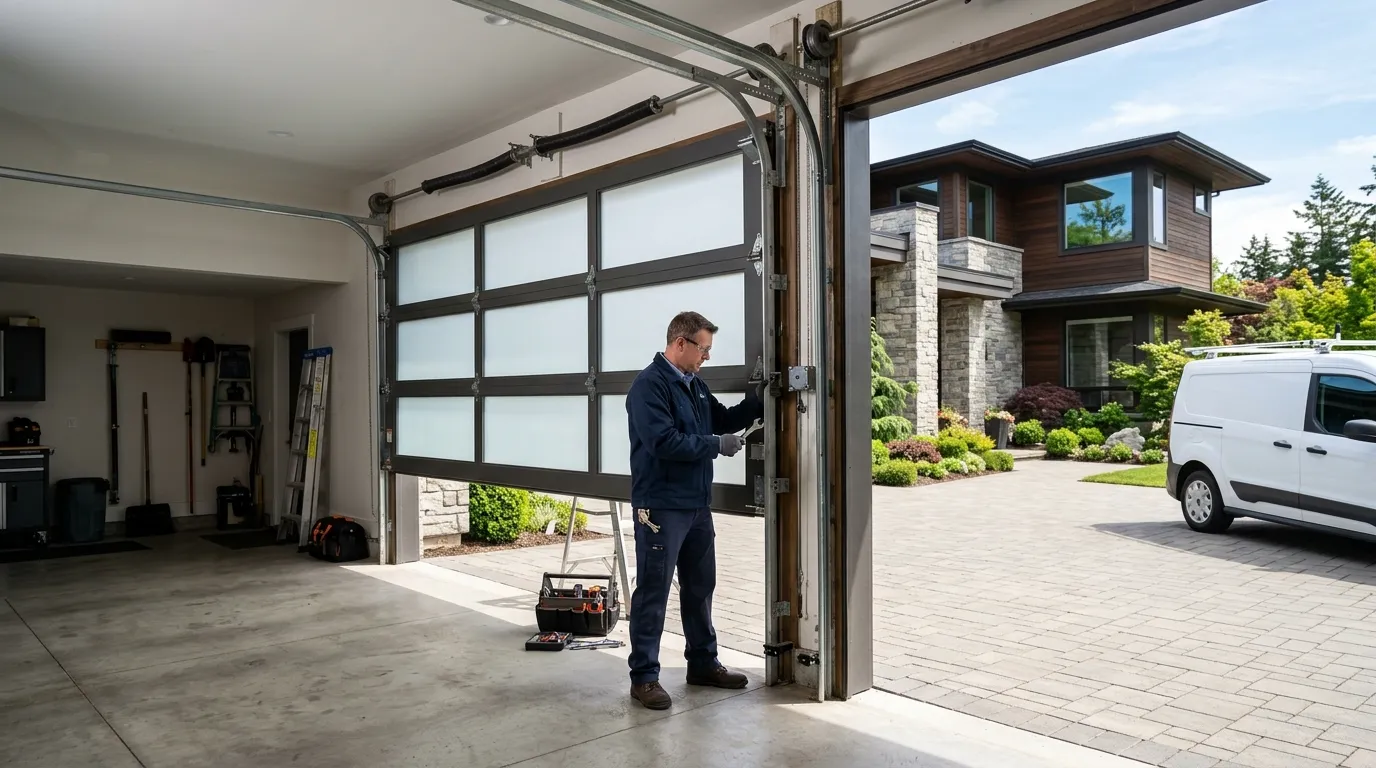
A roller that's gone bad rarely fails alone. By the time steel rollers are worn enough to notice, the track they've been grinding against is usually scored or bent in the same spots, especially near the bottom bracket where the door takes the most stress opening and closing. Replace the roller and ignore the track, and the new roller wears the same way in a fraction of the time.
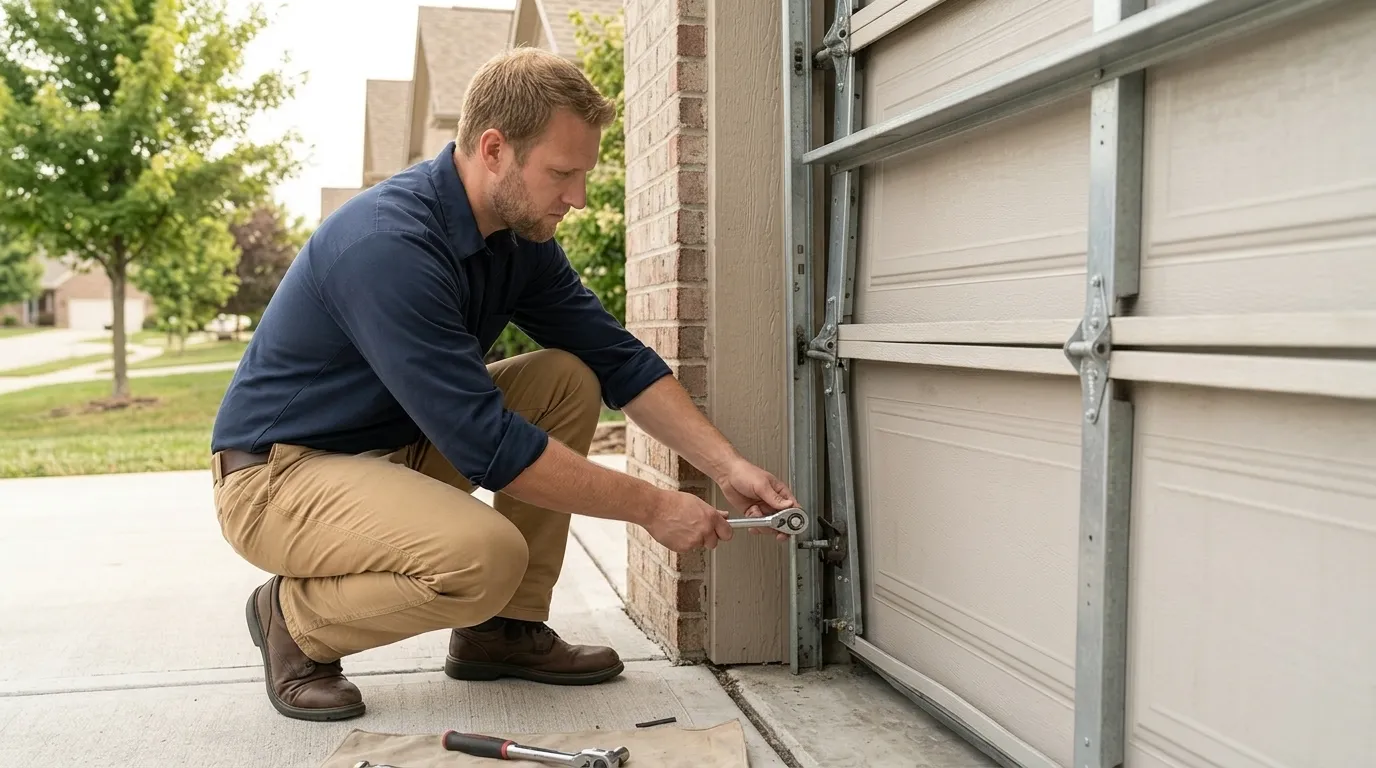
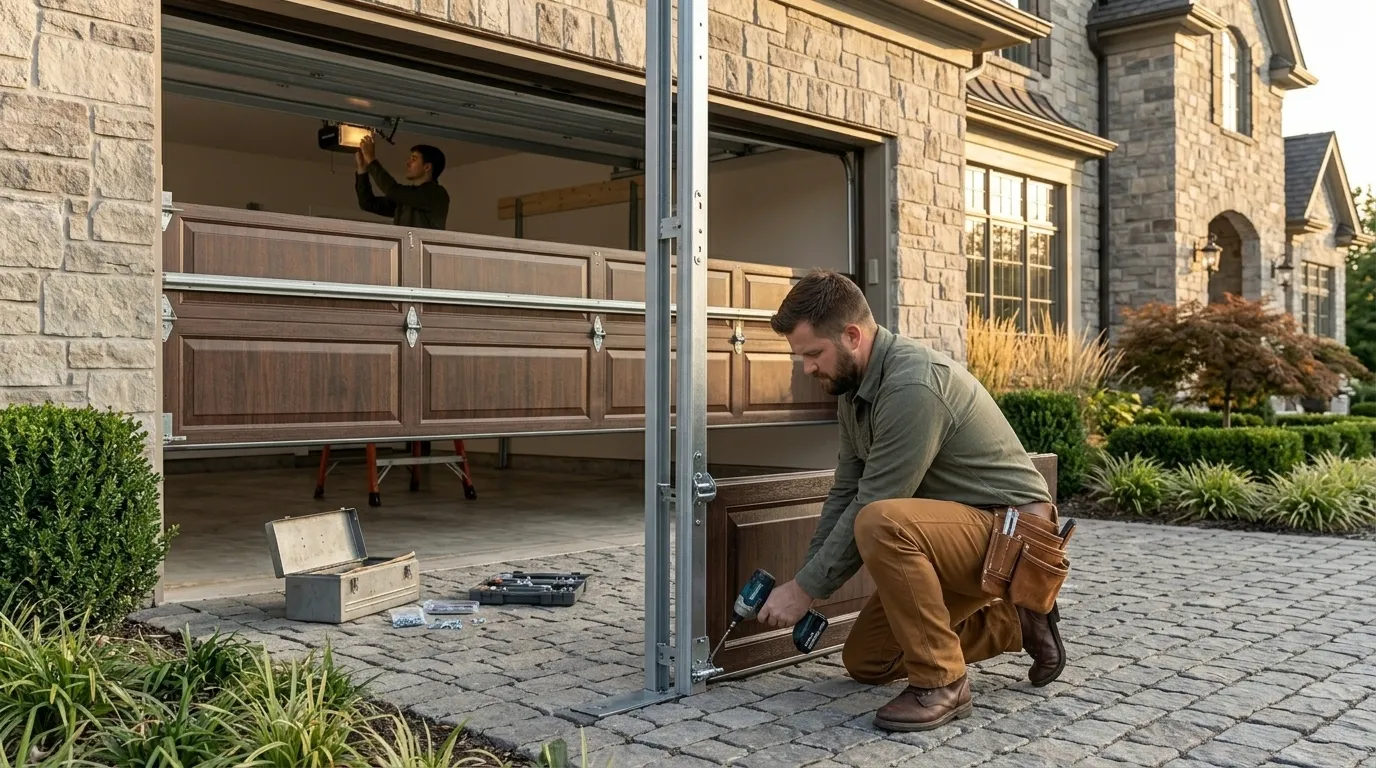
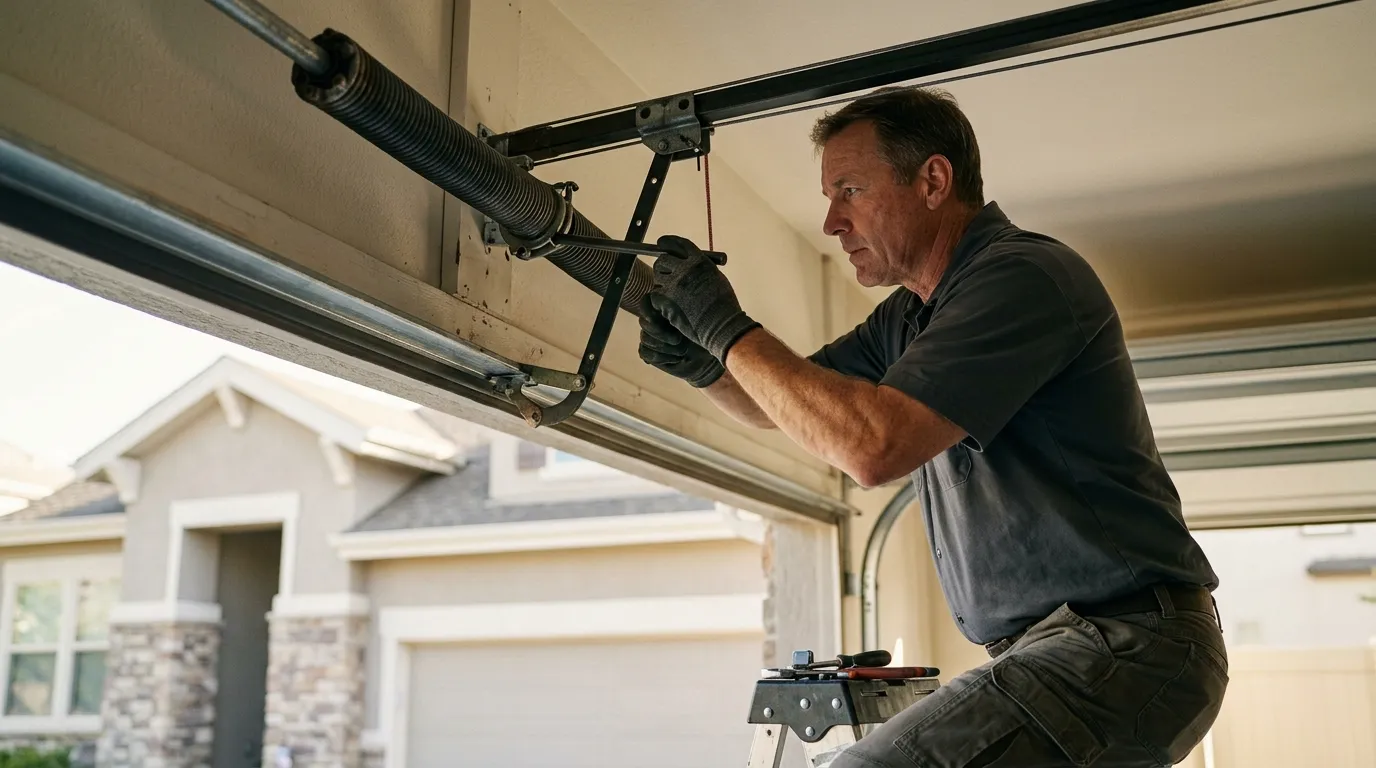
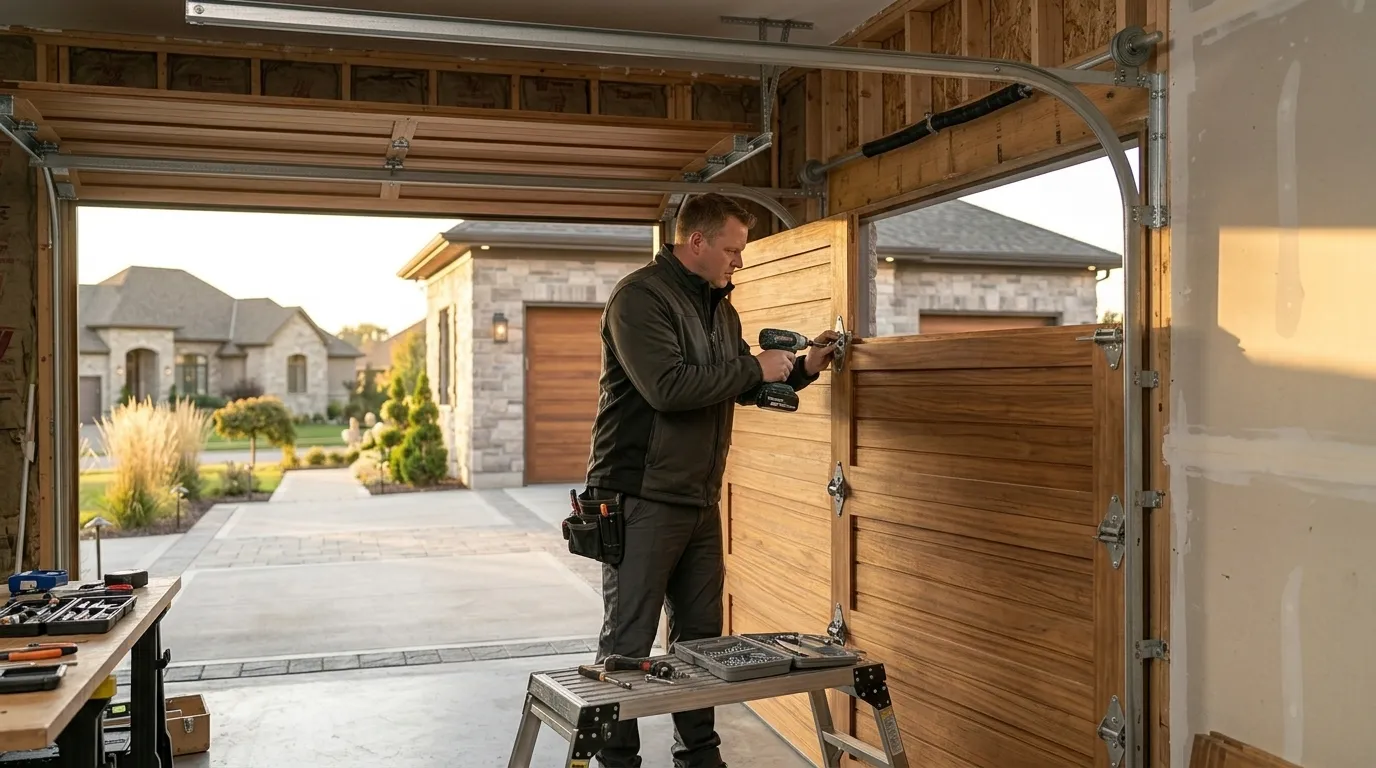
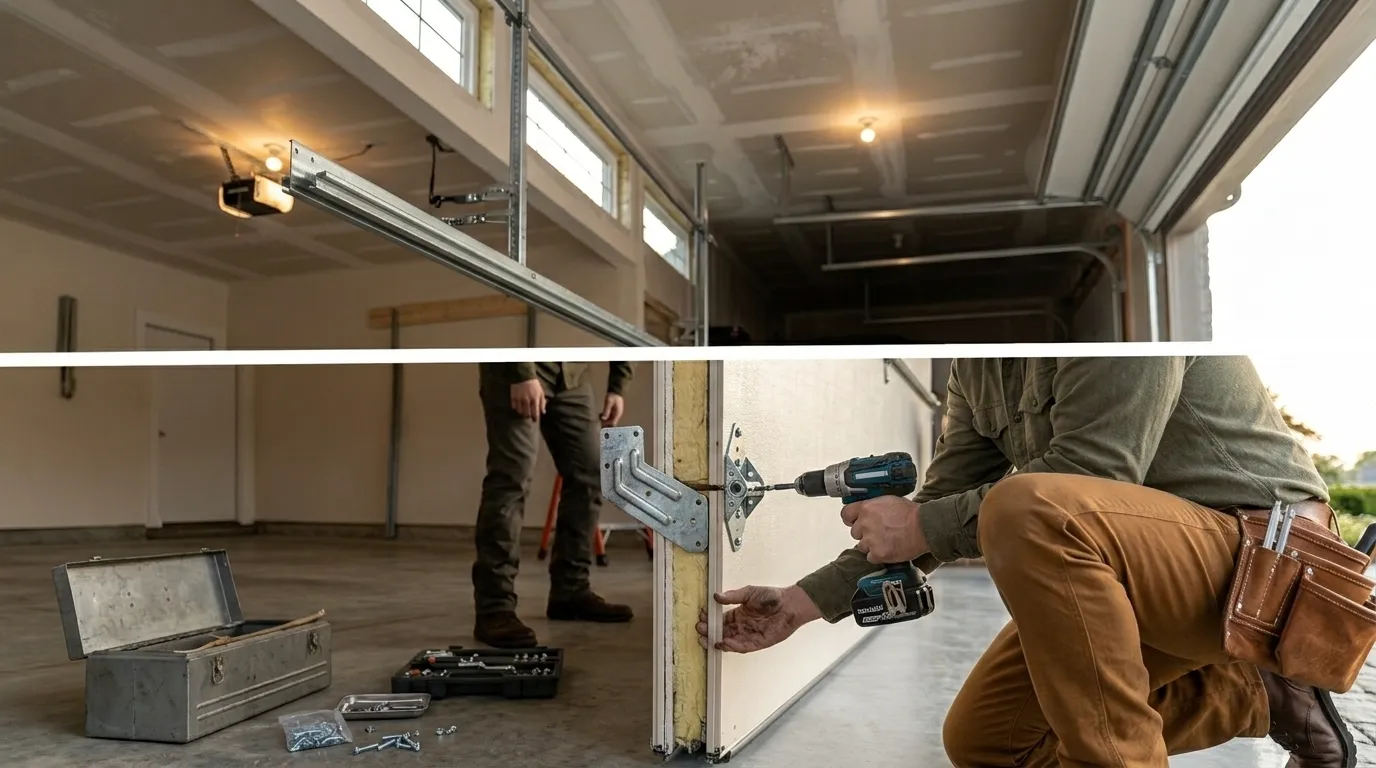
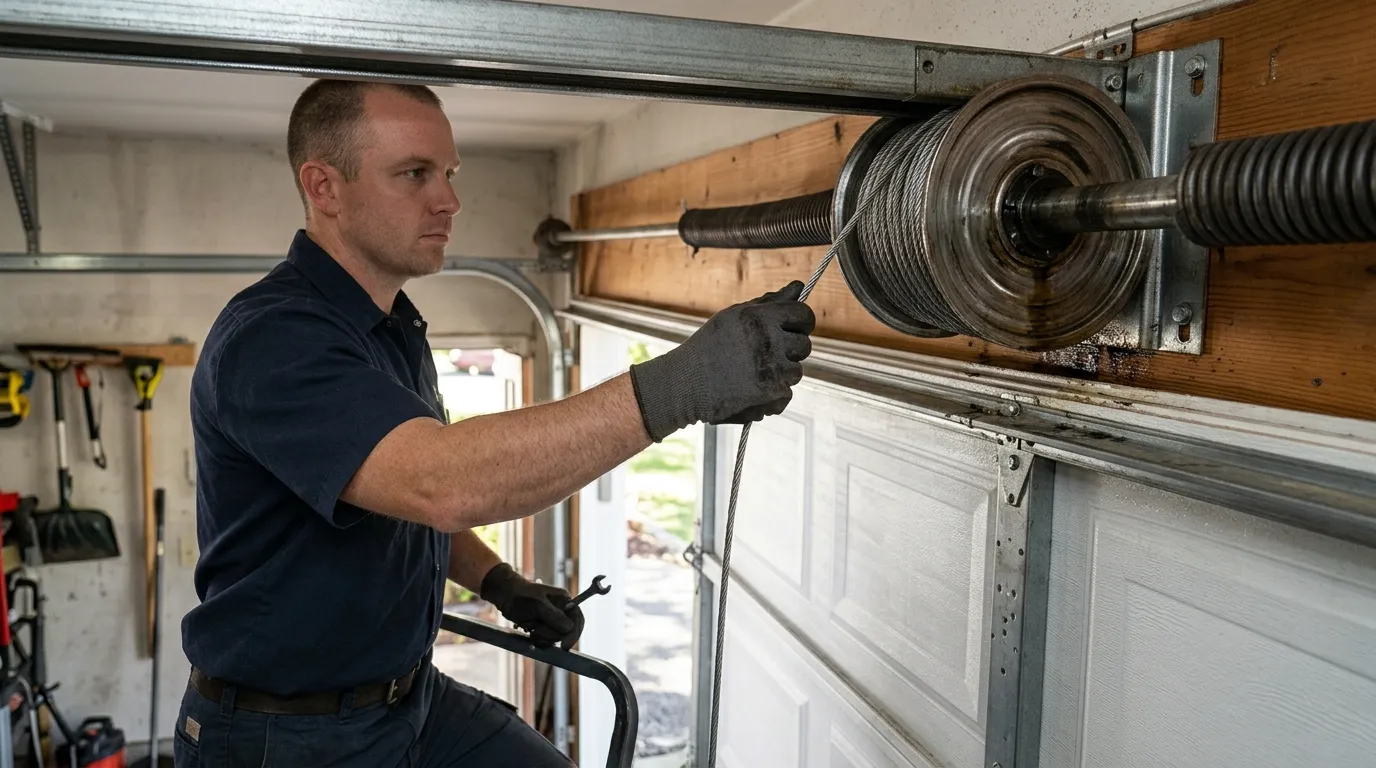
The other complication is the bottom bracket itself, which on older builder-grade doors is under spring tension. That bracket holds one end of the cable, and it is not a place to improvise. We also see this: on a lot of the 1980s and 90s doors common through this area, the roller stems are a slightly different length or gauge than what's sold off the shelf today, so a mismatched replacement can bind in the track even when it looks like the right part.
Homeowners with 298,442 households in this service area, most of them owner-occupied, are dealing with the same generation of hardware, which is why we see this failure pattern repeat house after house rather than as an isolated one-off.
What You Are Seeing
The classic sign is a door that used to glide and now jerks or shudders at one or two spots in the travel every single cycle, same spot, same sound. That's a flat or chipped roller catching the same point in the track. A grinding or squealing noise that gets worse as it's cold outside and eases up once the door's been run a few times points to the same steel-on-steel wear, aggravated by our cold-moderate winters thickening the old grease.
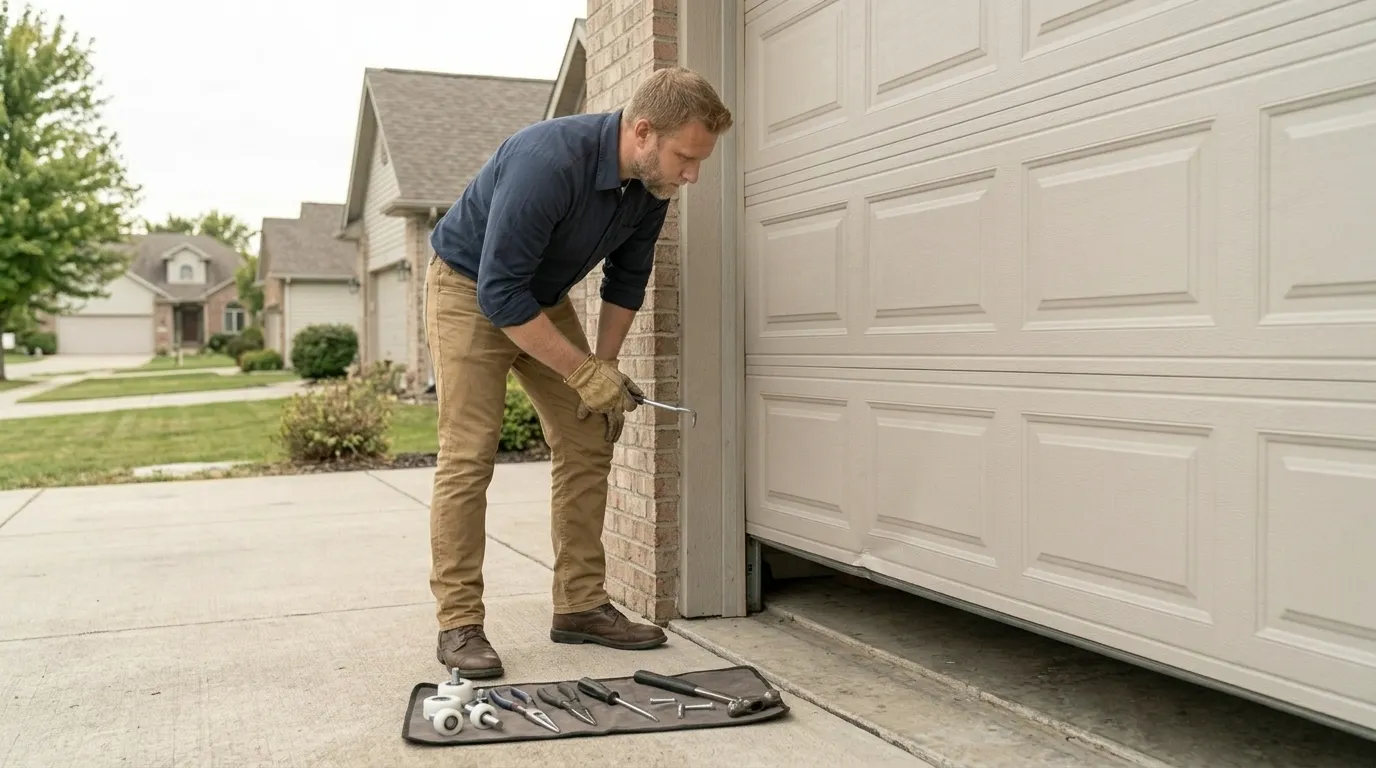
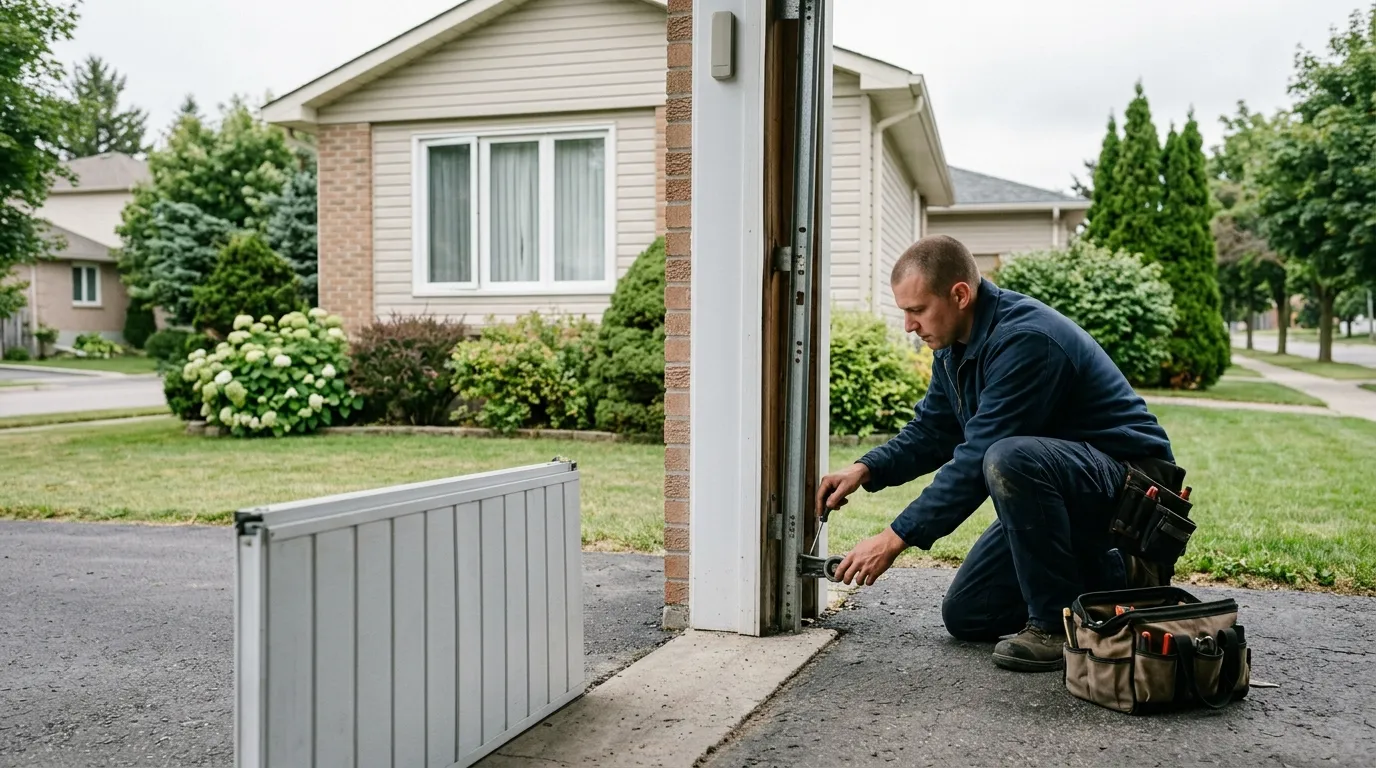
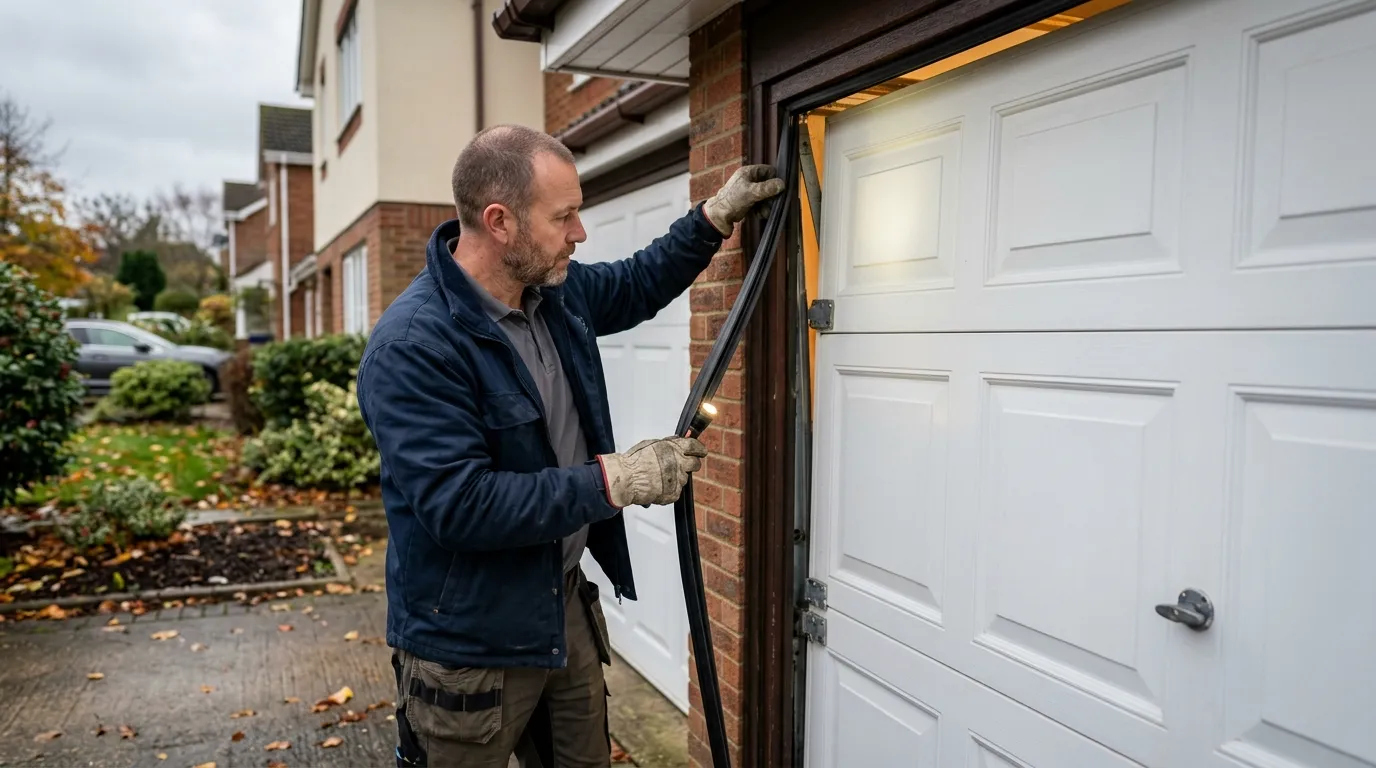
If the door is visibly wobbling side to side as it moves, or you can see daylight between the roller and the track on one side, that roller's worn enough that it's no longer riding the track square. Left alone, this doesn't stay a rolling problem - it turns into a track problem, then a bent-bracket problem, and the repair gets bigger the longer it waits.