What Causes It Around Here
Most of the housing in this service area went up between 1938 and 2003, with the median build year landing around 1983. That one number explains a lot of the emergency calls we take. A door and opener installed during the 1980s-90s building push across the area's 47 named neighborhoods is now well past the point where torsion springs, cables, and rollers are original equipment - they're worn equipment. Steel fatigues on a cycle count, not a calendar, and a spring wound in 1985 has already handled tens of thousands of open-close cycles.
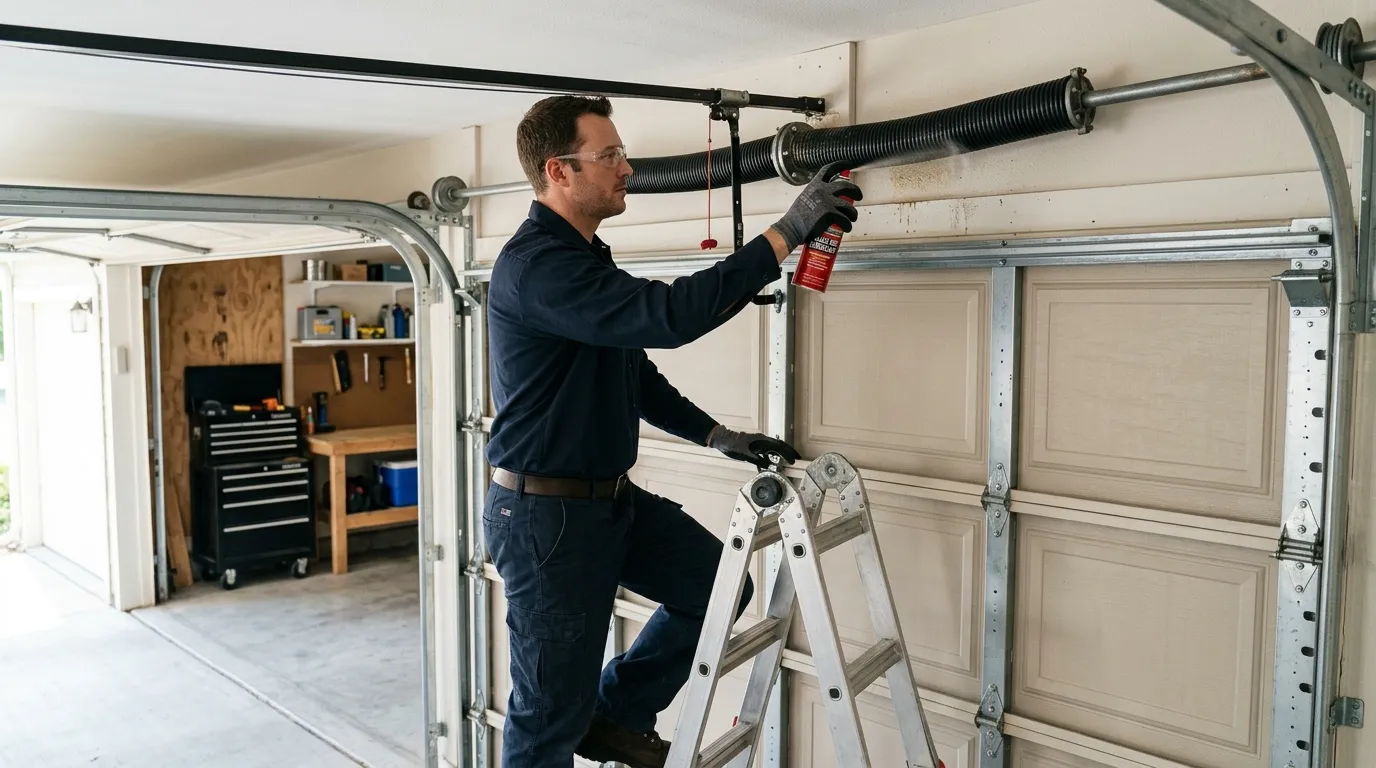
The area sits in a cold, moderate climate band, and that matters more than people expect. Cold steel is less forgiving steel. A spring that's already thinning from age snaps cleaner and faster once temperatures drop, and it usually happens on the coldest morning of the week - right when you're trying to leave for work. Openers see it too: older chain-drive units built for 1980s door weights start skipping or stalling once winter grease thickens up.
None of this is unique to one street. It's a function of when this area was built and what it's built to handle now, decades later.
The Complications
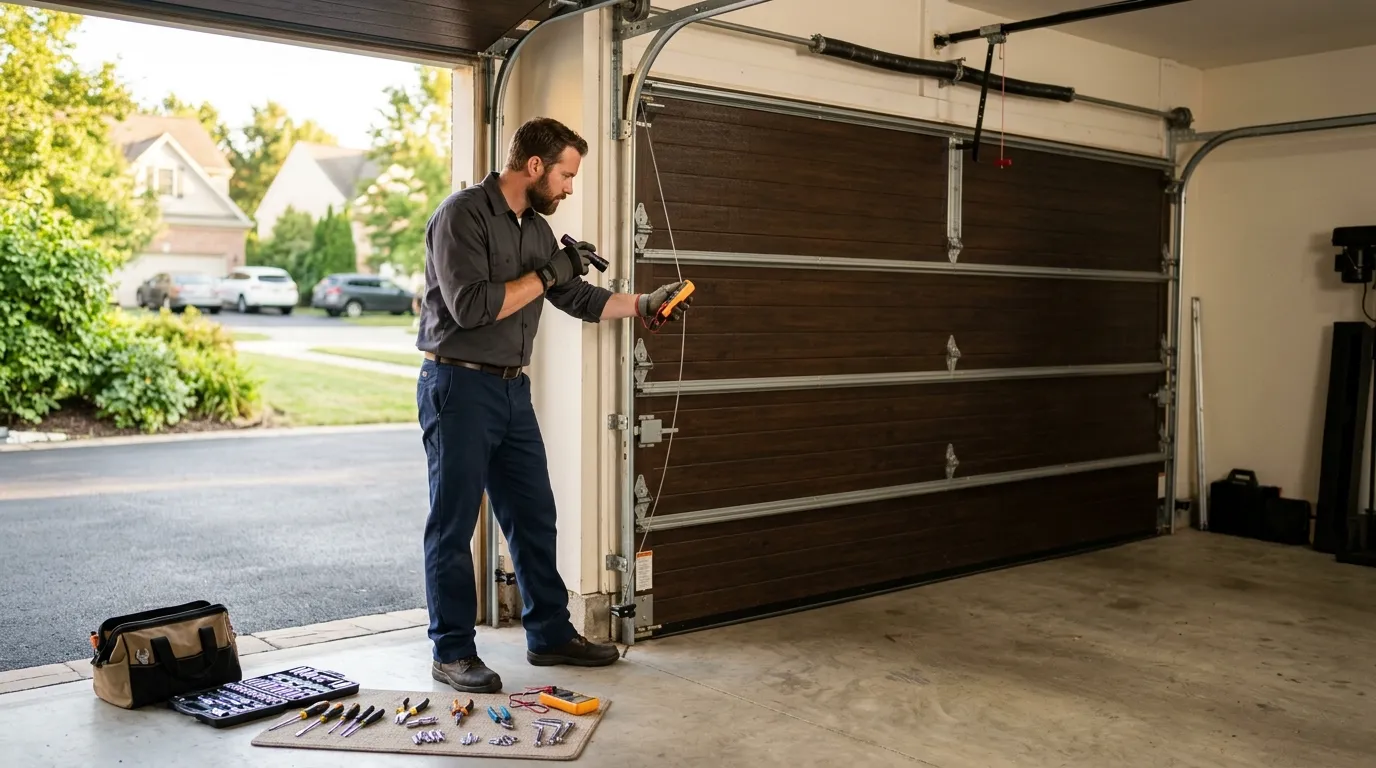
An emergency call is rarely just one broken part. On a door old enough to match the area's 1983 median build year, a snapped spring has usually been overloading the opener's gears for weeks before the actual break - the opener was straining, not just the spring failing quietly. So a same-day spring swap sometimes turns into a spring-and-opener conversation once we're actually looking at the drive gear.
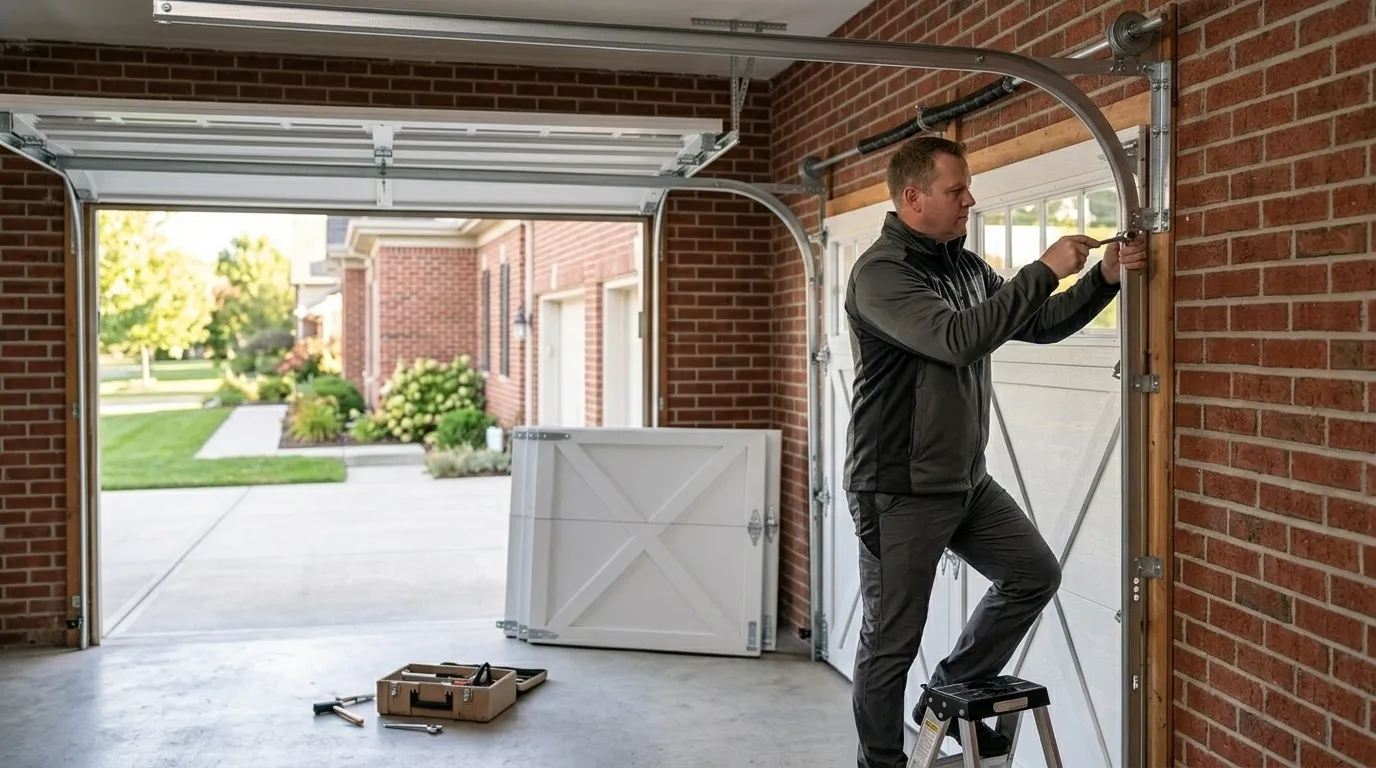
Hardware from the 1980s-90s stock across this area also isn't always a stock size anymore. Cable lengths, drum diameters, and track spacing on older doors don't always match what's sold off the shelf today, which can add time to a repair that looks simple over the phone.
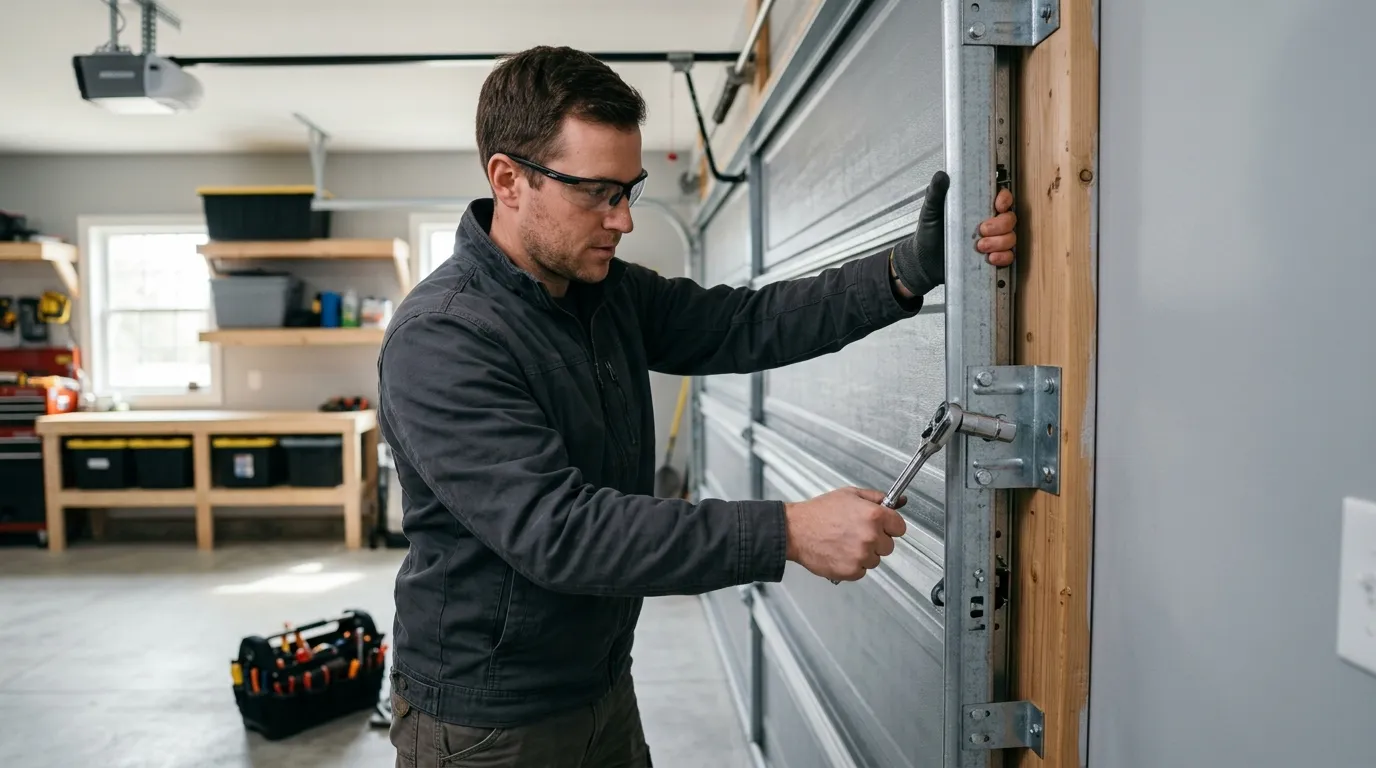
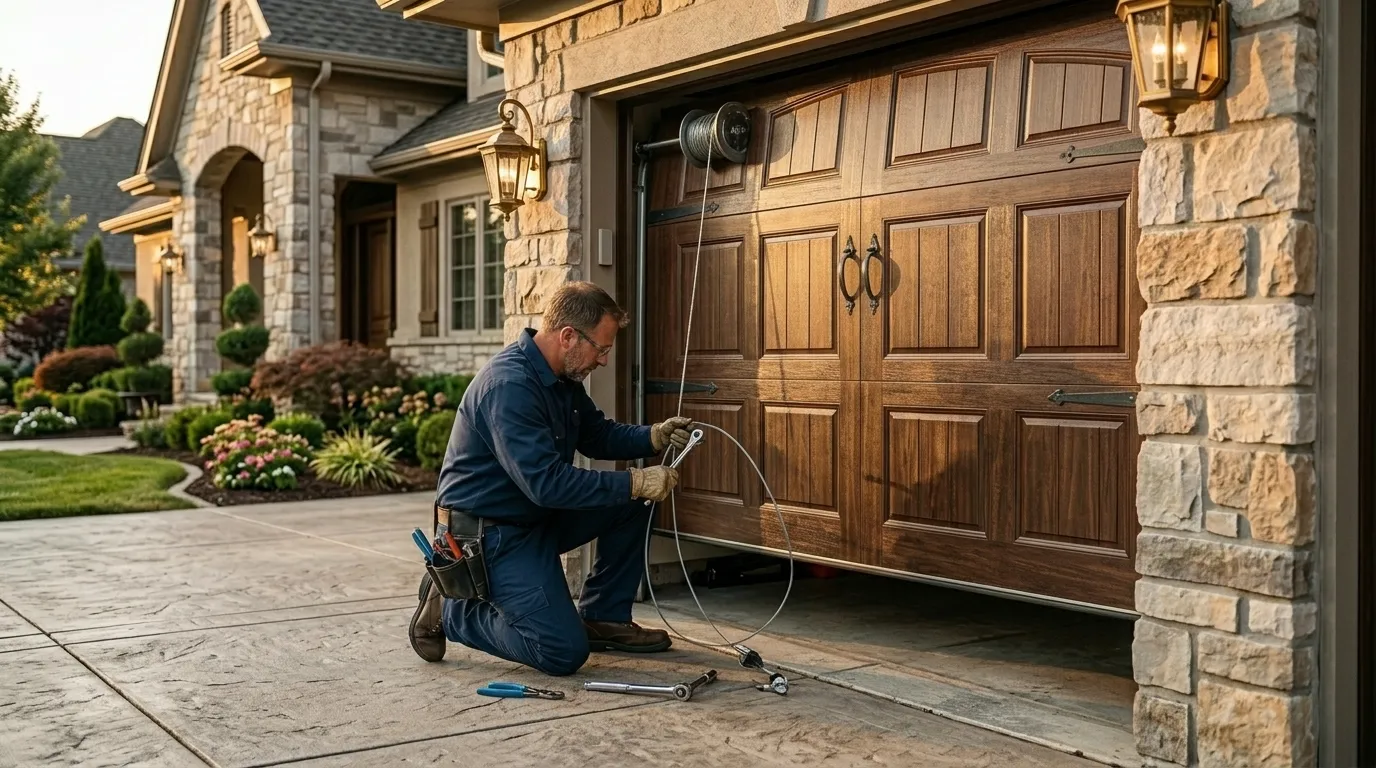
Cold-weather failures compound this. A spring that snaps in freezing temperatures often takes a cable or a section of track with it on the way down, because the door doesn't come to a clean stop - it drops. That's a bigger job than a spring alone, and it's part of why we look at the whole door on an emergency visit instead of just the part that failed first.
We don't stock every cable length and drum size for every era of door on the truck. On an older or unusual setup, a part may need to be sourced before the job finishes - that's the honest limit of a same-day call.
What You Are Seeing
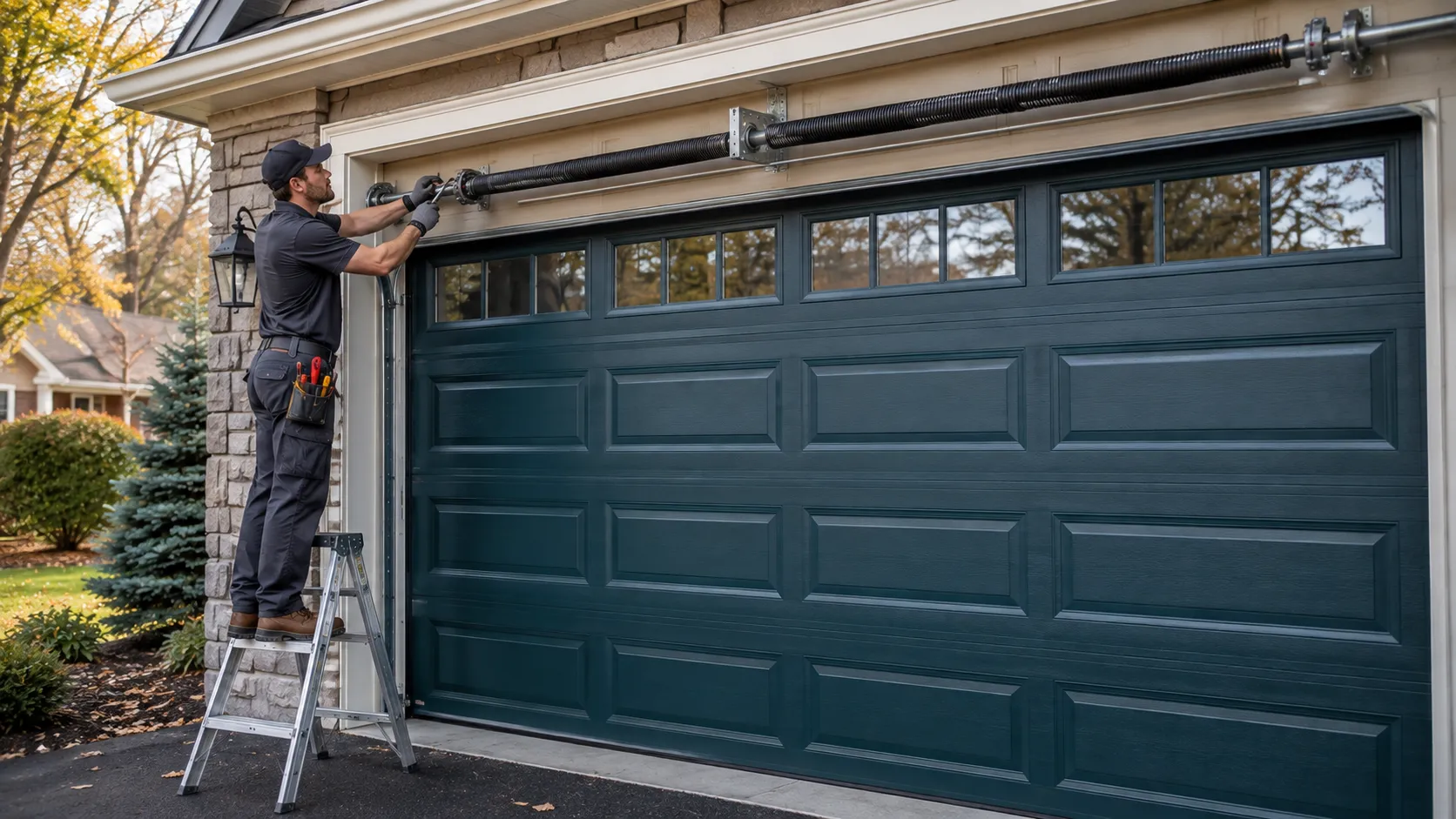
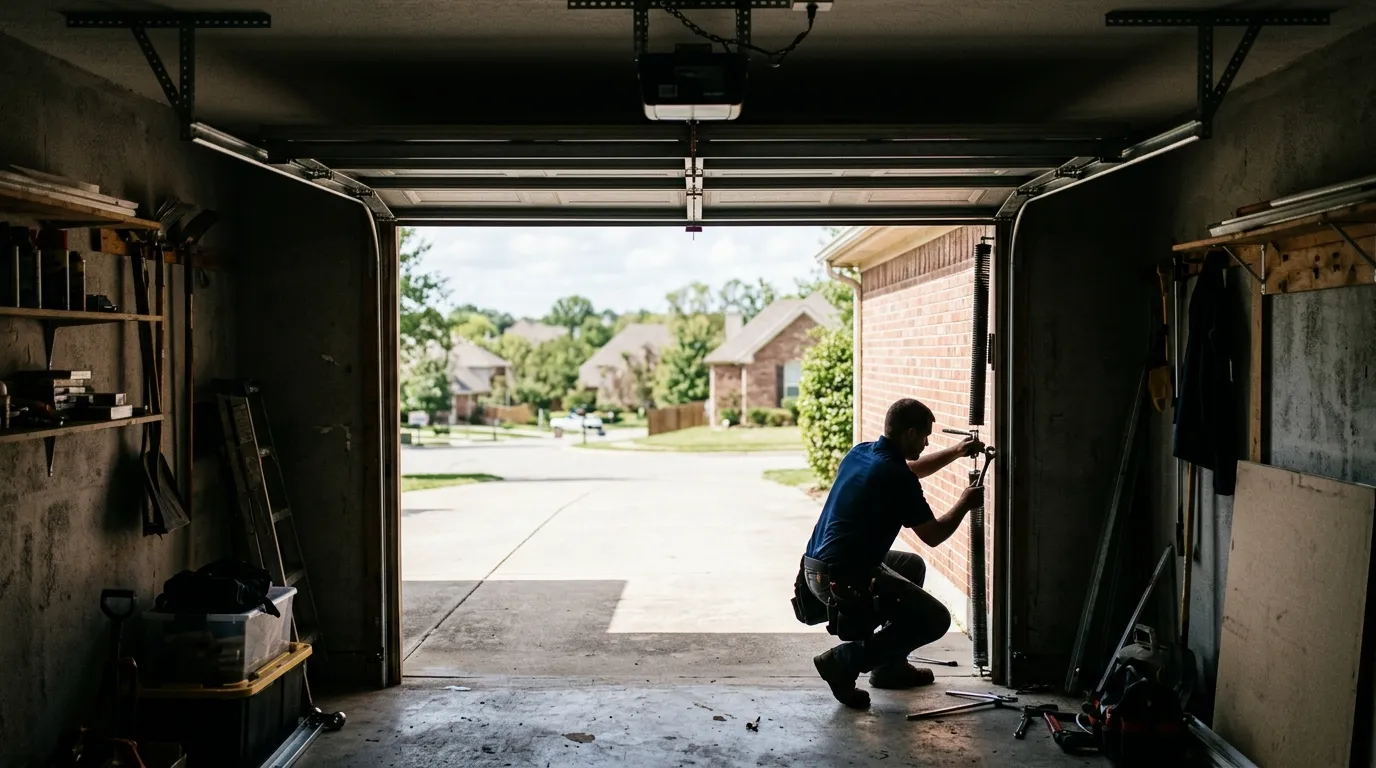
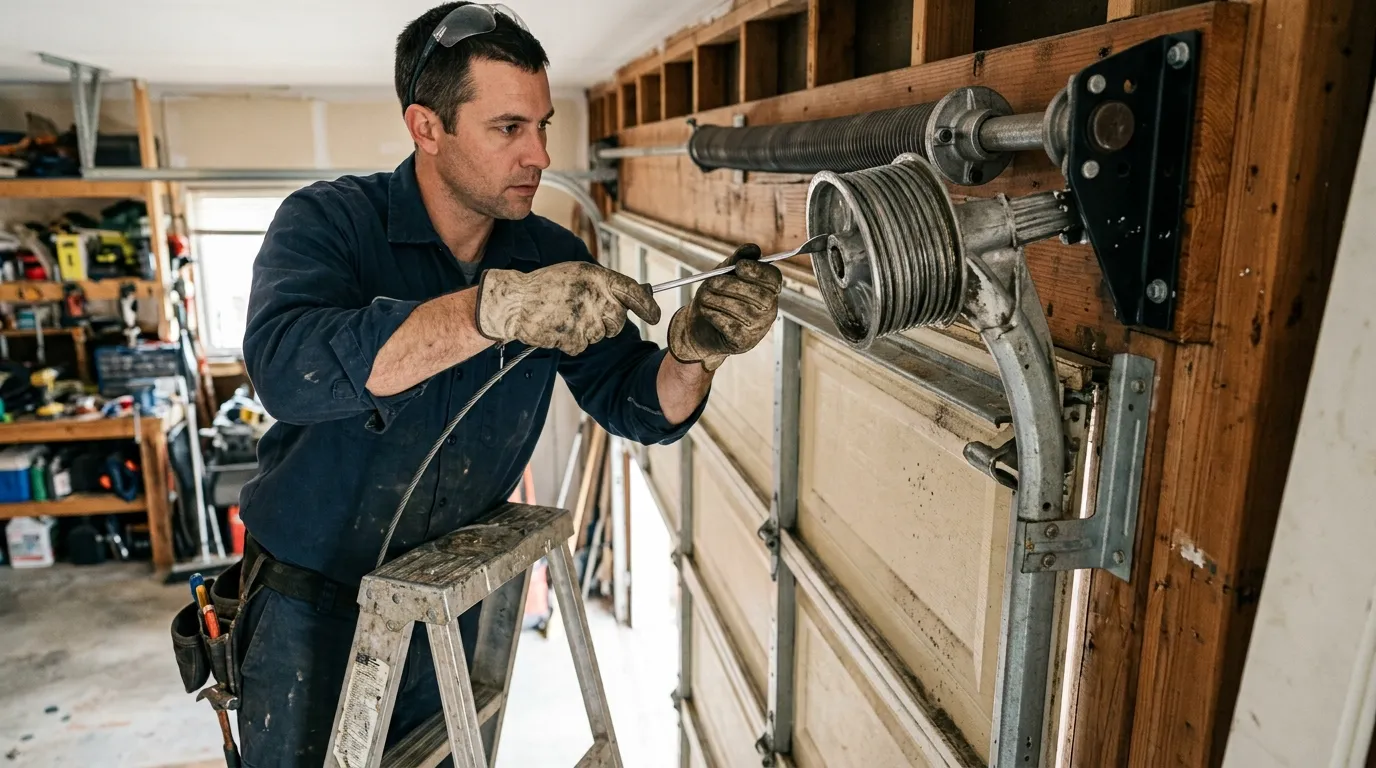
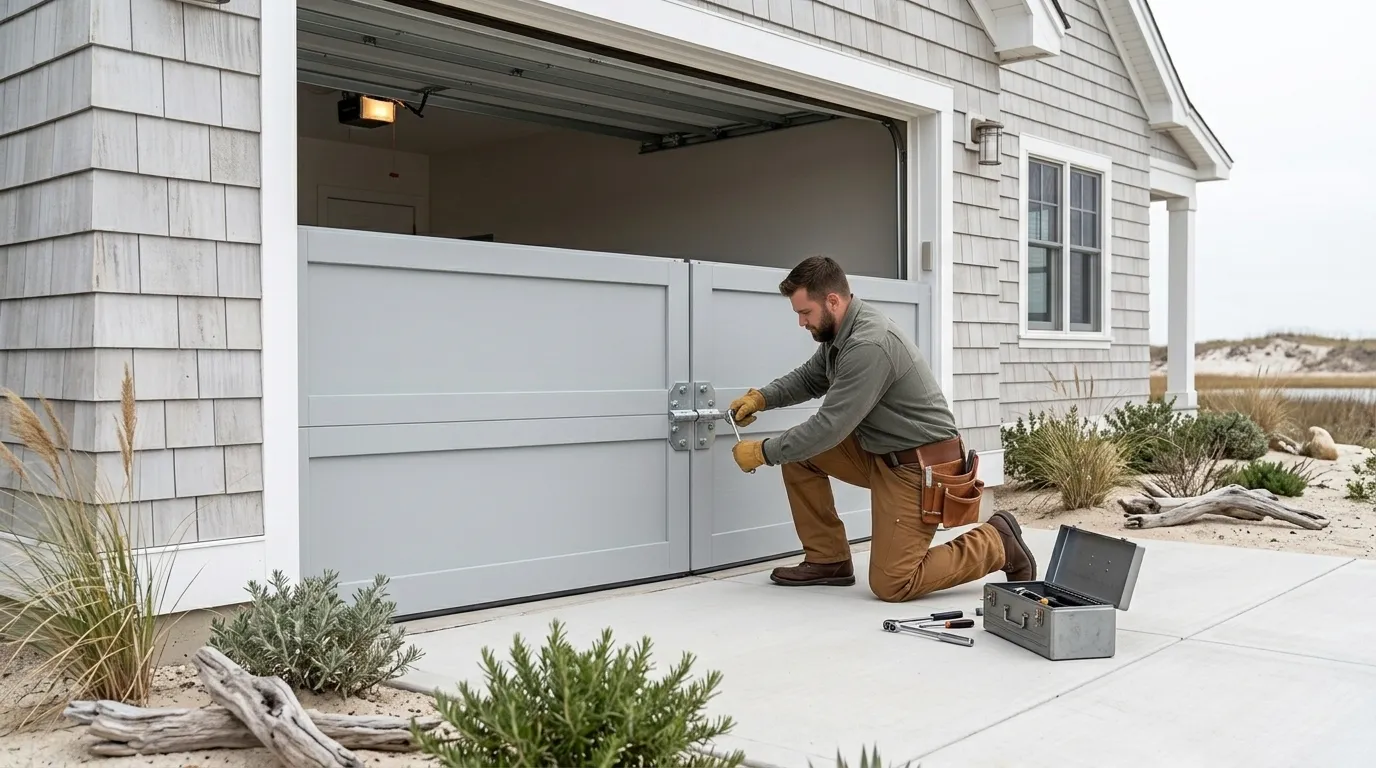
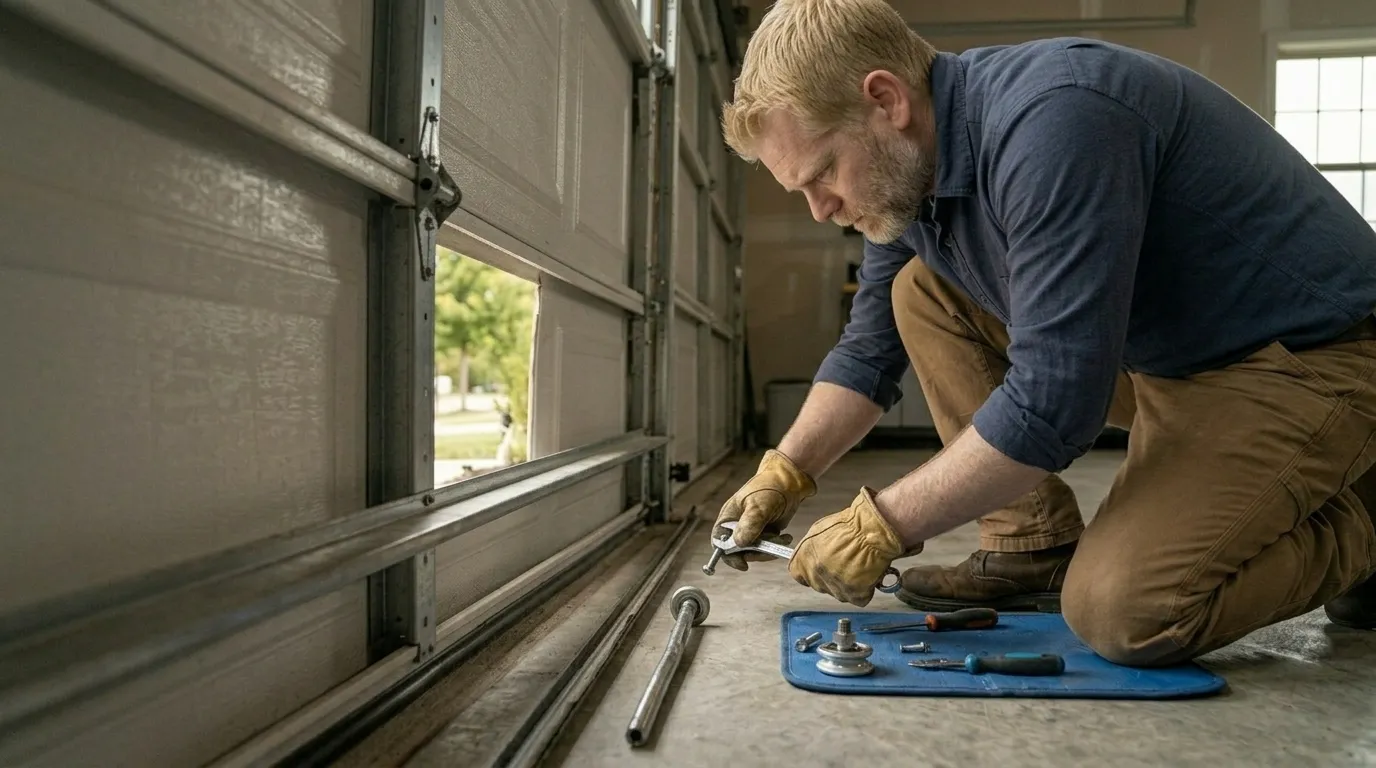
A loud bang from the garage followed by a door that won't budge, or that only lifts a few inches before stopping, is almost always a broken torsion spring - common enough on doors from the area's 1980s-90s housing stock that it's the single most frequent emergency call we get. If the door drops fast and uneven, one side lower than the other, that's usually a spring that's broken on just one side of a two-spring setup.
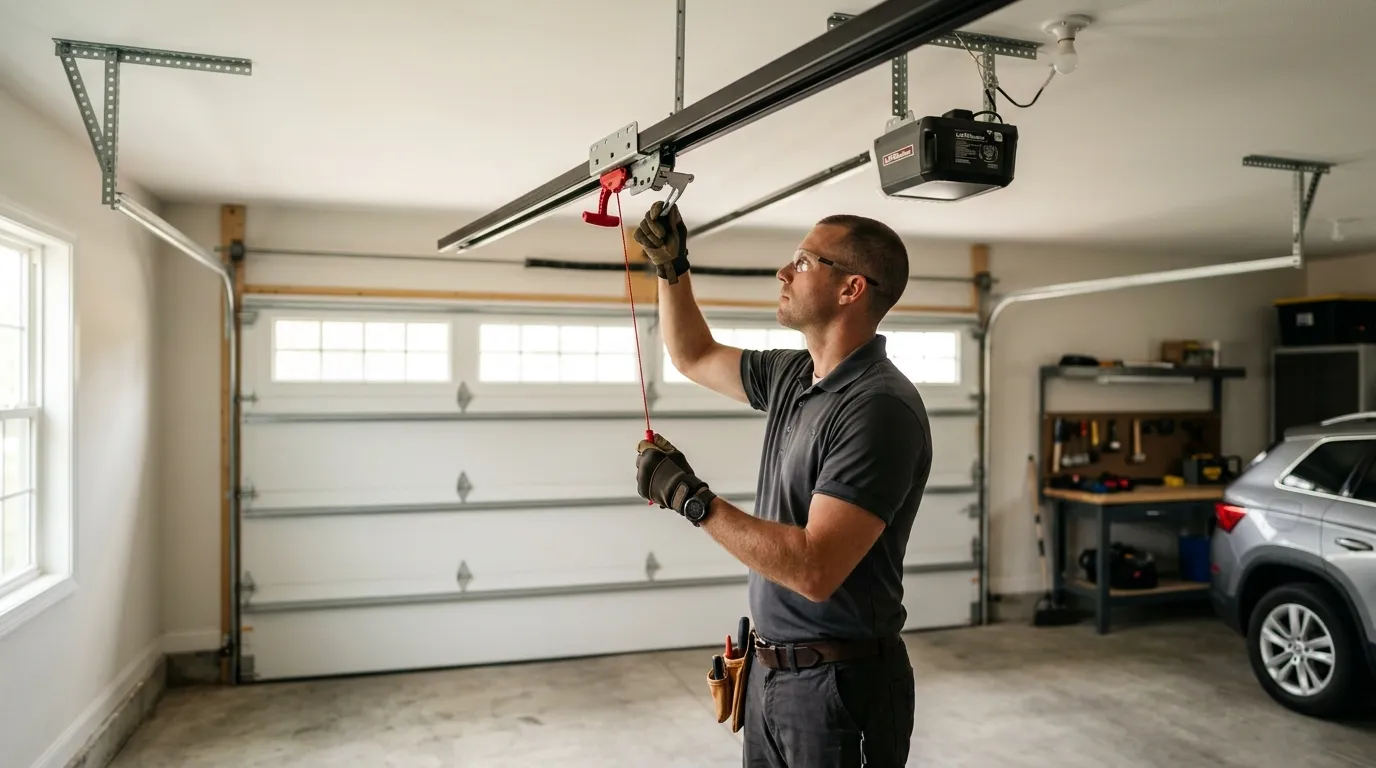
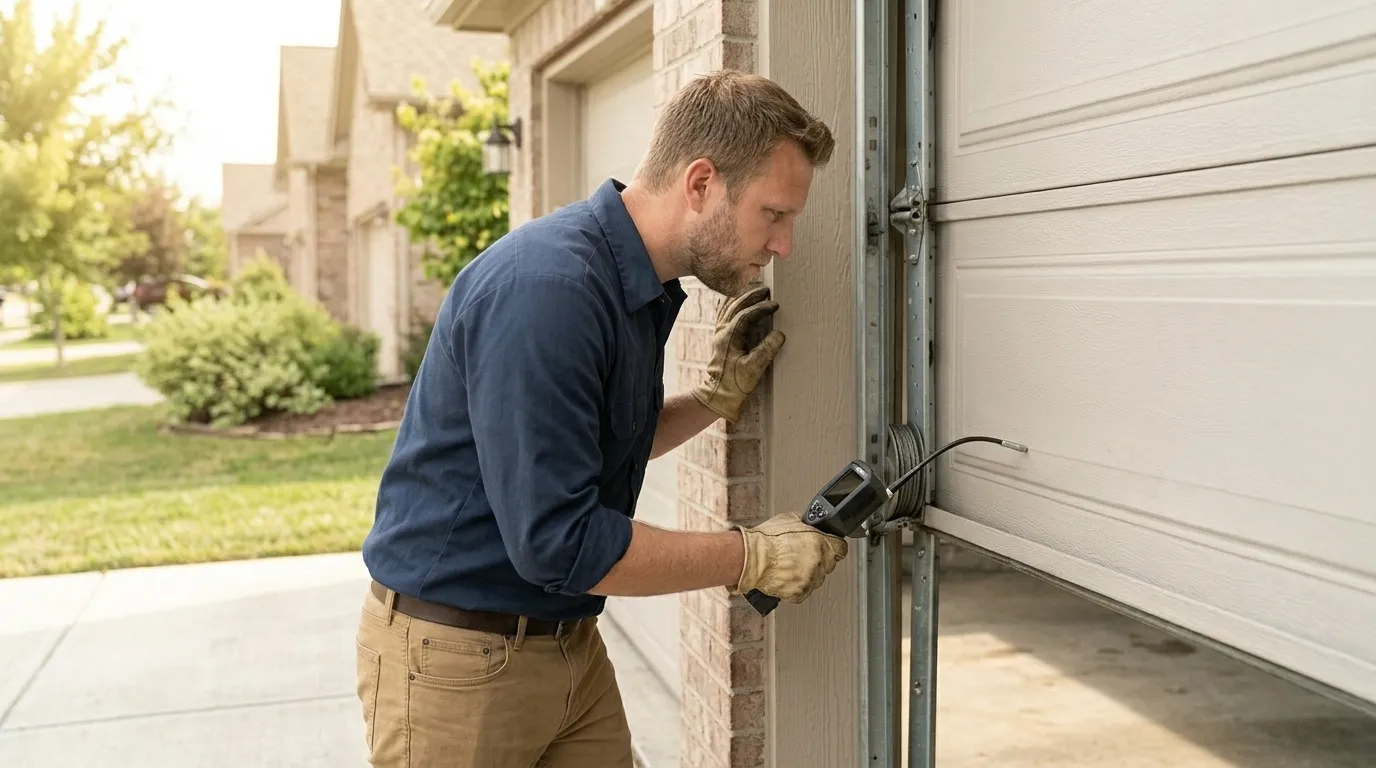
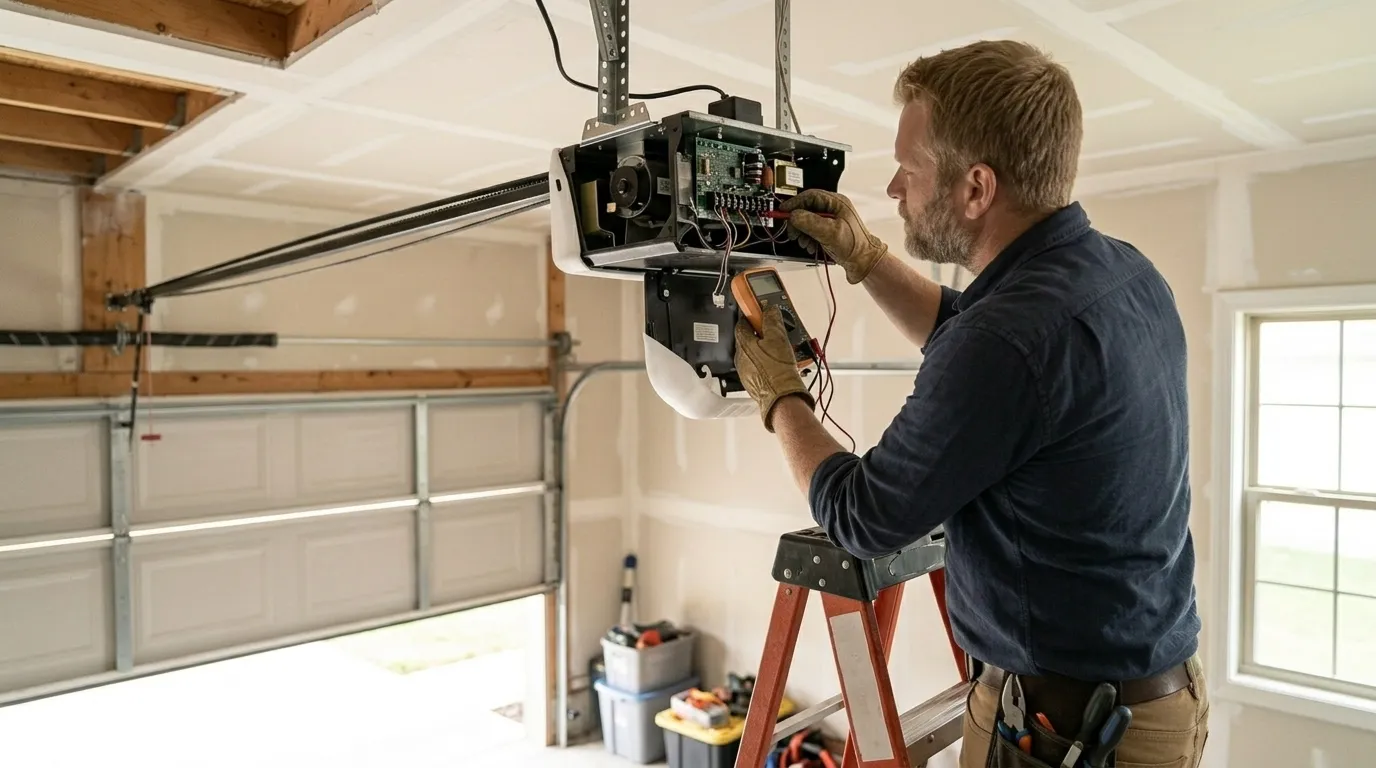
An opener that hums but doesn't move the door, or that reverses right after it starts closing, often points to a worn drive gear or a misaligned sensor rather than the spring. Cables that look frayed or kinked near the bottom bracket are a sign a full break is close - that's worth an emergency call before it fails on its own schedule, not yours.
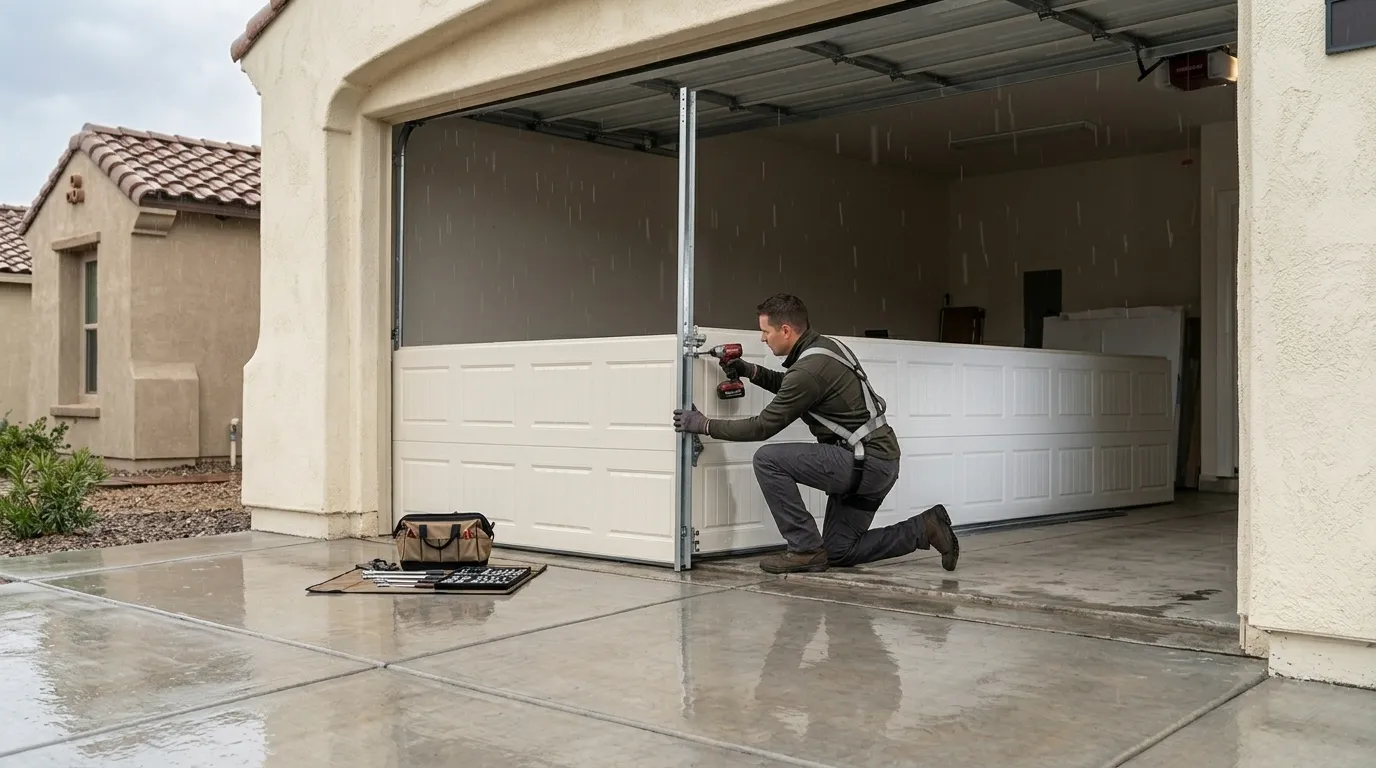
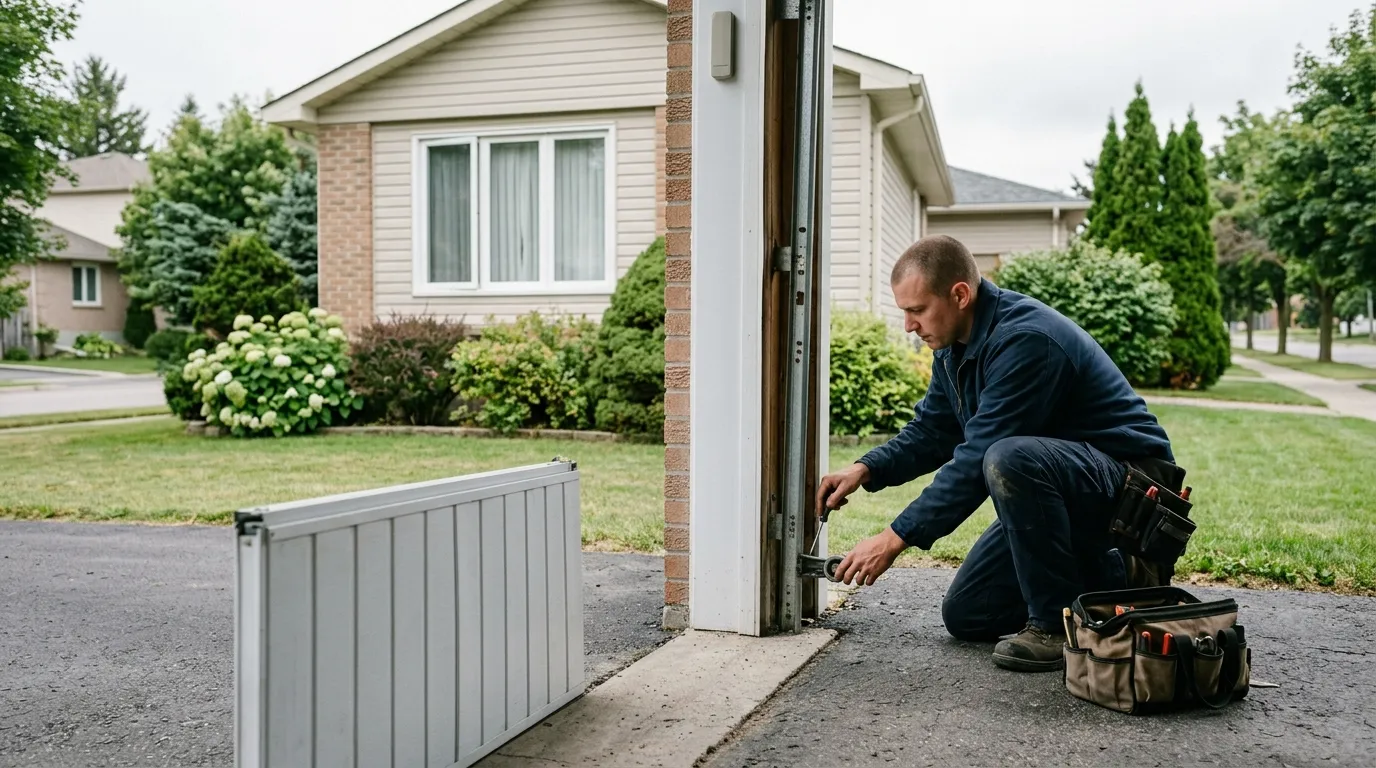
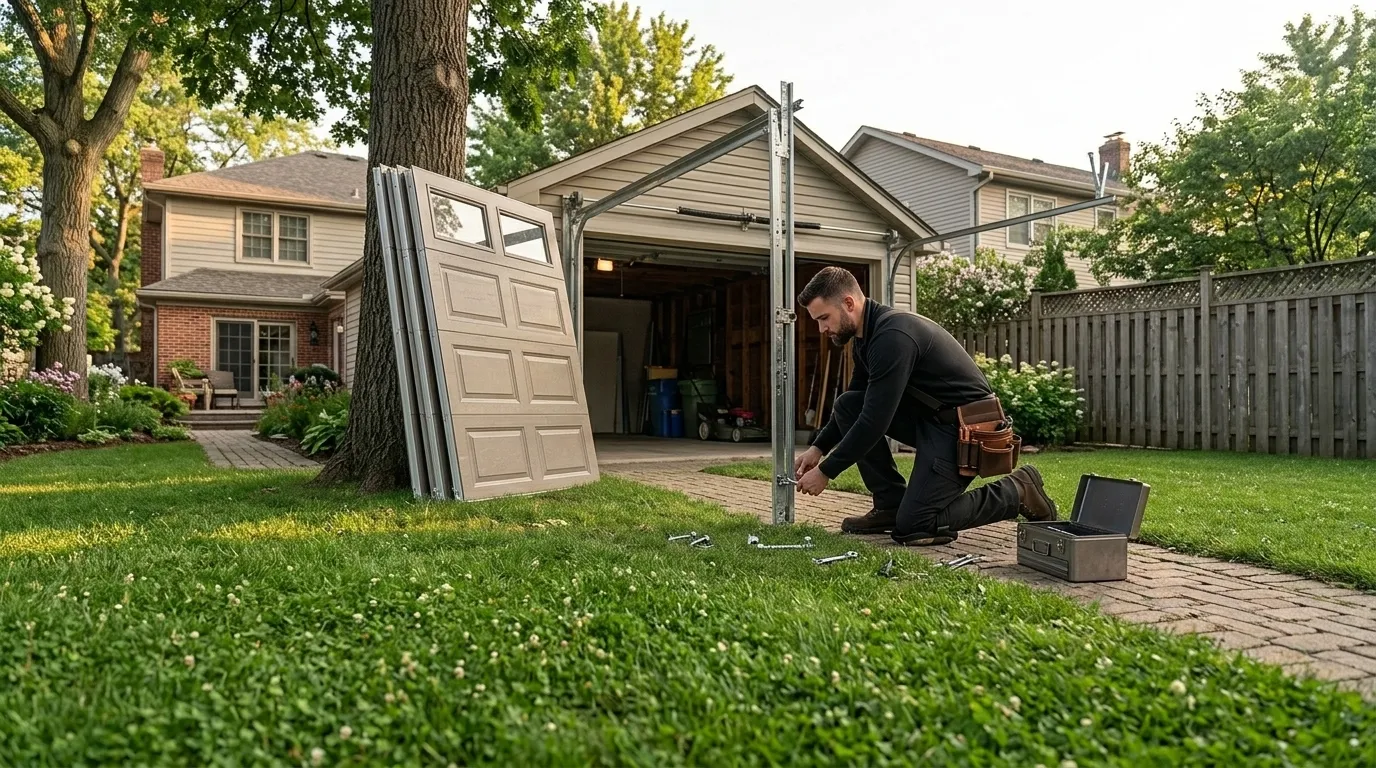
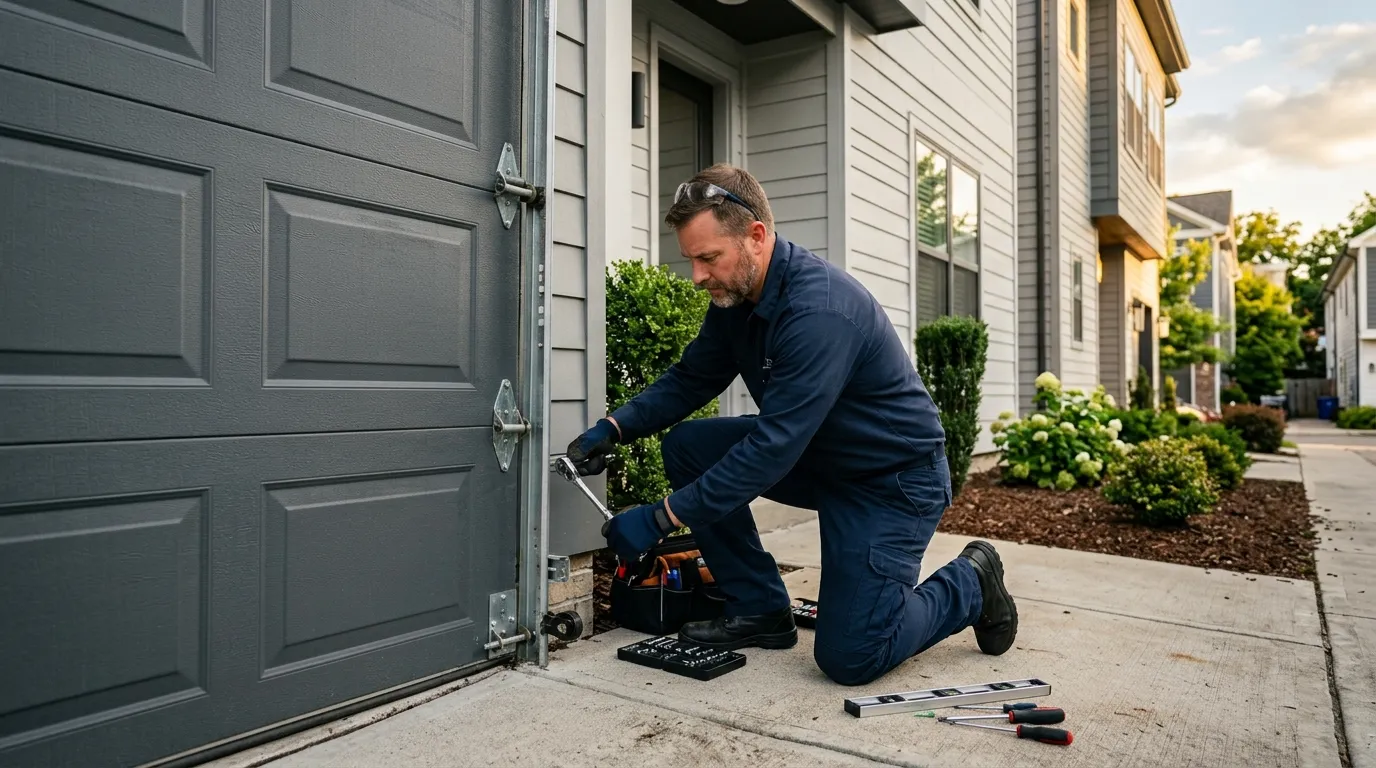
A door that's come off its track entirely, sitting crooked in the opening, usually means a cable snapped or a roller failed under load. Across households in this service area - roughly 147,257 owner-occupied houses out of 298,442 total - these are the failure patterns we see repeat on doors built during that same 1938-2003 window, just at different stages of wear.