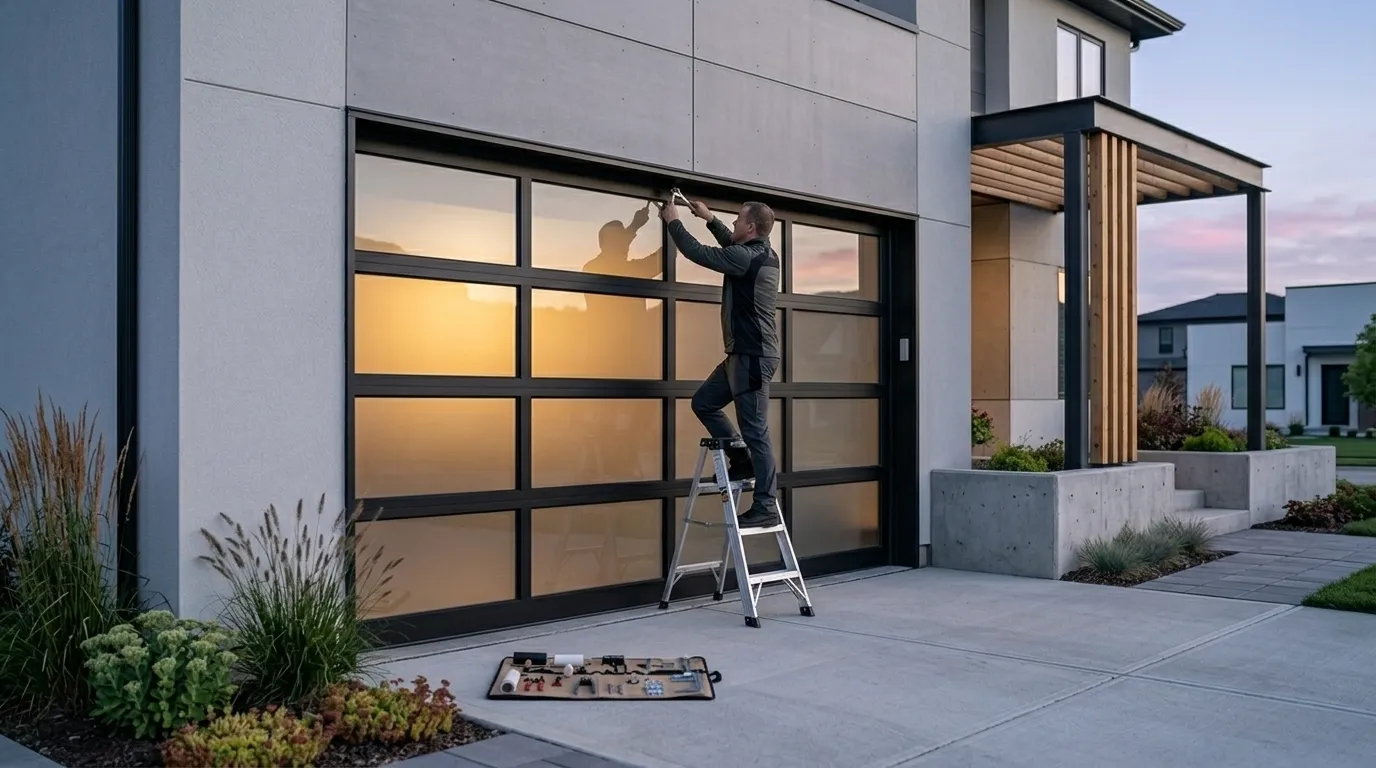
The Cost of This Job
What a new door runs here depends less on the brand you pick than on what's already hanging in the opening. A lot of houses in Lakeland South went up when the median build year across the area was 1985, and that means single-layer steel doors on extension springs mounted overhead the track, not torsion springs on a shaft. Swapping that setup for a modern insulated door isn't a straight panel-for-panel trade - the track geometry and spring type usually change too, which adds labor beyond just the door itself.
We don't quote a flat number over the phone for that reason. Door width, whether you want insulation (worth asking about here, since the area sits in a cold-moderate climate band), and whether the opener gets replaced alongside the door all move the number. What we can tell you without seeing the opening: if your house is original to that mid-80s wave and nothing's been touched, budget for spring and track work, not just a door swap. One honest limitation - we don't do same-day quotes sight unseen. We need eyes on the header and the track before we'll put a number on paper.
Stocked Parts
Doors from the 1985-ish build wave in this pocket almost always came with steel sectional panels and extension springs, not torsion. When we replace one of these, the truck carries hardware sized for both eras - extension-spring drums and pulleys for the door you have now, and torsion shafts and cables for the door going in, since most new installs move to torsion for a longer service life and a safer wind-up.
We also bring photo-eye sensor kits as a matter of course. Openers original to houses this age predate the 1993 federal rule requiring reversing sensors, so if your opener is original, it's missing a safety feature that's now standard on anything we install. If your home has already had a door or opener swapped since then, some of this may not apply - we check what's there before we assume anything about the vintage.
What we don't carry on the truck: wood carriage-house doors or anything custom-milled. Those get special-ordered and take longer, which is worth knowing if that's the look you want.
What the Fix Involves
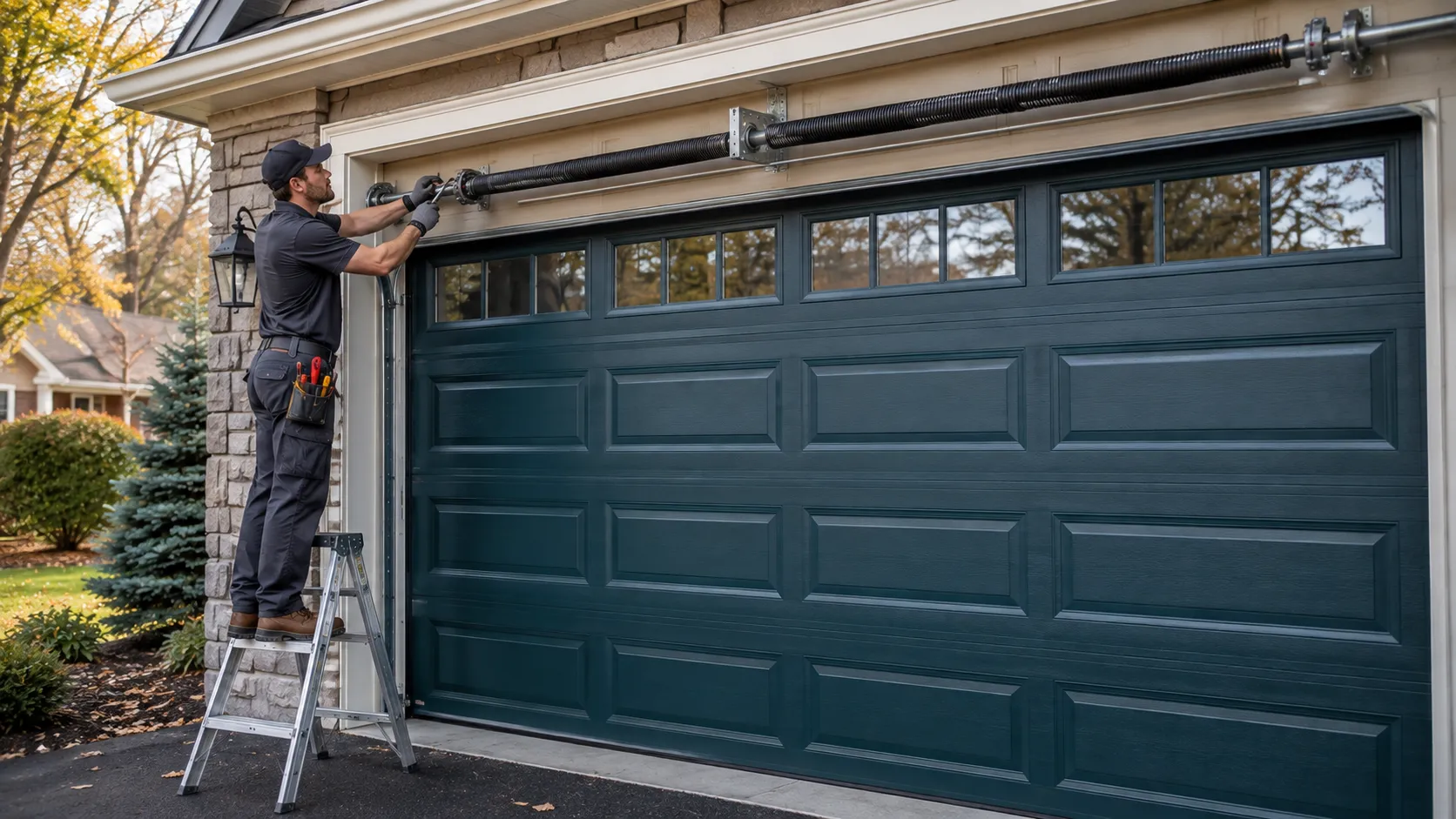
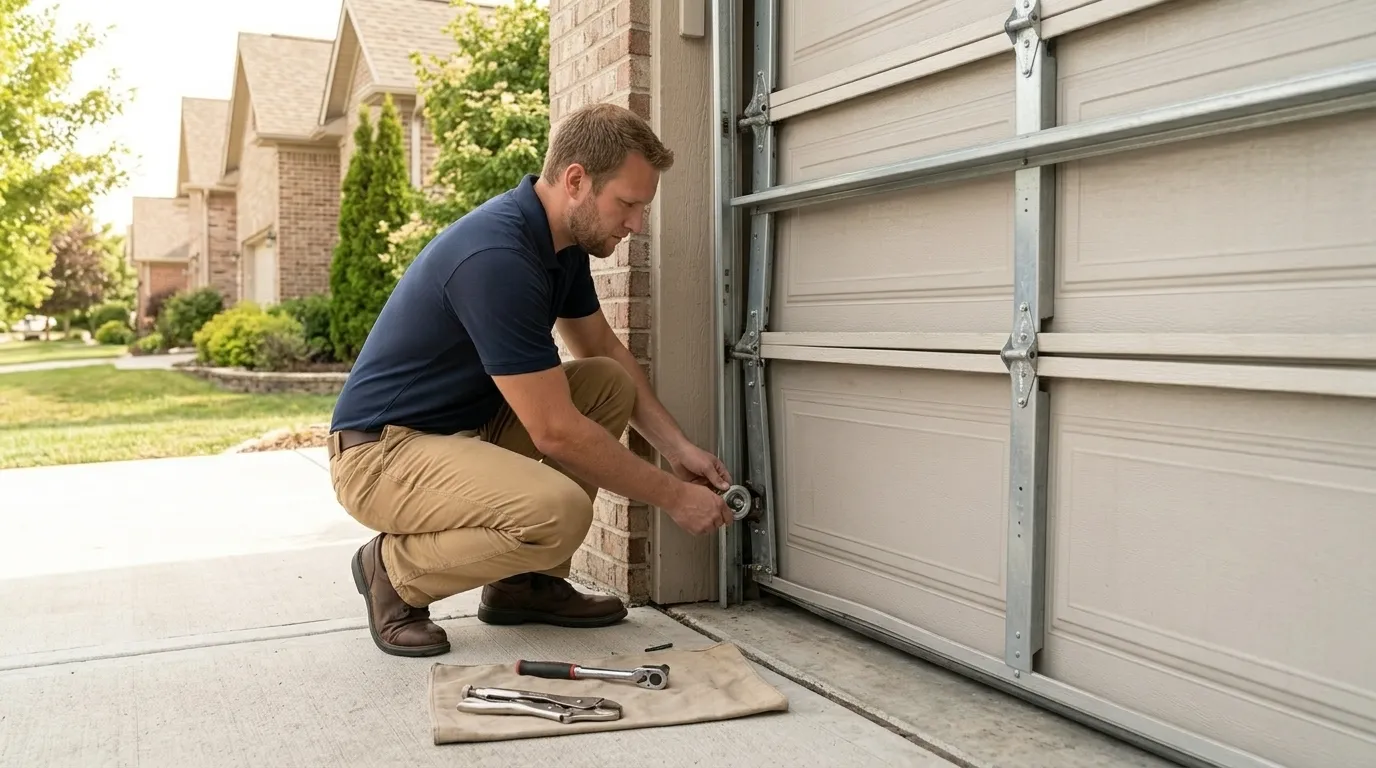
For a house built around 1985 with the original door, the job usually starts with pulling the old extension-spring track hardware entirely, not just unbolting the door panels. We reframe the track to torsion, mount a shaft and springs sized to the new door's weight, then set the panels, weatherstripping, and header seal.
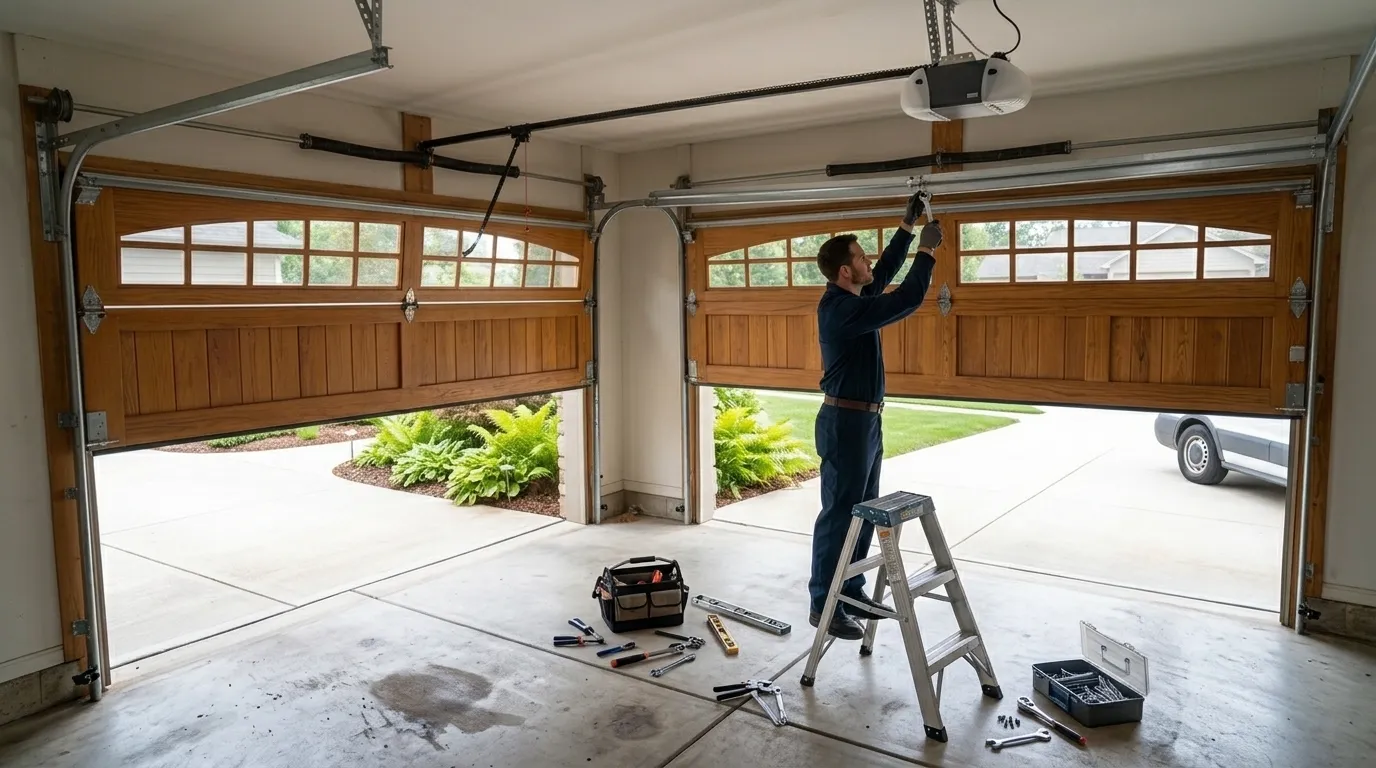
Opener replacement often comes with it. If yours is original to the house, it predates the 1993 photo-eye requirement, so we install a new opener with reversing sensors as part of the same visit rather than bolting a modern opener to old, unsensored rail. We test the balance with the door disconnected from the opener - a door that doesn't hold position halfway up on its own has a spring problem the opener will mask, not fix.
Insulation is the other decision point. Given the cold-moderate climate here, an insulated door pays for itself in comfort if the garage is attached and used as more than storage. It's not required, but we'll flag it if your garage shares a wall with living space.
Can You Do This Yourself
Panel cosmetics, sure - painting, weatherstrip swaps, roller lubrication, that's fine to DIY. Swapping a whole door on a house this age is a different job. You're not just hanging a panel; you're often converting extension-spring hardware to torsion, which means winding a torsion spring under tension with the right bars, in the right sequence. That's the single most common way people get hurt doing this themselves, and it's not a skill you pick up from a video in an afternoon.
There's also the opener question. If you install a new opener but leave old, unsensored rail and wiring in place, you can end up with a door that doesn't reverse properly on obstruction - which defeats the point of upgrading it. If your household includes an income around the area's median of roughly $105,273, the labor cost of having this done right is a small fraction of what a mis-set torsion spring or a door that won't reverse could cost you in a repair or, worse, an injury. We're honest that this isn't a weekend project for most homeowners.