The Complications
Pacific is a small town - 2,406 households, nowhere near the size of the bigger suburbs we cover. That matters for roller work in one specific way: a town this size doesn't have enough volume to support its own garage door shop, so most of what breaks here gets fixed by trucks coming in from somewhere else, in this case the 4 miles from Auburn.
The housing here centers on 1986, a tighter build window than you'll find across the wider service area (which runs 1938 to 2003). That means the doors in Pacific are more uniform than in older or newer pockets nearby - most of them shipped with the steel rollers and roller-and-hinge assemblies standard to mid-80s production. Those parts have had roughly forty years of open-close cycles, and steel rollers on steel track wear a groove that eventually throws the door off-track under load, especially with the cold snaps this area gets in winter.
The complication isn't exotic hardware - it's consistency. When one 1986-built door starts grinding, the neighbor's door built the same year is usually a few thousand cycles behind it, not decades. That's useful for us to know before we open the panel, and it's the reason a roller job here tends to be a straightforward swap rather than a hunt for obsolete parts.
What You Are Seeing
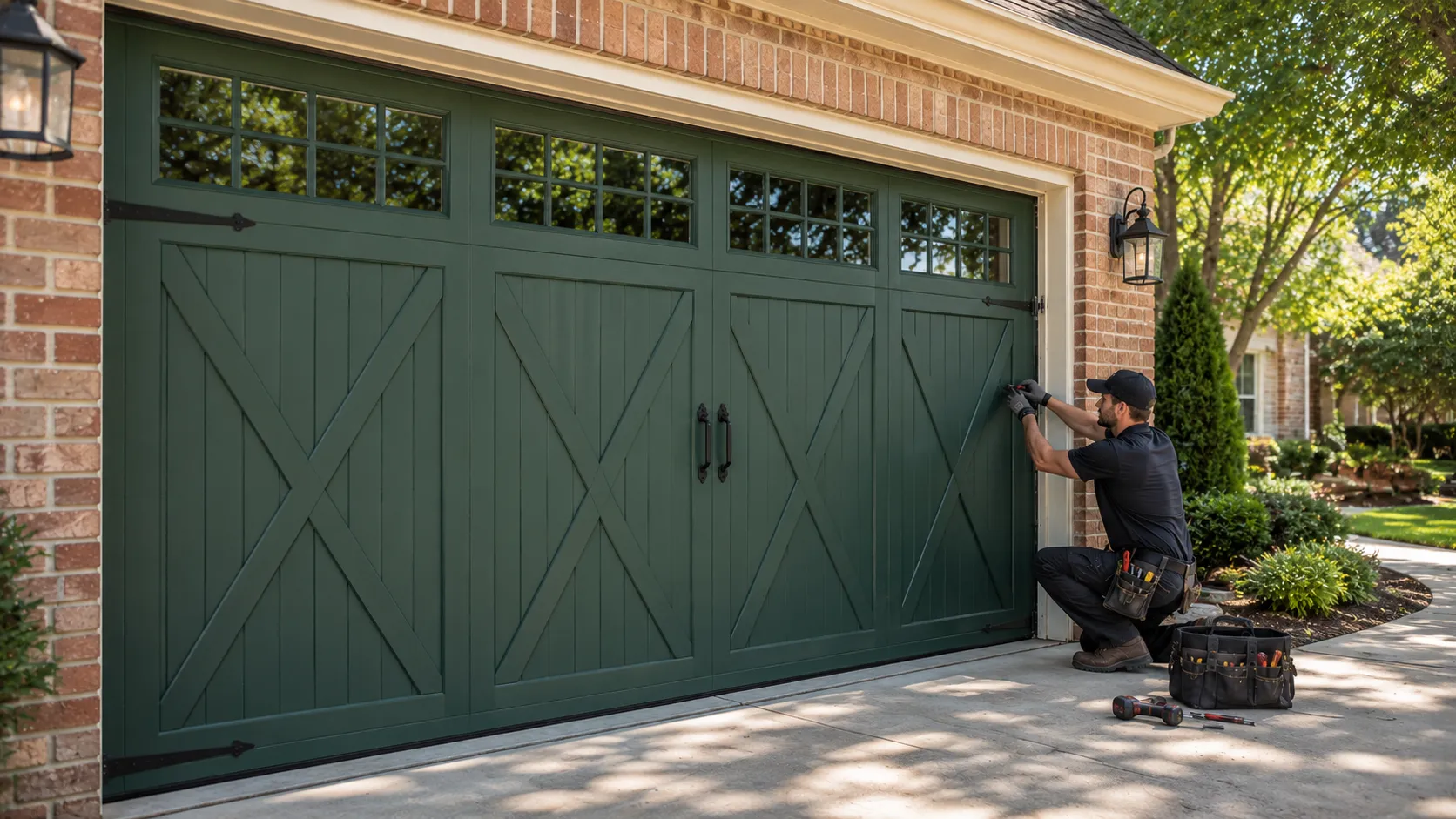
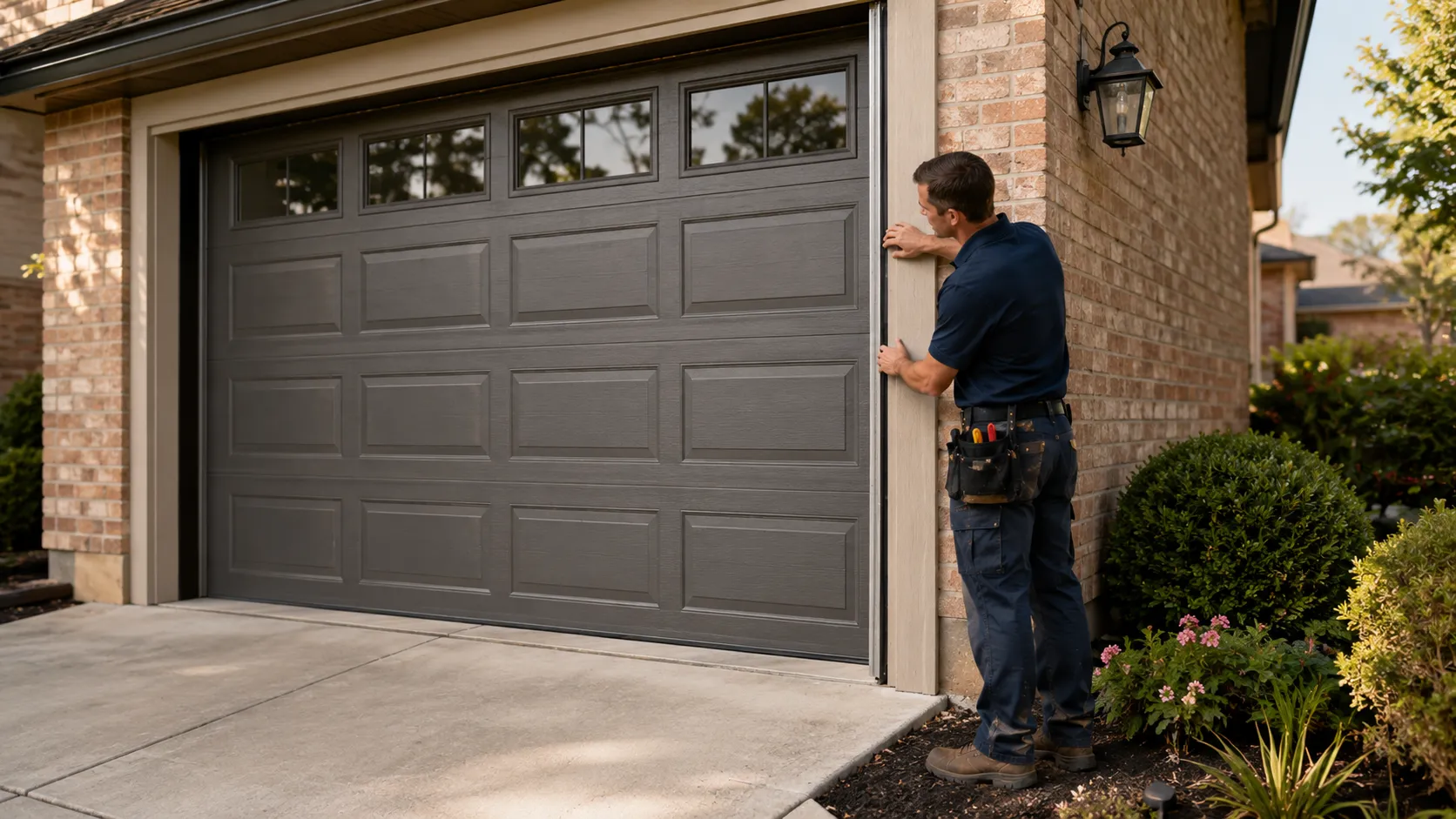
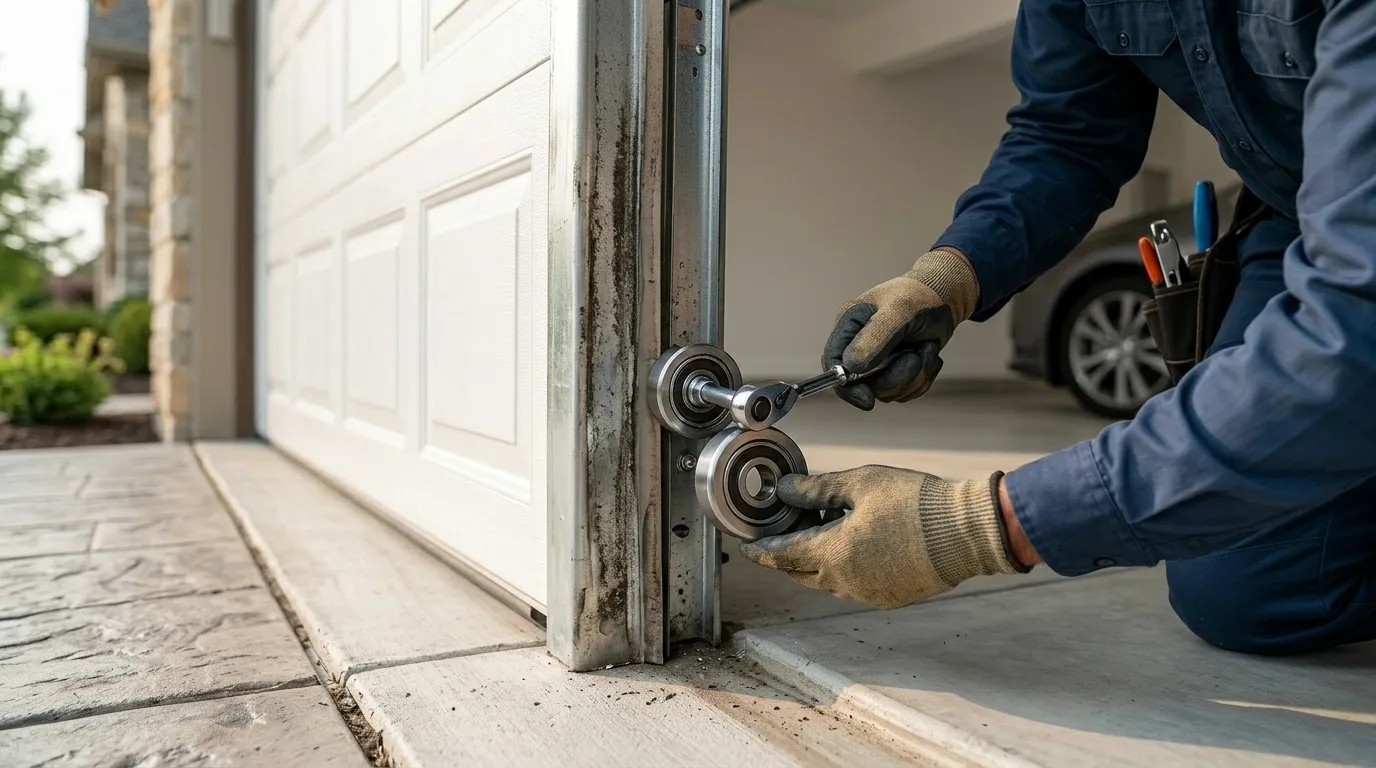
A worn roller usually announces itself before it fails outright. Listen for a grinding or popping sound as the door travels, especially near the top of the track where the door picks up speed. Look at the door in motion - if it wobbles side to side instead of gliding straight, one or more rollers has flattened on one side or the roller stem has bent.
On the steel rollers common to 1986-era doors, you'll often see visible wear as a flat spot or a chip where the roller meets the track. Nylon rollers, if a previous owner upgraded, tend to crack rather than flatten, and cracked nylon sheds small plastic fragments you'll find on the garage floor under the track.
Cold matters here too. This region sits in a moderate-cold climate band, and steel rollers stiffen and grind louder on cold mornings before they've warmed up from a few cycles - if the noise fades after the door's been run a couple of times, that's a sign the roller bearing is drying out, not yet frozen solid. Left alone, a flattened roller eventually jumps the track, which is a bigger and more expensive fix than the roller itself. Catching it at the grinding-noise stage is the cheap version of this repair.
How to Book
We run this job out of Auburn, 4 miles from Pacific, so there's no local branch or depot to call - just a truck making the short run. Median household income in this area sits at $102,976, in line with the kind of straightforward repair-and-replace work most roller jobs are: parts and labor, no upsell needed if the door itself is sound.
Call to describe what you're hearing and seeing - grinding, wobble, a jumped track - and we'll bring the roller stock that matches 1986-era hardware as a starting point. If your door turns out to be older or newer than the neighborhood norm, we'll adjust on-site. See our Pacific area page for the rest of what we cover nearby, or check the Auburn roller replacement page for the base service details.