The Complications
Most houses in Pacific went up around 1986, three years before doors legally had to reverse when they hit something. That 1993 federal safety rule requiring auto-reverse and photo-eye sensors came after most of this town's garages were already built and wired for whatever opener the builder threw in. A lot of those original units are long gone, replaced once or twice, but the wiring, the header clearance, and the bracket spacing still date back to the original build.
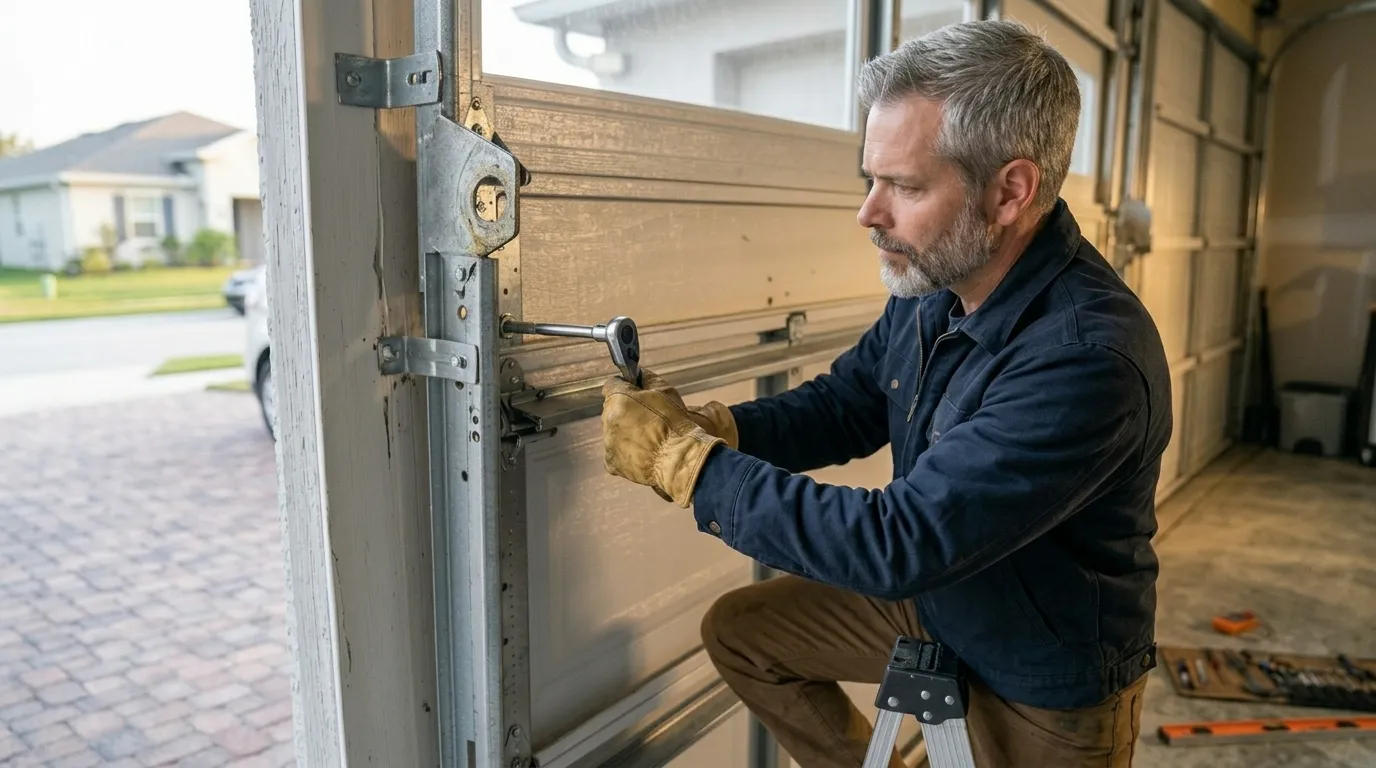
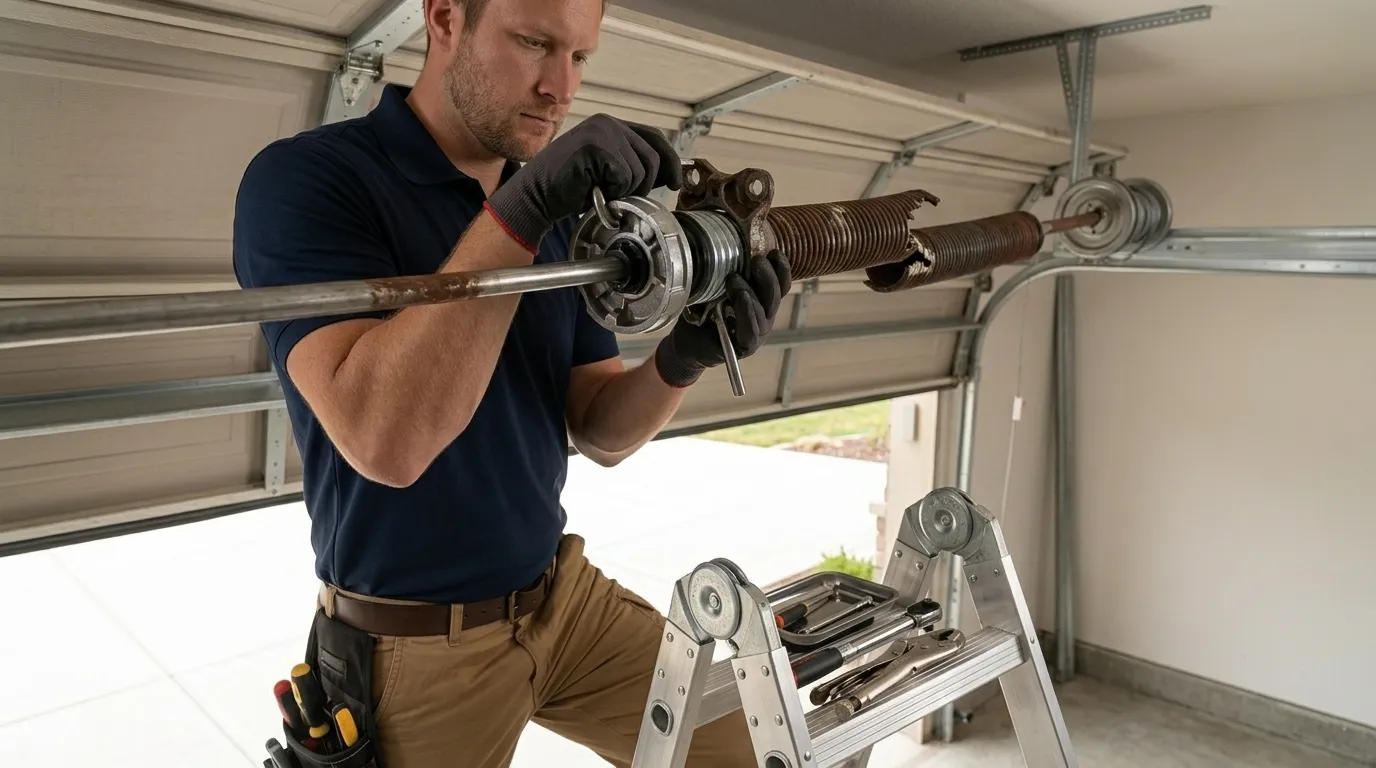
That matters because a lot of chain-drive openers from that era were sized for lighter doors than what people run now. Homeowners in Pacific have swapped in heavier insulated steel doors over the years without upsizing the opener, so the motor strains, the chain stretches, and the travel limits drift. We see openers doing a job they were never built for, on brackets that were never meant to hold this much weight.
We also run into houses where the outlet near the opener is original 1980s wiring, ungrounded or on a shared circuit with something else in the garage. That's not a garage door problem exactly, but it's the kind of thing that turns a one-hour opener swap into a longer job once we're up on the ladder and see what's actually there.
What You Are Seeing
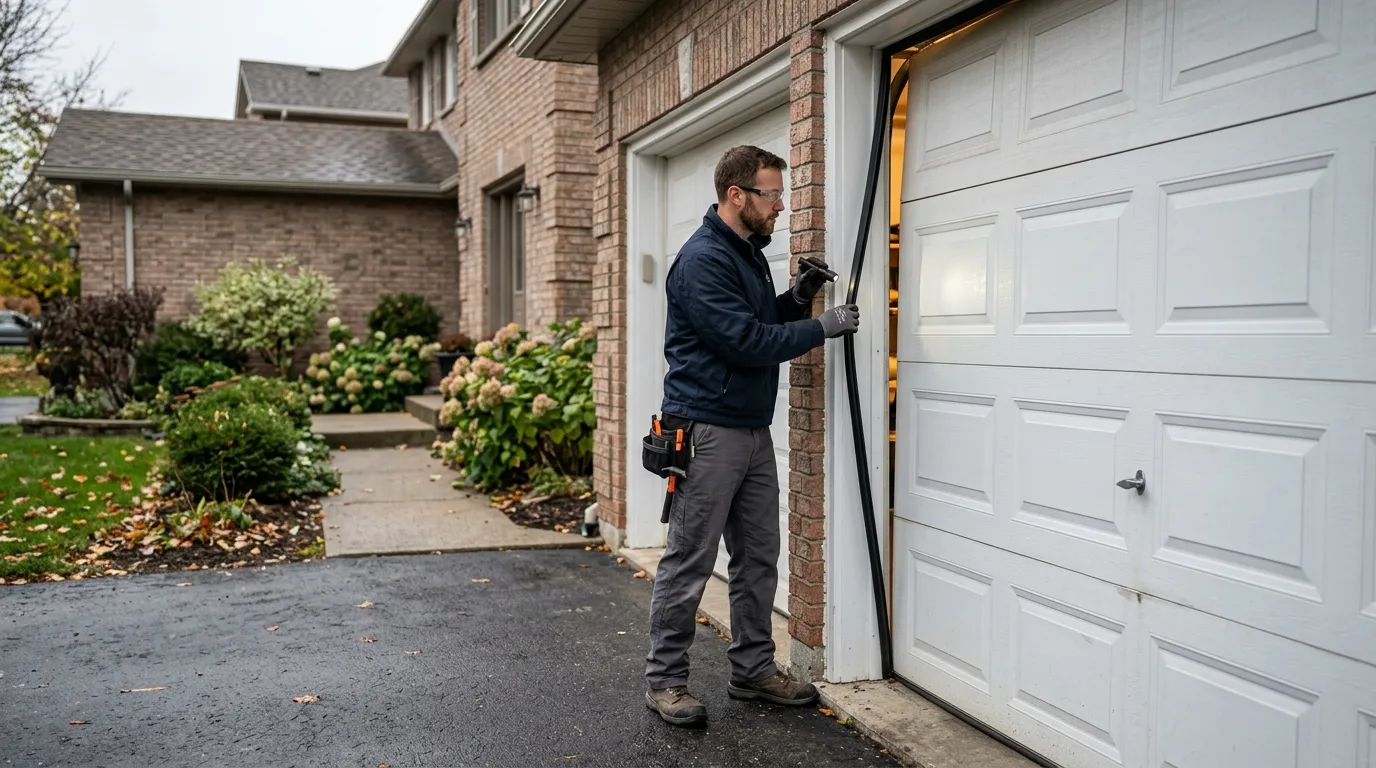
The most common call from this part of town is an opener that runs but won't reverse when something's in the way, or reverses randomly with nothing there. That's usually a missing or misaligned photo-eye pair, which older openers simply didn't have. If your opener is original to a mid-1980s build, it may never have had one installed.
Other owners tell us the door slams the last six inches on the way down, or the chain slaps loud enough to hear from the street. That's chain stretch and worn end-bearings, common on units running longer than they were designed for.
In this cold-moderate climate, we also hear about openers that struggle every winter - slow starts, grinding, a motor that seems to work harder in January than in July. Old grease in a 1980s-era gear housing stiffens up in cold weather, and a worn capacitor makes it worse. None of this is dangerous by itself, but a door that won't reverse on contact is not something to leave alone, especially if there are kids or pets in the house.
How to Book
Pacific sits four miles from our Auburn shop, close enough that we don't pad the job with drive time you pay for. We travel out for opener installs and retrofits on the same schedule we run for the rest of the service area.
At a median household income of $102,976, Pacific owners more often ask us to replace outright rather than patch a 40-year-old chain drive, and once we're on site we'll give you a straight answer on whether a retrofit makes sense or a new opener is the better spend. Check our area page for Pacific for the towns nearby we also cover, or see the full rundown of opener work on our Auburn opener installation page.