The Complications
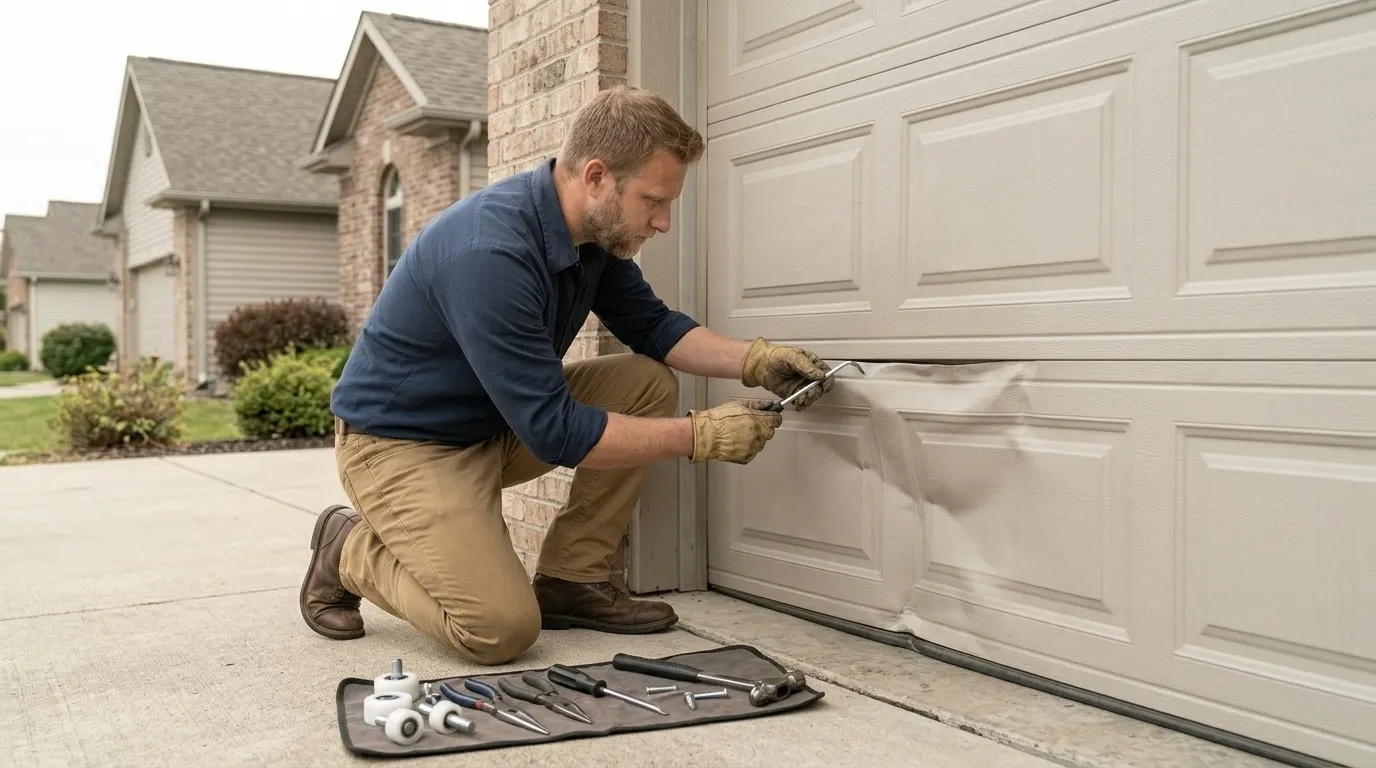
Most garages in Pacific went up around 1986, which puts the doors themselves in a specific bracket: single-layer steel sectional panels, no foam core, hung on a steel torsion spring mounted over the header rather than the older side-mount extension setup you'd find on anything built before the mid-70s. These are 16x7 double doors or 9x7 singles more often than not, and the steel is thin enough that a slammed car bumper dents a panel in a way a modern insulated door would shrug off.
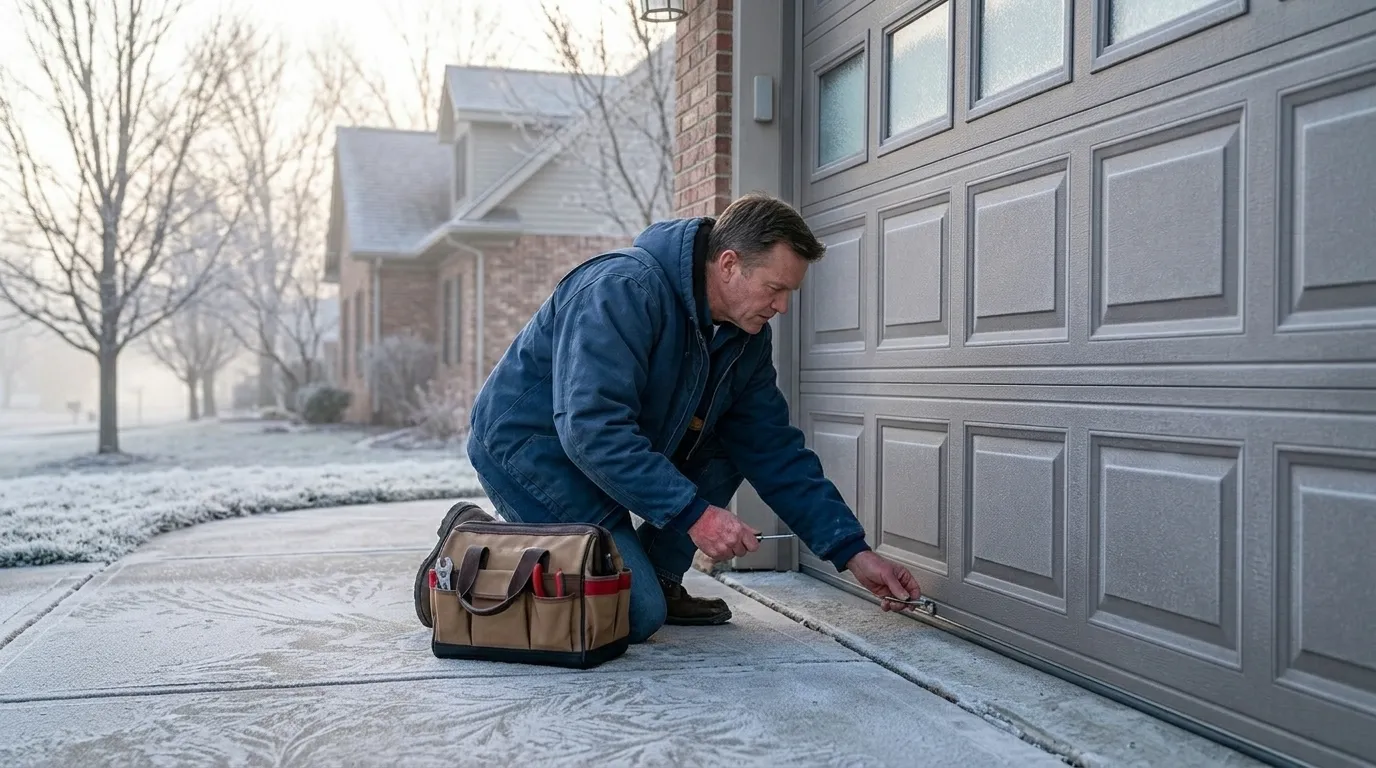
That non-insulated steel skin is also why cold, damp winters hit these doors harder than they'd hit a newer build. Moisture gets between the panel and the roller track, the grease in the torsion spring thickens, and a door that lifted fine in September suddenly needs a shoulder against it in January. Add thirty-some years of cycles on the original hardware and the spring itself is often past its rated life, not just cold-stiff.
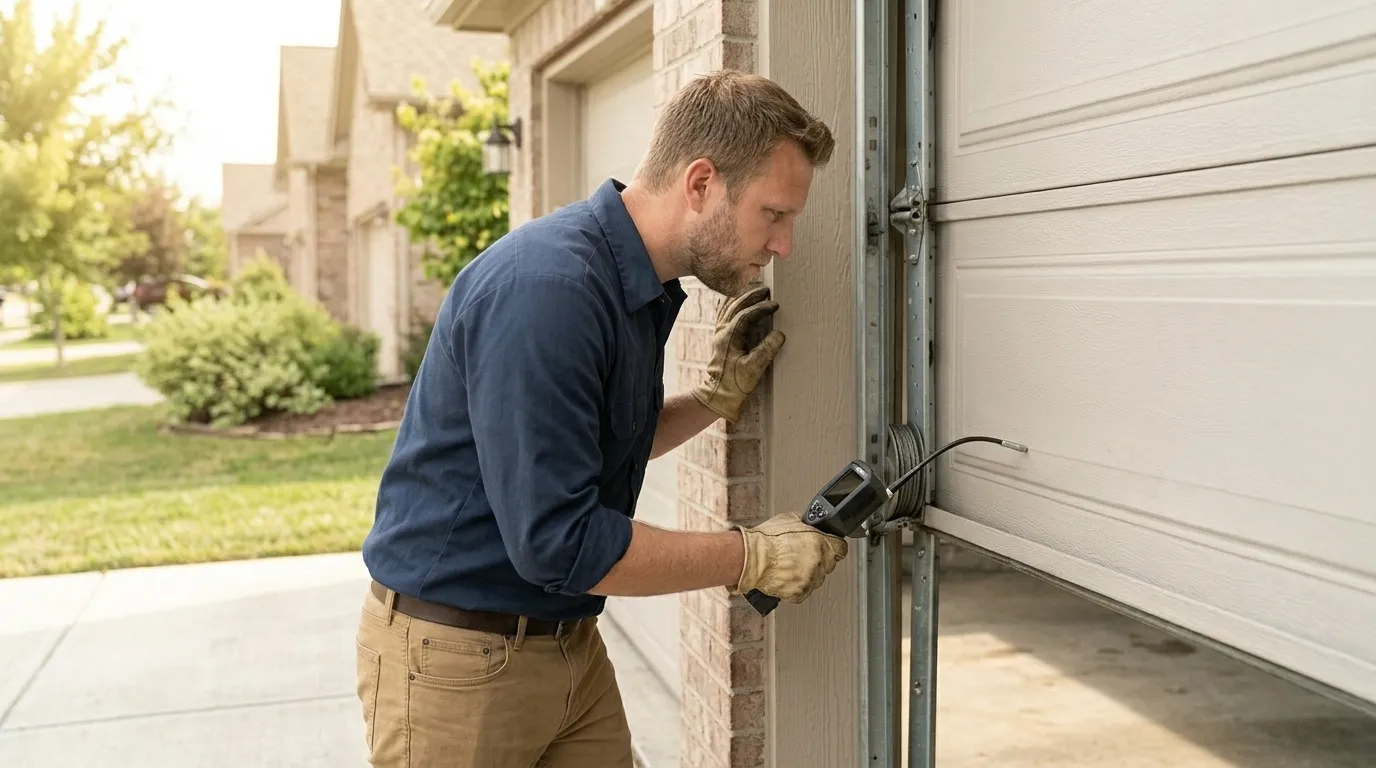
The other common failure on this stock is the cable fraying where it wraps the drum. Original cable from the mid-80s wasn't galvanized to the standard used now, and once it starts to fray near the drum it can let go without much warning. That's the one we treat as urgent, not the slow-close door.
What You Are Seeing
A door that stalls halfway up and won't restart on the opener usually means the torsion spring has lost tension, not that the opener motor is failing. On the steel sectional doors common here, that shows up as the door feeling twice as heavy by hand as it should, or the opener straining and clicking off on its safety cutoff.
A loud bang from the garage followed by the door refusing to move at all is almost always a broken spring, sometimes both if the door is a double. If you see a cable hanging loose or frayed near the bottom bracket, don't run the opener again - a snapped cable on one side can let a panel drop unevenly and bend the track.
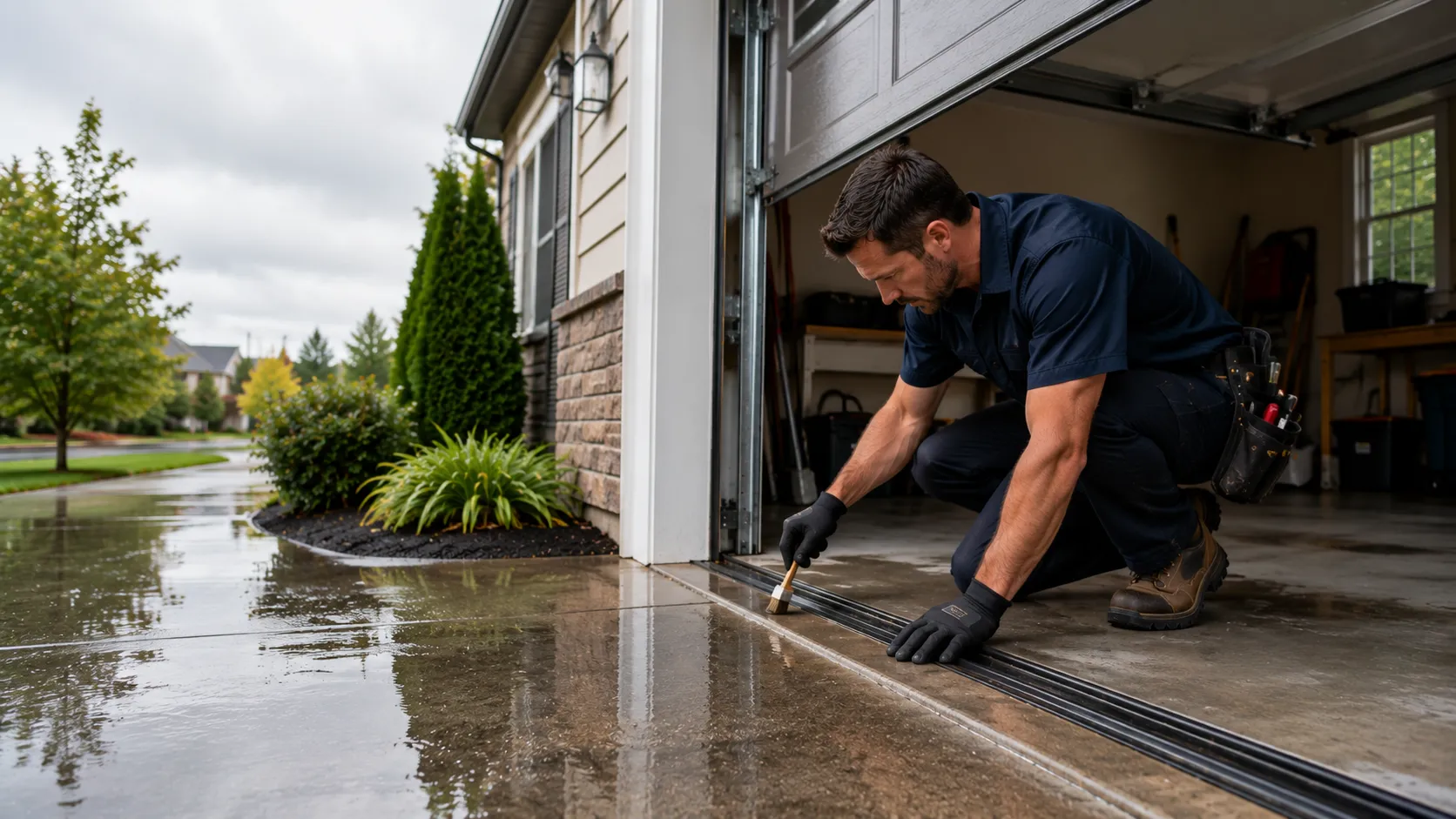
Rust streaks at the bottom roller track, or a door that binds on one side only, point to water sitting in the track over a wet winter. That's slower to fix and less urgent than a spring or cable, but it's worth a call before the roller wears through the track edge.
How to Book
Pacific sits about 4 miles from our Auburn shop, close enough that a call here doesn't turn into a half-day trip. We travel out with the truck stocked for the steel sectional, torsion-spring doors that make up most of this area's housing.
With 2,406 households in Pacific, this is a small, tightly packed pocket of the service area, and the median household income here, $102,976, runs a bit under the wider service area's $109,235 - which doesn't change how we price a job, but it's part of why we don't push a full door replacement when a spring and cable job will do.
Call and describe what you're seeing - stalled door, loud bang, hanging cable, or a door that just feels heavy - and we'll tell you over the phone whether it sounds like a same-visit fix or something that needs a part ordered first. See the Pacific area page for more on how we cover this pocket of the service area, or check the Auburn emergency repair page for the full rundown of how our emergency calls work.