What the Fix Involves
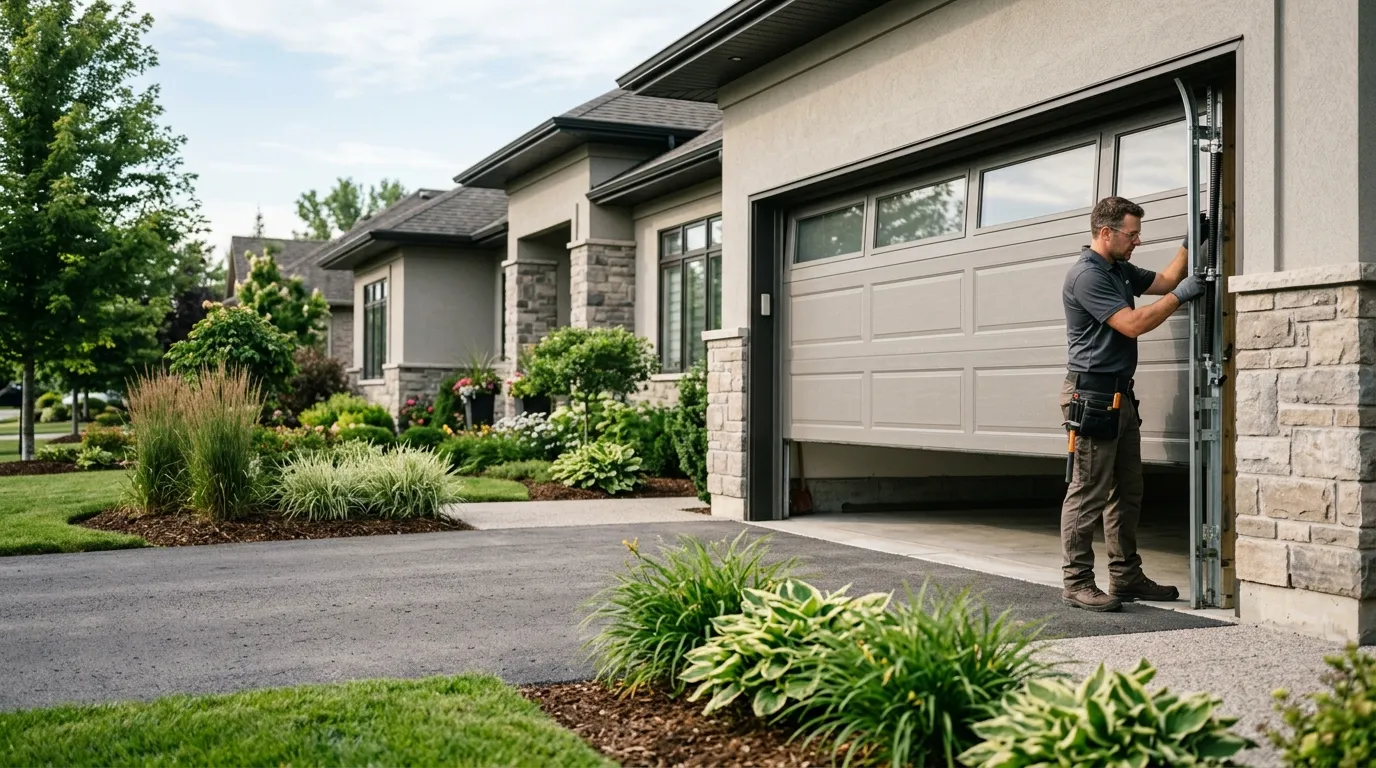
Algona's housing stock centers on 1988, a bit newer than the wider service area's 1983 median. That five-year gap matters more than it sounds. Doors built in the mid-to-late 80s were already shifting away from the flat, stamped drums common on early-80s torsion setups toward grooved drums built for thicker galvanized cable. When a cable frays or snaps on a house from this era, we're usually swapping a cable that has to match a specific drum groove pitch, not just running a universal size off the shelf.
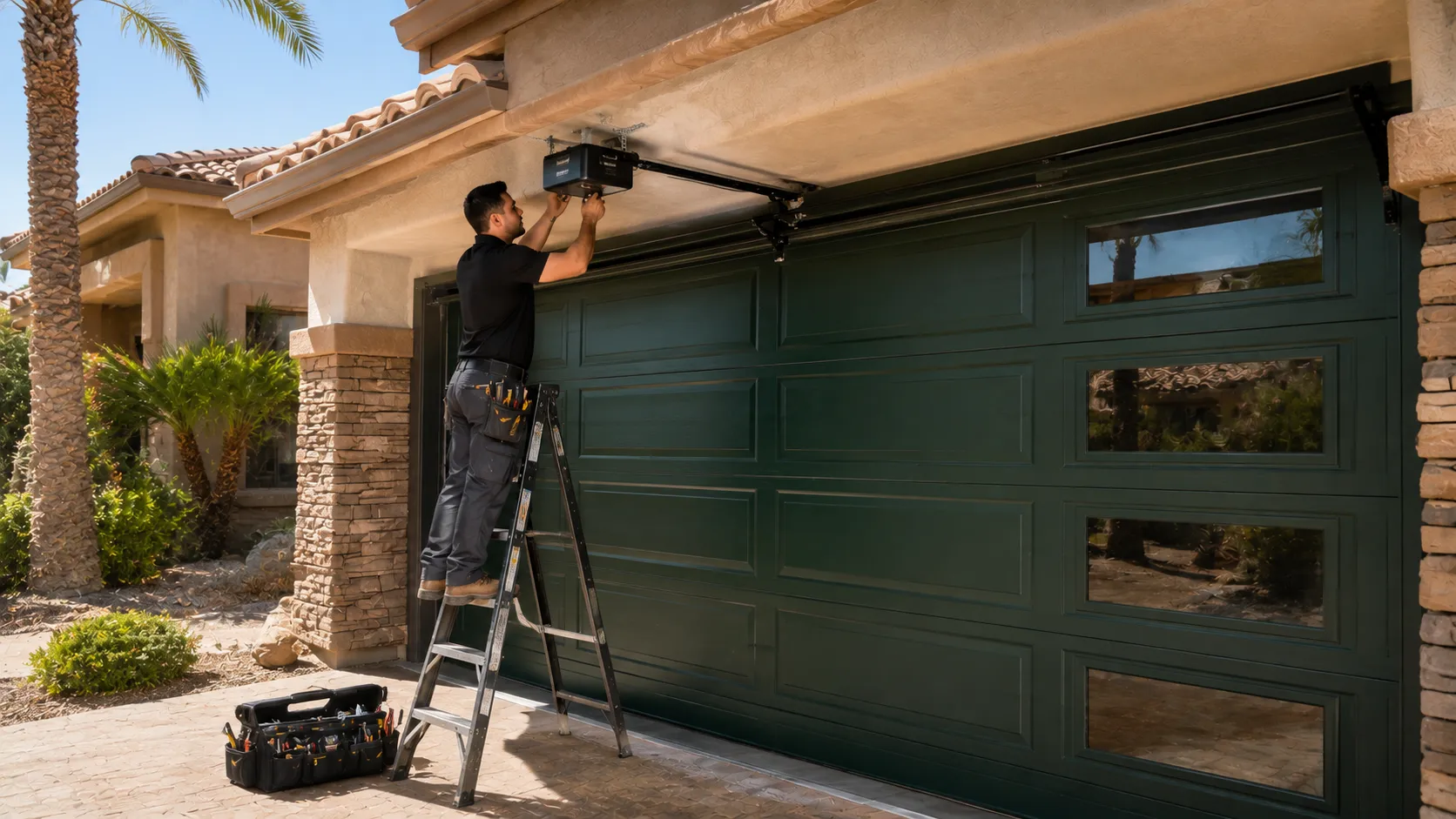
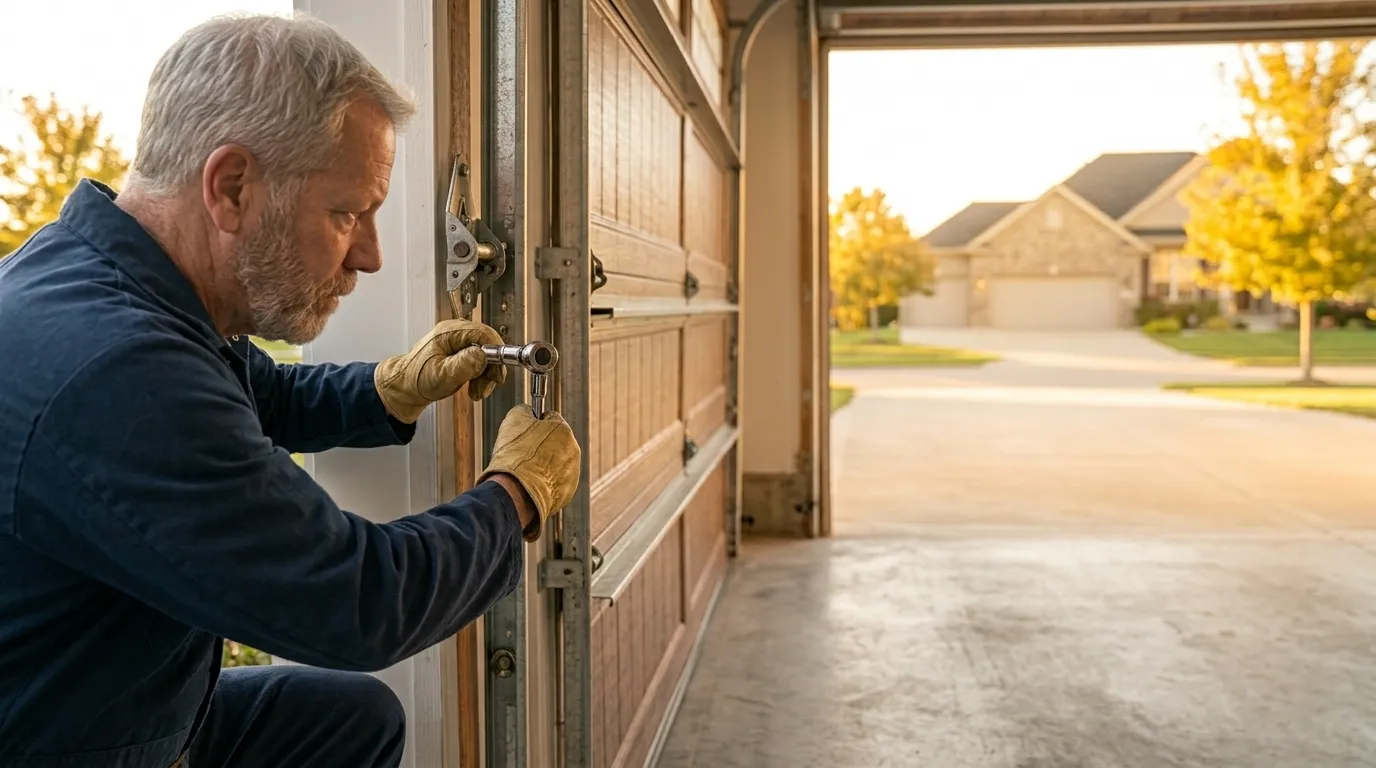
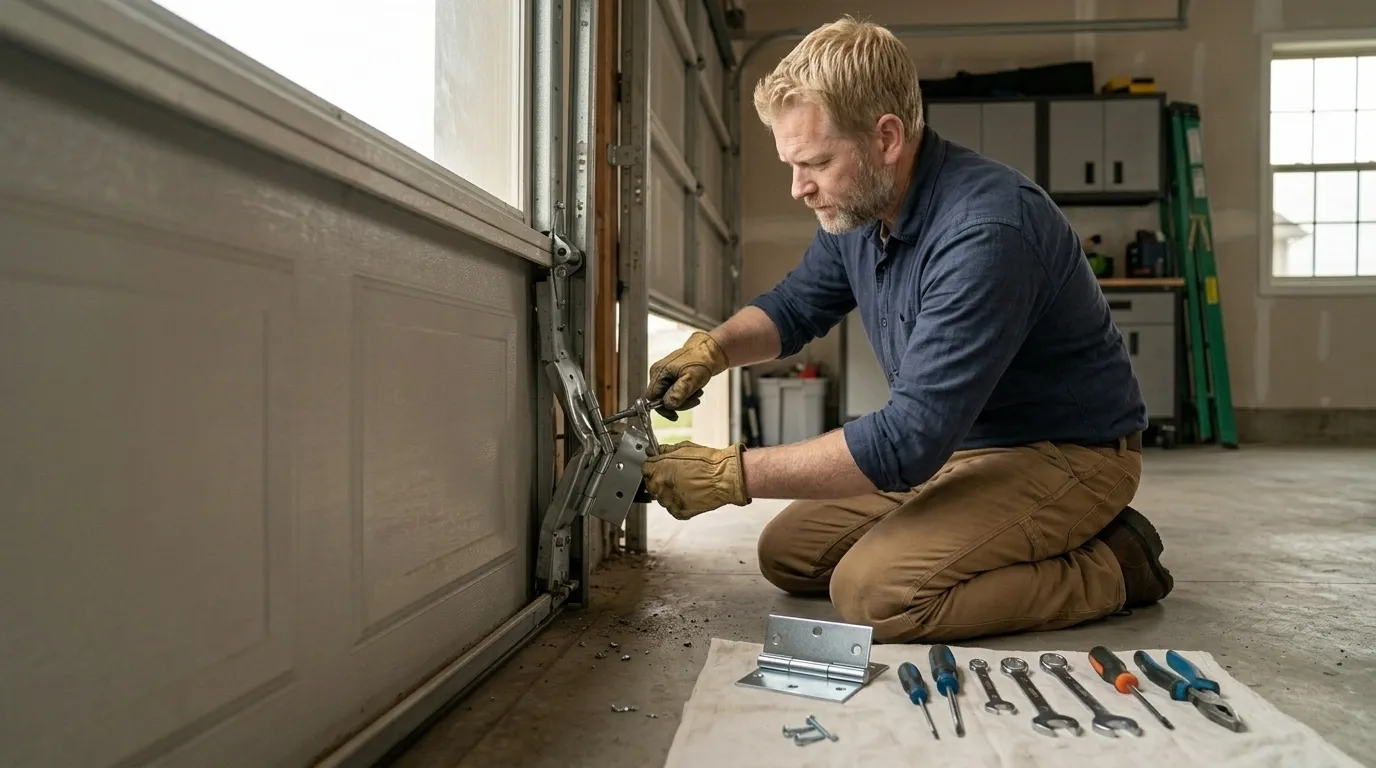
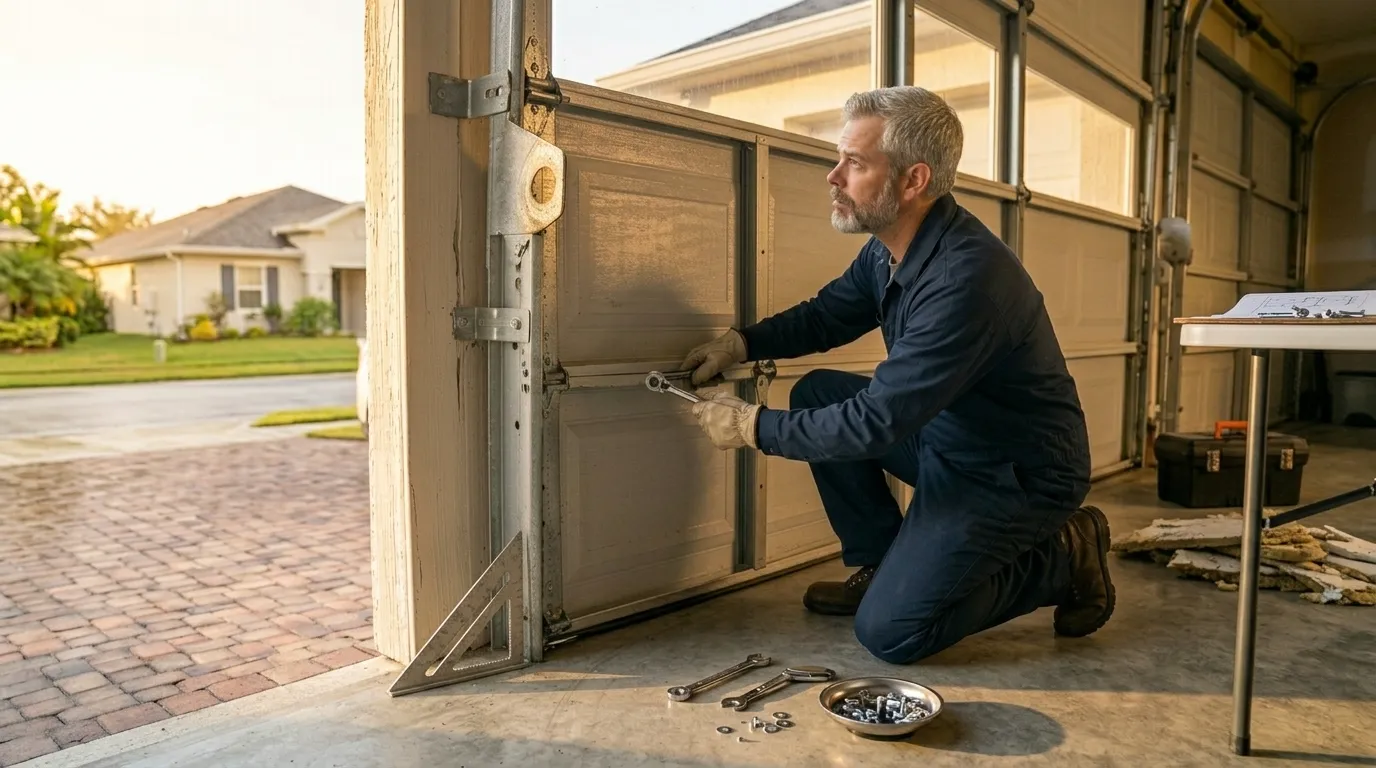
The fix itself is straightforward once we're on site: release tension from the spring safely, pull the broken cable off the drum and track, measure the replacement against the drum's groove spacing, and re-thread it under controlled tension. On a standard double door this is a same-visit job. What takes the extra ten minutes on Algona houses specifically is confirming which drum generation is on the shaft before we cut new cable, since a mismatch means the cable walks off the drum again within weeks.
We don't stock every drum-cable pairing on the truck. If your door uses an odd aftermarket drum from a builder-grade opener package instead of a standard torsion setup, that part sometimes has to be ordered, and we'll tell you that up front rather than force a fit.
What Causes It Around Here
With roughly 930 households in Algona, most sitting on 1980s-era torsion hardware, the failure pattern is consistent: galvanized cable that's done twenty-plus years of flexing over the drum finally frays at the same wear point every time, usually a few inches from where it clamps to the bottom bracket. That's a fatigue failure, not a one-time event, and the cold-moderate climate this area sits in speeds it along - repeated freeze-thaw cycles work moisture into the strands and the cable corrodes from the inside before it looks bad from the outside.
We also see cables that snap because a roller seized in the track and forced the door to bind. When a door doesn't want to move and gets pushed anyway - a stuck opener chain, a bent track, ice in the roller channel - the cable takes the overload instead of the roller, and it shears.
Houses built right around 1988 in this area still commonly run the original torsion spring and drum assembly if nobody's replaced the opener system since. That means when a cable goes here, it's worth checking the spring and drum for wear at the same visit, since they're the same age and under the same stress.
What You Are Seeing
A door that dropped unevenly, hangs crooked in the opening, or came down hard and fast on one side is the clearest sign - that's a cable that let go on one drum while the other side held. If the door won't budge at all and you can see a loose cable hanging loose near the bottom bracket instead of wound tight against the drum, that confirms it.
A slower warning sign is cable that looks frayed or has individual strands popping loose near the bottom fitting, usually visible if you look at the corner where the cable clamps to the bracket. That's a cable on its way out, not one that's failed yet, and it's the cheaper call to make - replacing a fraying cable before it snaps costs less than dealing with a door that's dropped and possibly bent a track or panel on the way down.
Sometimes it's less dramatic: the door runs but makes a grinding or popping noise as it travels, which can mean a cable riding rough against a worn drum groove rather than sitting flush. That's worth a look before it becomes a full break.
How to Book
We run out of Auburn and cover Algona as part of that service area - it's a short trip, about 2 miles, so getting a truck to a house here doesn't add the delay it would for some of the farther towns we reach. Call and describe what the door's doing: which side dropped, whether the cable's visibly loose or frayed, and the approximate age of the door if you know it. That's enough for us to bring the right cable stock and drum hardware instead of guessing on site.
Have your address and a rough sense of when the garage door or opener was last serviced, if ever - for a lot of Algona houses built around the late 80s, that answer is 'never,' and that's useful information on its own.